COMMERCIAL PARKING LOT CLEANING | OIL, GUM, ALGAE AND SLIP HAZARD REMOVAL | SURFACE CLEANER EQUIPMENT | SCHEDULED MAINTENANCE PROGRAMS | DOCUMENTATION AVAILABLE
Safe Parking Lots Protect You From Liability.
Algae, oil, and biological growth on parking lot surfaces are not a maintenance nuisance. They are a premises liability exposure. One slip-and-fall incident costs more than a decade of professional cleaning. A scheduled parking lot maintenance program removes the hazard and documents the effort.
Safer, Cleaner Parking Lots
Property managers and commercial landlords are responsible for the condition of the common areas on their properties. Parking lots, drive aisles, pedestrian crossings, and walkways that accumulate biological growth and oil contamination become slip hazards, particularly in the wet conditions that Florida rain and dew create regularly. A wet algae-covered parking lot surface can be as slippery as ice. Florida courts treat premises liability seriously. Documented negligence in common area maintenance is not a defensible position.
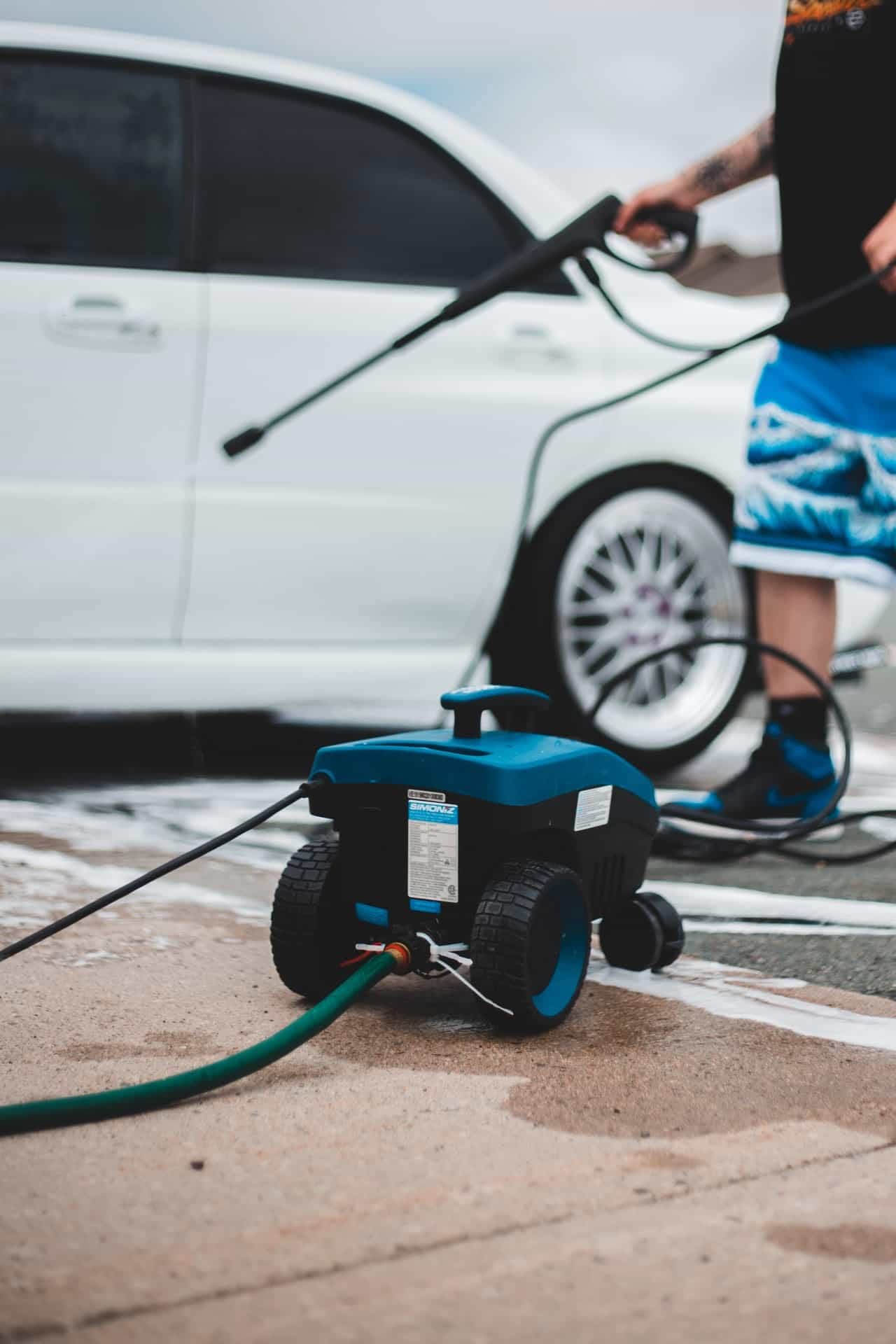
Starr’s & Stripes provides commercial parking lot cleaning throughout the Ocala area using industrial surface cleaner equipment that covers large paved areas uniformly and efficiently. One cleaning visit removes the biological growth, oil stains, gum, and accumulated organic contamination that create both safety hazards and the visual degradation that reduces property value and tenant satisfaction. A scheduled maintenance program documents the commitment and keeps the lot at standard between visits.
Four Parking Lot Conditions That Create Premises Liability Exposure.
Florida property owners and managers have a legal duty to maintain common areas in a reasonably safe condition for invitees — customers, tenants, visitors, and delivery personnel who have permission to be on the property. When a parking lot condition is known, or reasonably should be known, and is not remediated, and someone is injured as a result, the property owner or manager faces premises negligence exposure. The four conditions below are the most common parking lot hazards in the Ocala market. All four are preventable with a scheduled maintenance program.
Algae and Biological Growth on Concrete and Asphalt
The situation: Florida’s year-round warmth and high humidity create ideal conditions for algae, mold, and cyanobacteria colonization in the porous surface of parking lot concrete. Biological growth accumulates in expansion joints, low-drainage areas, shaded sections under tree canopy, and any section that stays damp after rain. It is not visible in dry conditions — it becomes visible as a green-black surface darkening that most people do not consciously register as a hazard until they are already on it.
The legal exposure: Wet algae on concrete is among the most treacherous slip surfaces in commercial environments. A pedestrian crossing a lot after Florida rain on algae-colonized concrete faces a friction coefficient similar to wet ice. Documented algae growth that was not remediated is treated as constructive notice in premises liability cases — the property manager knew or should have known the condition existed.
How the maintenance plan addresses it: Biological growth treatment is the primary surface condition addressed in each maintenance visit. Surfactant application kills the growth at the root and prevents rapid recolonization. Regular cleaning intervals prevent algae from reaching the visible and hazardous stage.
Oil and Fuel Contamination
The situation: Vehicle traffic deposits motor oil, transmission fluid, power steering fluid, and fuel spill residue on parking lot concrete continuously. Every vehicle that parks contributes some level of fluid contamination. Oil deposits are invisible when fresh and darkly stained when aged, but both stages are hazardous. Oil contamination in the parking lot surface migrates into the substrate of the concrete if left untreated, creating progressive surface degradation over time.
The legal exposure: Oil-contaminated concrete is a slip hazard in wet conditions and a chronic surface degradation issue. As the oil penetrates the concrete substrate it weakens the surface layer, accelerating spalling and surface cracking. Structurally compromised concrete surfaces create trip hazards in addition to slip hazards. Both are actionable premises liability conditions. Oil contamination that has migrated to a storm drain is also a potential environmental compliance concern.
How the maintenance plan addresses it: Oil contamination is addressed with industrial degreaser surfactant pre-treatment before pressure washing. The degreaser emulsifies the oil at the surface and substrate level, allowing pressure washing to remove both the visible stain and the penetrating residue. Regular cleaning prevents oil from reaching the substrate migration stage.
Gum, Organic Waste, and High-Traffic Contamination
The situation: Chewing gum deposits, food and drink spill residue, tobacco waste, and the general organic accumulation from heavy pedestrian traffic create both surface contamination and appearance issues in high-use areas — entryway approaches, drive-through queues, pedestrian crossings, and areas near trash receptacles. Gum deposits become extremely slippery when wet. Organic accumulation provides the nutrient base that accelerates biological growth in these areas.
The legal exposure: Gum deposits on wet concrete are a specific slip hazard at the pedestrian-scale contact points where customers are most likely to be focused on the building entry rather than the ground surface. The entryway approach zone where most gum contamination concentrates is precisely where the customer is most likely to slip. Documented contamination at a known high-traffic pedestrian area is the clearest premises notice scenario in commercial property maintenance.
How the maintenance plan addresses it: High-traffic zones and pedestrian approach areas receive targeted treatment during maintenance visits, including spot degreaser application for gum deposits and extra attention to the crosswalk and entryway approach surfaces that carry the highest pedestrian volume.
Obscured Striping and Parking Area Markings
The situation: Parking lot striping — lane dividers, pedestrian crossings, fire lane markings, accessible parking designations, directional arrows — becomes progressively less visible as biological growth and surface contamination darken the concrete field around the markings. When the contrast between the painted marking and the concrete surface is reduced, the markings do not perform their safety and compliance function. Drivers who cannot clearly read fire lane markings park in them. Pedestrians who cannot clearly see crosswalk markings do not know where to cross.
The legal exposure: Fire lane obstruction is a fire code violation that creates liability for the property manager if an emergency response is delayed. Obscured accessible parking designation markings create ADA compliance exposure. Crosswalk markings that are not readable create pedestrian safety hazards at the most documented high-injury location in commercial parking environments. Striping compliance is an ongoing property maintenance obligation, not a one-time installation.
How the maintenance plan addresses it: Cleaning the parking lot concrete reveals the existing striping by removing the biological film and contamination that has darkened the contrast between marking and surface. After cleaning, striping visibility is restored without repainting in most cases. Where cleaning reveals markings that have faded below visibility threshold, the property manager is informed so restriping can be scheduled.
Commercial Parking Lot Cleaning. The Right Equipment for the Scale.
A parking lot is not a large driveway. The surfaces are larger, the contamination types are more intensive (commercial vehicle oil versus residential car parking), the coverage requirement is uniform across hundreds or thousands of square feet, and the scheduling constraints require completing the work without blocking customer or tenant access. Commercial lot cleaning requires equipment and approach calibrated to commercial scale.
1
Poured Concrete Lots and Drive Aisles
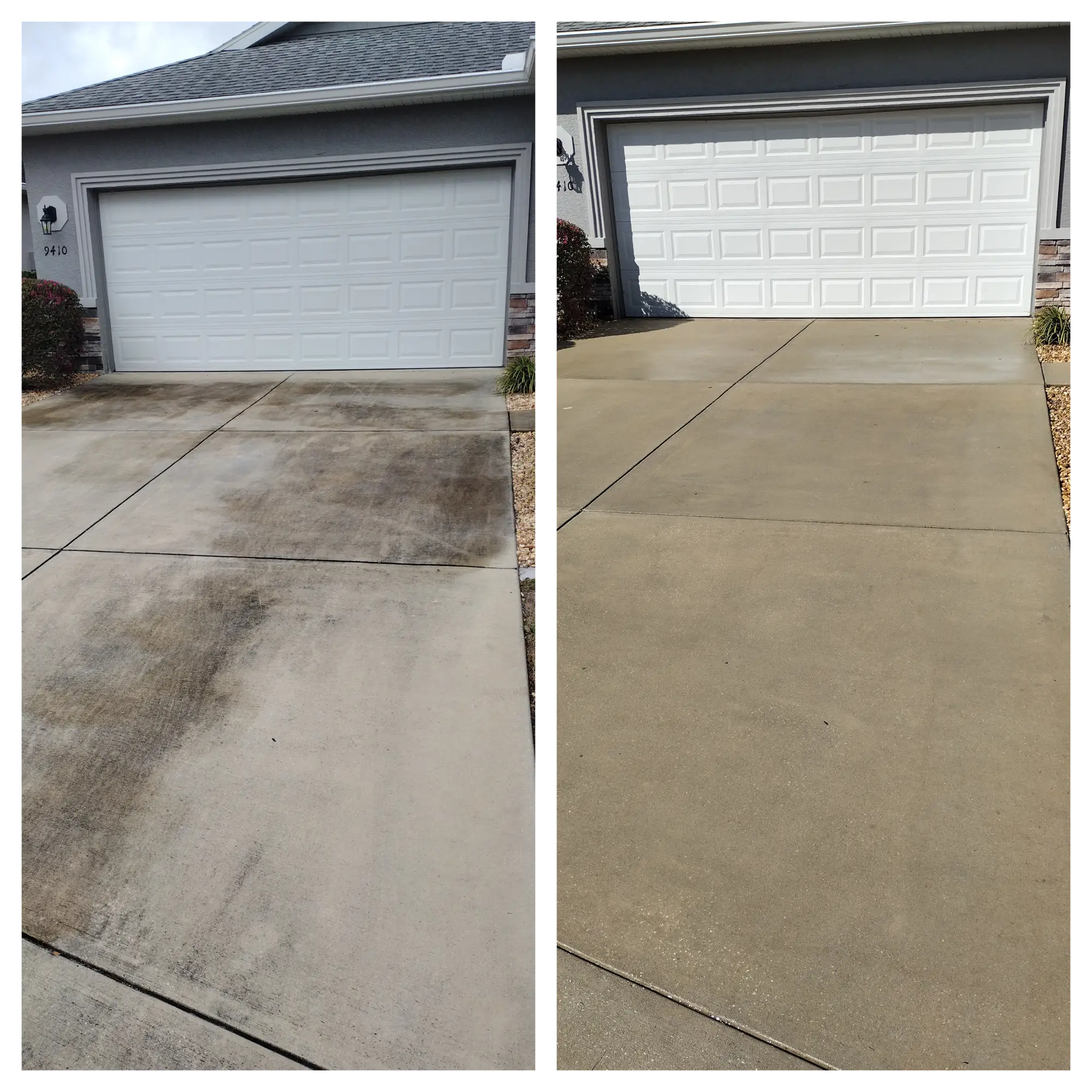
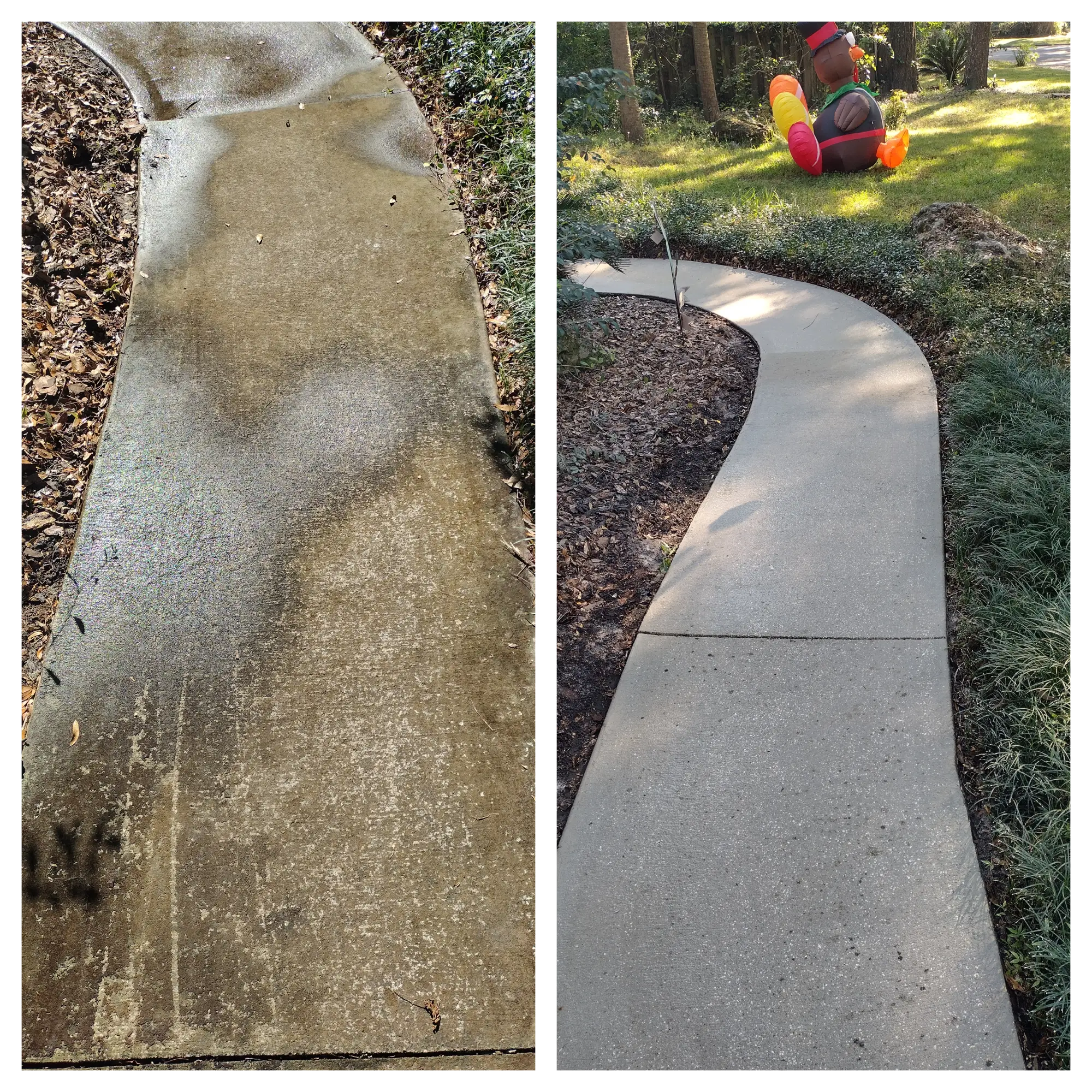
Common problem: Standard poured concrete parking lots accumulate biological growth in the porous surface and expansion joints, oil contamination from vehicle traffic, and the progressive darkening from weathering that reduces striping contrast. Consumer-grade wand washing leaves tiger stripe patterns -- alternating light and dark bands caused by overlapping wand passes at inconsistent pressure and angle. Professional lots cleaned with wand marks look patchy and unprofessional. Our approach: Industrial surface cleaner attachment covering a consistent circular cleaning path at uniform pressure across the entire concrete field. No tiger stripes. Consistent results edge to edge. Pre-treatment of oil zones with degreaser surfactant before surface cleaning. Post-rinse of expansion joints and perimeter curbing. The result is a uniform concrete field with full striping visibility restored.
2
Asphalt Lots
Common problem: Asphalt parking lots present different cleaning challenges than concrete. Asphalt is softer and more temperature-sensitive, requiring pressure management to avoid surface damage particularly in hot Florida summer conditions when asphalt softens. Biological growth colonizes asphalt differently than concrete -- it tends to aggregate in lower areas and drainage channels rather than distributing uniformly. Oil contamination on asphalt is absorbed more readily than on concrete, making degreaser pre-treatment more important. Our approach: Pressure calibrated for asphalt surface hardness and temperature conditions. Biological growth treatment with surfactant appropriate for asphalt surfaces. Targeted degreaser application on oil zones before washing. Hot-weather scheduling consideration -- asphalt cleaning is preferably done in cooler morning hours when the surface is firmest. Asphalt lot cleaning restores color uniformity and removes slip-hazard biological growth without surface damage.
3
Pedestrian Crossings, Crosswalks, and Entryway Approaches
Common problem:Pedestrian crossing zones and entryway approaches are the highest-traffic foot-contact surfaces in any commercial lot and the locations where slip incidents are most common. They also tend to be the areas with the most gum deposit, organic spill accumulation, and direct weather exposure from lack of overhead cover. These zones also tend to be where striping clarity matters most for pedestrian safety. Our approach: Targeted high-attention cleaning of all pedestrian crossing surfaces, crosswalk markings, and entryway approach zones. Spot degreaser treatment for gum deposits. Extra pressure dwell time on any sections with embedded organic contamination. Post-clean visual inspection of all crosswalk and pedestrian marking visibility. These zones are cleaned to a higher standard than the general lot field because they carry the highest pedestrian traffic and the greatest slip incident risk.
4
Fire Lanes, Accessible Parking, and Compliance Zones
Common problem: Fire lanes and accessible parking areas carry specific regulatory marking requirements under Florida fire code and ADA standards. These designations must be clearly visible to function. The red curb paint, yellow fire lane striping, accessible parking symbols, and adjacent access aisle markings are all subject to the same biological contamination and surface darkening as the general lot, but the consequences of obscured compliance markings are regulatory rather than just aesthetic. Our approach: Compliance zones are cleaned with the same surface cleaner approach as the general lot. After cleaning, marking visibility is assessed. Any markings whose paint has faded below clear visibility threshold are flagged for the property manager's attention. Cleaning compliance zones regularly preserves the paint markings longer by preventing the embedded biological growth that degrades paint adhesion from below.
5
Curbing, Wheel Stops, and Perimeter Surfaces
Common problem: Concrete curbing, wheel stops, and perimeter surfaces accumulate biological growth, tire rubber deposits, and the contamination runoff from the lot surface during rain events. Dirty curbing reduces the visual definition of the lot perimeter and makes the property look less maintained than the lot cleaning alone suggests. Wheel stops accumulate rubber and organic growth that reduces their visibility as vehicle impact markers. Our approach: Curbing cleaned with targeted pressure and surfactant treatment to remove biological growth and tire rubber deposits. Wheel stops cleaned on all visible surfaces. Perimeter concrete addressed as a standard component of the lot cleaning visit. A lot with clean field and clean curbing reads as fully maintained rather than partially attended to.
A Maintenance Plan Is What the Liability Argument Resolves Into.
A single cleaning removes the hazard that currently exists. A maintenance program prevents the next one from developing. For property managers, the program is also a documentation asset: a record of scheduled, professional maintenance that demonstrates the duty-of-care standard was actively maintained. That record has value in the event of an incident regardless of outcome.
Starr’s and Stripes offers commercial lot maintenance programs at three cadences. The right program depends on lot traffic volume, tree canopy coverage, Florida wet season exposure, and the contamination intensity specific to the property. We discuss all of these during the estimate walk.
Quarterly Maintenance Program
Best for: High-traffic retail lots, restaurant lots, medical and professional office parking areas, and any commercial lot with heavy biological growth from Florida wet season or significant tree canopy coverage
Includes: Full lot cleaning including all surface types, pedestrian crossings, compliance zones, curbing, and wheel stops. Service completion documentation for property records.
Frequency: Four times per year — once per quarter, aligned to seasonal biological growth cycles
Primary benefit: Biological growth never reaches the visible and hazardous stage between visits. Documentation record shows consistent year-round maintenance commitment. Most protective program for high-traffic lots.
Semi-Annual Maintenance Program
Best for: Moderate-traffic commercial lots, office park shared parking, small strip center common areas, and lots with low biological growth exposure (minimal canopy, good sun exposure, good drainage)
Includes: Full lot cleaning at both visits. Spring visit before wet season removes winter accumulation and prepares surface for high-humidity growing season. Fall visit after wet season removes the seasonal biological growth before dry season.
Frequency: Twice per year — spring and fall timing coordinated with Florida’s seasonal cycle
Primary benefit: Matches Florida’s primary biological growth season with a pre-season and post-season cleaning. Minimum effective program for documented maintenance commitment. Most economical effective program for lower-traffic lots.
Single-Visit with Follow-Up Option
Best for: First-time clients who want to establish a baseline cleaning before committing to a program, lots with infrequent use, and properties under new management establishing a maintenance baseline
Includes: Complete single-visit cleaning covering all lot surfaces and perimeter. Post-visit assessment of conditions that will drive future maintenance frequency recommendation. Service documentation provided.
Frequency: One visit, with program enrollment available after the visit based on results and observed recontamination timeline
Primary benefit: Establishes a documented cleaning baseline. Most appropriate for first-time commercial cleaning relationships. Sets the reference condition for maintenance frequency decision.
SERVICE DOCUMENTATION
All scheduled maintenance program visits generate service completion documentation that property managers can retain for their records. Documentation includes date of service, surfaces covered, treatment chemistry applied, and any conditions observed before and after cleaning. This documentation is a standard component of the maintenance program and is provided without additional cost.
5-Star Rated on Google & Yelp
Trusted by Homeowners Across Marion, Citrus, Levy & Sumter Counties
Posted on Google
 Brandon Fairley
Trustindex verifies that the original source of the review is Google.
Randy and his team are true pros when it comes to power washing. They take the time to do the job right and treat your property with care. Highly recommend!Posted on Google Chad FilleyDoes and great job, extremely thorough job on a drive way and house.Posted on Google
 Gary StrikerStars and Stripes Power Washing does incredible work. Randy and his crew did an outstanding job on my horse trailer. It looks brand new. He is professional, shows up on time, paid attention to the details, and left everything clean when he finished. I’m a realtor, and I recommend Randy and Stars and Stripes Power Washing to all of my clients who need power washing. Reliable, high quality work every time..Posted on Google
 Gus BlancoWe own Complete Dryer Vent Services LLC and were really impressed with the work these guys performed. I can't believe how dirty my vinyl fence was. A week later and it's still glowing white! Got a good education on how lichen can cause staining and damage protective coating on vinyl fence. These guys know their stuff. They even washed our work trailer! Highly recommend Starr's and Stripes.Posted on Google
 Michael FetchRandy and Mathew from Starr's and Stripes Power Wash did an excellent job on our full house wash. Communication was clear and easy from start to finish, and they took the time to protect the plants and landscaping around the house. Our roof shingles had streaks all over them and now they are completely gone — the roof and house both look amazing. Honestly looks like a brand new home again. I would absolutely recommend them to anyone looking for pressure washing done right.Posted on Google
 Crystal LyonsReally great people! Prompt, courteous and professional while still being personable. Highly recommend!!! Edited to add that we are now repeat customers and our rating hasn't changed a bit! Same promptness, courtesy and professionalism!Posted on Google
 Kevin MckenzieRandy was very professional, friendly and thorough. I would highly recommend Starr's & Stripes Powerwash to anyone needing their home, roof or driveway cleaned.Posted on Google
 Angela NortonStarr's & Stripes PowerWash exceeded my expectations! Randy's team transformed my property, leaving everything spotless and looking brand new. Their attention to detail and dedication to quality are impressive. If you need reliable and thorough exterior cleaning, look no further—these guys are the best in the business!Posted on Google
 Mary RossiAbsolutely the nicest people to deal with and a great job.Posted on Google
 Jeannine PlummerI am a local Realtor, and I love that I can trust Starrs & Stripes to do a great job and with such professionalism that my clients reach out singing their praises after they leave. I highly recommend using this company for all of your power washing needs!
FAQs
Questions About Parking Lot Cleaning in Ocala
Does a dirty parking lot actually create legal liability?
Yes. Property owners and managers in Florida have a legal duty to maintain common areas — including parking lots, drive aisles, and pedestrian crossing zones — in a reasonably safe condition for invitees. When a hazardous condition exists, is known or should reasonably be known, and is not remediated, and someone is injured as a result, the property owner or manager faces premises liability exposure. Slip-and-fall incidents on commercial properties are among the most common personal injury claims in Florida. Biological growth on wet concrete surfaces is a documented slip hazard, and documented negligence in common area maintenance is not a defensible position in Florida courts. A scheduled cleaning program with service documentation demonstrates active duty-of-care maintenance and is a standard element of commercial premises liability defense.
Do you clean around active business hours?
Yes. Commercial lot cleaning is scheduled to minimize disruption to tenant operations, customer access, and parking availability. Early morning service before businesses open is the most common scheduling approach for active retail and restaurant lots. For large lots that require phased cleaning, we can clean one section of the lot while the remainder stays accessible, then complete the remaining sections in sequence. Evening and weekend scheduling is also available. Specify your operating constraints when requesting an estimate and we will build the cleaning schedule around them.
Can you clean a large parking lot efficiently in a single visit?
Yes. Our industrial surface cleaner equipment covers large paved areas quickly and uniformly. The surface cleaner attachment produces consistent results across the entire concrete field without the tiger stripe pattern that wand washing leaves on large areas. For reference, a standard 100-space retail parking lot can typically be cleaned in three to five hours with commercial surface cleaner equipment. Larger lots or those requiring extended degreaser dwell time for significant oil contamination may require more time. We discuss the scope and timing estimate during the commercial assessment.
Do you provide documentation of cleaning for property management records?
Yes. All scheduled maintenance program visits generate service completion documentation that property managers can retain for their records. Documentation includes date of service, property address, surfaces covered, and treatment applied. This documentation is provided as a standard component of the maintenance program. If you have a specific documentation format required by your property management company or insurance carrier, let us know when scheduling and we will accommodate it.
Can you remove oil stains from parking lot concrete?
Yes, for most oil contamination. Fresh and moderately aged oil stains respond well to industrial degreaser pre-treatment followed by commercial pressure washing. The degreaser emulsifies the oil in the concrete surface and substrate, and the pressure washing removes both the visible stain and the penetrating residue. Very old, deeply set oil that has penetrated and oxidized in the concrete substrate may be significantly reduced but not fully eliminated in a single visit. Deep oil penetration typically requires multiple treatment cycles. We assess the oil contamination during the estimate and provide a realistic expectation of the result before any work begins.
Will cleaning the lot make the striping more visible?
Yes, and often dramatically so. Biological growth and surface contamination reduce the contrast between the painted striping and the concrete field. When the concrete darkens uniformly from algae and weathering, the striping does not disappear but becomes significantly less readable. Cleaning the concrete field removes the biological film and restores the original concrete color, which restores the contrast against the painted marking. In most cases, a single cleaning significantly improves striping visibility without repainting. Where cleaning reveals markings that have genuinely faded below legibility from UV degradation of the paint rather than surface contamination, we note those sections for the property manager’s attention so restriping can be scheduled.
How much does parking lot cleaning cost in Ocala?
Parking lot cleaning is priced per square foot of paved surface area to be cleaned, with the specific rate depending on surface type, contamination level, and any specialty treatment required such as degreaser pre-treatment for significant oil staining. Most small commercial lots in the 10,000 to 30,000 square foot range price between 00 and 00 for a single cleaning visit. Larger lots, lots with significant oil contamination requiring extended degreaser treatment, or multi-day projects are priced accordingly. Scheduled maintenance program pricing reflects a modest per-visit discount in recognition of the ongoing relationship. Starr’s and Stripes provides a free on-site written estimate for all commercial lot cleaning projects. Call or text (352) 230-9299 to schedule a commercial property assessment.