HOA AND COMMUNITY ASSOCIATION CLEANING FOR CLUBHOUSE, COMMON AREAS, AND AMENITIES WITH RECURRING MAINTENANCE PROGRAMS, SERVICE DOCUMENTATION FOR BOARD RECORDS IN ALL FOUR COUNTIES | LICENSED AND INSURED
Keep Property Values High and Residents Happy. Your Community Deserves a Partner, Not a Vendor.
Looking for professional HOA community cleaning in Ocala, Florida? Starr's & Stripes Power Wash provides specialized pressure washing, soft washing, and sidewalk cleaning for neighborhood associations, multi-family housing complexes, clubhouses, and pool decks across Marion, Sumter, Citrus, and Levy Counties. Owners Randy and Matt Starr deliver phased, resident-friendly scheduling—eliminating green algae, black mold, slippery sidewalk stains, and dirty perimeter walls without disrupting parking or resident access.
Reliable HOA Exterior Care
Community associations across Marion, Citrus, Levy, and Sumter Counties maintain common areas that are visible to every resident, every visitor, and every prospective buyer who tours the neighborhood. The clubhouse exterior that accumulates biological growth, the entrance monument with stained concrete, the pool deck that needs professional treatment before the season opens, the walking paths with algae in the expansion joints — these are not isolated maintenance items. They are the visible indicators of how well the board manages the community. They affect resident satisfaction surveys, HOA fee justification, and ultimately the property values of every home in the association.
Starr’s & Stripes works with HOA boards and community managers as a recurring exterior maintenance partner. We show up on the schedule we commit to, document the work for board records, and carry the insurance documentation your vendor approval process requires. One good vendor decision and the exterior maintenance question moves off your agenda for good.
Every Common Area Surface in Your Community. One Maintenance Partner.
Community associations in the Ocala area maintain a wide range of common area surfaces that require professional exterior cleaning on different maintenance schedules. The eight surfaces below cover the primary cleaning needs of most HOA and community association properties in the four-county service area.
Clubhouse and Amenity Center Exterior
The clubhouse exterior is the most visible building in most community associations and the one that residents judge the community by. Biological growth on the stucco or masonry facade, streaking on the building face from roof runoff, and contamination on the entry sequence — walkway, door frame, awnings — all reflect on the community’s maintenance standard. The clubhouse exterior is the building that appears in every HOA marketing material and every prospective buyer tour.
Maintenance frequency note: Bi-annual minimum for most communities. Quarterly for communities with heavy tree canopy or significant biological growth. Clubhouse cleaning is typically the highest-priority surface because of its visibility to residents and visitors.
Pool Deck, Enclosure, and Surrounding Surfaces
Community pool decks see the highest-traffic use of any HOA common area surface and require the most frequent cleaning. Biological growth on wet pool deck concrete is a slip hazard that creates both liability and resident safety concerns. Pool enclosure screens accumulate algae, pollen, and biological growth that reduce visibility and read as neglected even on communities that maintain everything else well. Pool deck cleaning before each season opening is a standard HOA maintenance requirement.
Maintenance frequency note: Minimum twice per year — before season opening and after peak-use season. Communities with year-round pool use (common in Central Florida) benefit from quarterly pool deck cleaning to maintain slip-hazard-free surfaces and enclosure clarity. See dedicated Pool Deck and Enclosure Cleaning page for full service detail.
Community Entrance Monuments, Signage, and Walls
The community entrance monument is the first impression every resident, visitor, and prospective buyer has of the community. Stained concrete at the base, biological growth on the monument face or walls, and algae on the surrounding decorative surfaces communicate community management quality before anyone passes through the gate. Entrance monuments are among the most photographed elements of a community in real estate listings.
Maintenance frequency note: Quarterly cleaning of entrance monuments and walls keeps this high-visibility surface at a consistent standard year-round. Some communities clean entrance monuments monthly during peak Florida wet season when biological growth is most rapid.
Walking Paths, Sidewalks, and Fitness Trail Surfaces
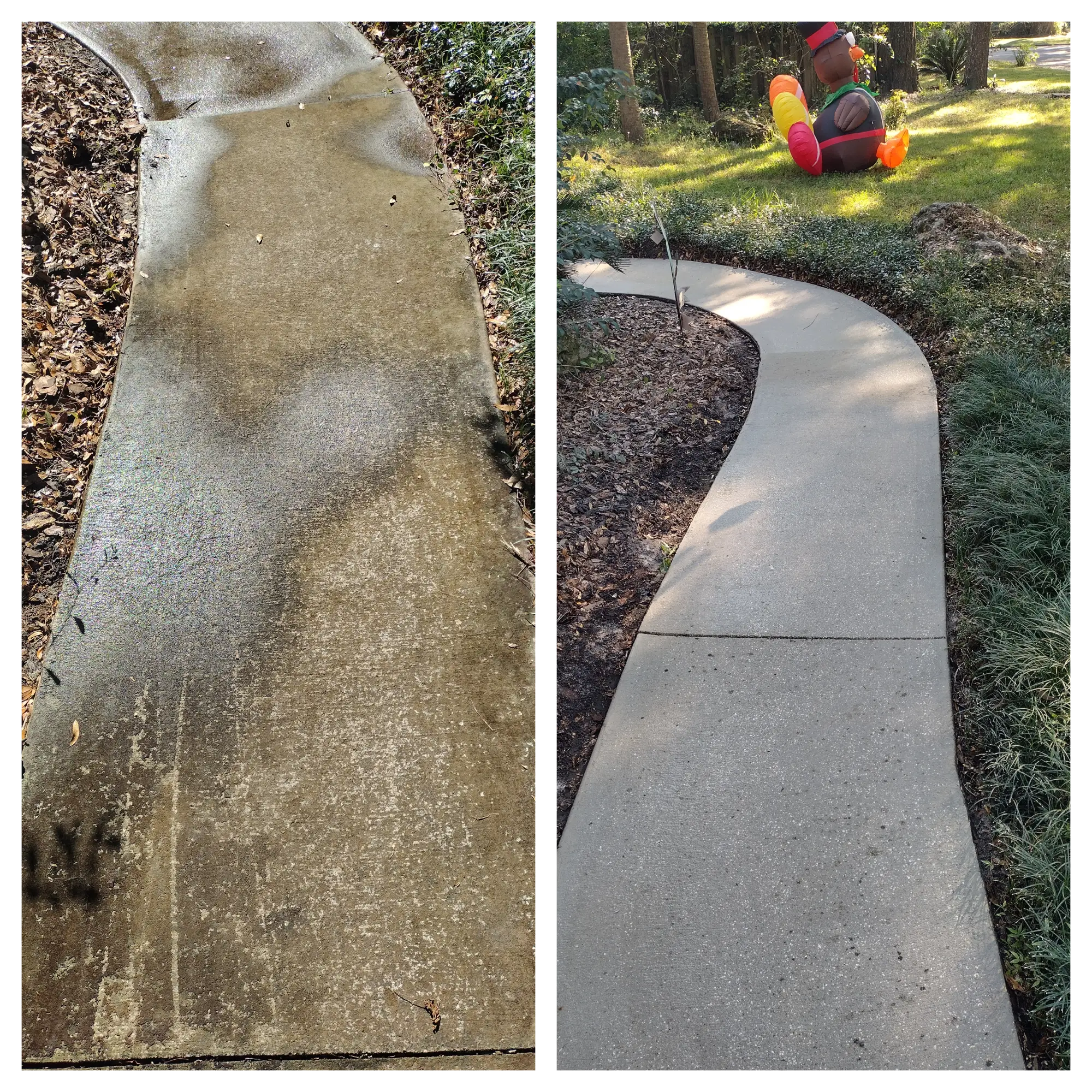
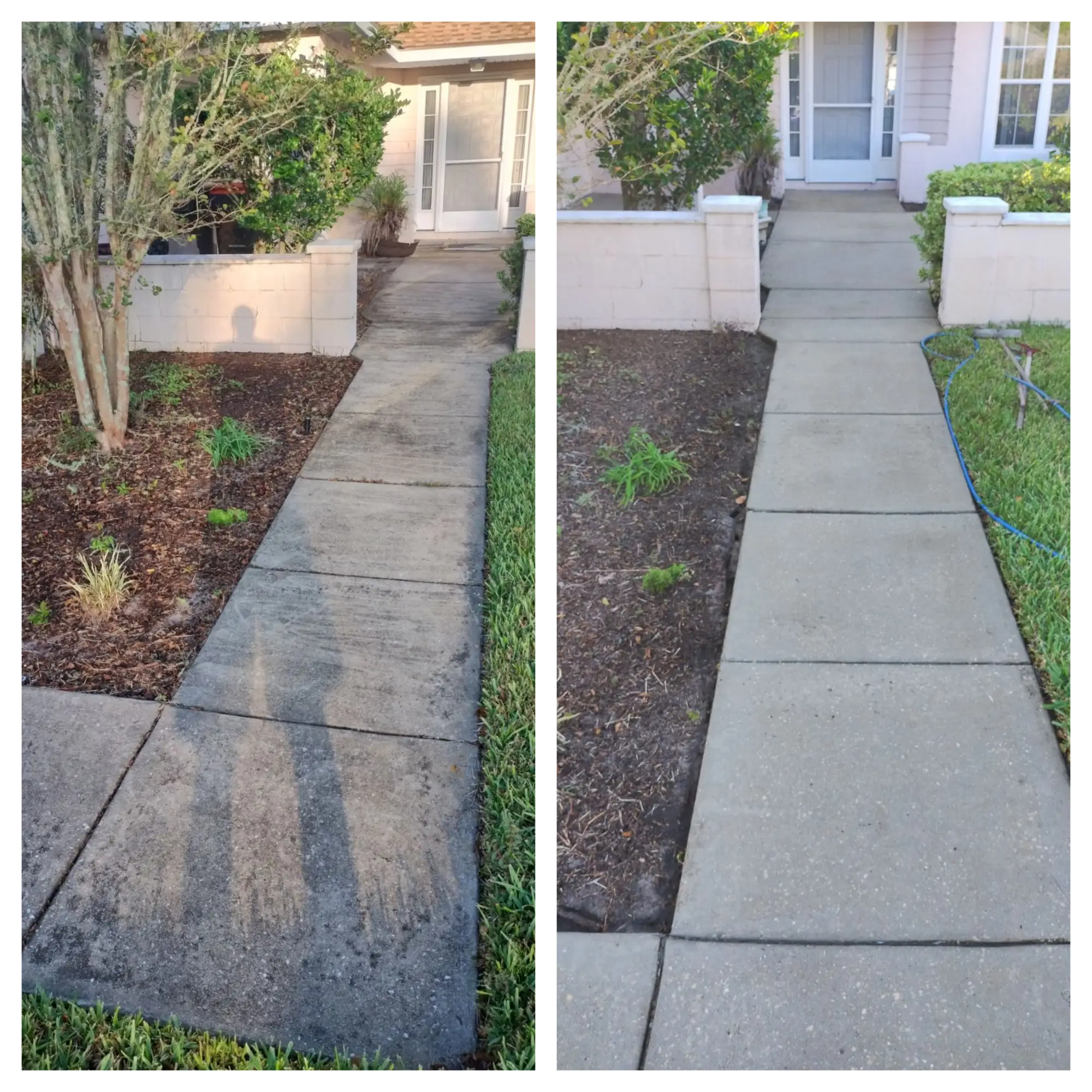
Community walking paths and sidewalks are used daily by residents. Biological growth in the expansion joints and on the concrete field creates slip hazards, particularly in the shaded sections typical of canopy-covered walking paths. Florida humidity and organic material from tree canopy accelerate growth on path surfaces significantly faster than on sun-exposed open concrete. Safe, clean walking paths are both a resident amenity quality indicator and a community liability concern.
Maintenance frequency note: Bi-annual cleaning addresses the primary biological growth cycles. Communities with extensive canopy-covered paths benefit from quarterly cleaning of the shaded sections where growth is most rapid and slip hazard most significant.
Parking Areas at Community Facilities
Parking lots at clubhouses, recreation centers, and community amenity areas accumulate the same biological growth, oil contamination, and surface darkening as any commercial parking lot. The difference in the HOA context is that the parking lot condition is evaluated by residents on every amenity visit. A clean, well-striped amenity parking area communicates the same maintenance standard as the building it serves.
Maintenance frequency note: Annual minimum for low-traffic community facility lots. Bi-annual for high-use facilities. See dedicated Parking Lot Cleaning page for full commercial lot service detail.
Pickleball Courts, Tennis Courts, and Sport Surfaces
Community sport courts accumulate biological growth on the playing surface from Florida humidity and overhead tree canopy, particularly at the court perimeter where shade is most significant. Green algae on a pickleball or tennis court surface is both a slip hazard during play and a visible maintenance failure for a community that has invested in sport amenities. Court surfaces require cleaning chemistry and pressure calibrated to avoid damage to the court surface coating.
Maintenance frequency note: Annual cleaning at minimum. Communities with courts under significant canopy or with high year-round use benefit from bi-annual cleaning to keep playing surfaces safe and visually maintained.
Community Fencing and Perimeter Walls
Perimeter fencing and walls define the community boundary and are visible from public roads. Vinyl fencing accumulates oxidation and biological growth. Masonry or concrete block perimeter walls accumulate biological growth, staining, and general weathering. Well-maintained perimeter fencing communicates community quality to every passing vehicle. Neglected fencing with heavy biological growth reads as a management failure from the road.
Maintenance frequency note: Bi-annual cleaning of perimeter fencing keeps the community boundary at a consistent maintained appearance. Vinyl fencing with oxidation accumulation may benefit from annual cleaning in Florida UV conditions.
Mailbox Kiosks, Bulletin Boards, and Community Structures
Smaller community structures — mailbox kiosks, community bulletin board enclosures, gazebos, shade structures, and decorative landscape features — accumulate biological growth and weathering contamination at the same rate as larger structures but are often overlooked in maintenance planning. These structures are part of the daily resident experience and their condition contributes to the overall community maintenance impression.
Maintenance frequency note: Annual cleaning as part of a comprehensive community maintenance visit. These structures are efficiently cleaned in combination with adjacent primary surfaces rather than as standalone service visits.
What Every HOA Board Member Needs From an Exterior Cleaning Partner.
An HOA board member searching for an exterior cleaning vendor is not making a personal purchasing decision. They are making a fiduciary decision on behalf of every homeowner in the association. The criteria are different from a homeowner choosing a service for their own property. Four things determine whether an exterior cleaning vendor works for an HOA board.
1
Reliability: Shows Up on the Scheduled Date, Every Time
Why board members care: An HOA board commits to a maintenance schedule in front of residents and in the community budget. When a vendor fails to appear on the scheduled date, the board explains it to residents, reschedules around community events, and manages the disruption. Vendor no-shows and chronic rescheduling are the most common reason HOA boards change exterior cleaning vendors. How we address it: We commit to a schedule and keep it. If a weather-related reschedule is necessary, we notify the community manager in advance and provide the next available date immediately. The board should be able to put the exterior maintenance schedule on the calendar and move on to other business.
2
Documentation: Service Records for Board Reports and Annual Reviews
Why board members care: HOA boards are legally accountable for how community funds are spent. Board members document maintenance activities for annual reports, resident meetings, and in some cases for covenant enforcement records. A vendor who provides no service documentation forces the board to self-document, which costs volunteer time and creates record-keeping gaps. How we address it: Every HOA service visit generates a service completion report including date, community name, surfaces covered, and treatment applied. These records are provided to the community manager after each visit and are formatted for inclusion in board records or annual maintenance reports. The documentation is standard with every program, not an add-on.
3
Insurance and Vendor Compliance: COI on Request, No Delays
Why board members care: Most HOA boards and community associations require vendors to maintain specific insurance minimums and provide a certificate of insurance naming the HOA as an additional insured or certificate holder. Some communities have formal vendor approval processes. An exterior cleaning vendor who cannot produce documentation quickly or who carries insufficient coverage creates liability exposure for the board. How we address it: We carry full liability and commercial insurance appropriate for HOA and community association work. Certificate of insurance is available on request and can typically be provided within one business day. If your community has a formal vendor approval process with specific insurance requirements, share the requirements when requesting a proposal and we will confirm compliance before beginning any work.
4
Resident Satisfaction: Work That Generates Positive Response, Not Complaints
Why board members care: HOA board members hear from residents when something goes wrong. A cleaning vendor who damages landscaping, blocks access at the wrong time, leaves equipment in common areas, or produces visible results that fall short of the community standard generates resident complaints that the board manages. Exterior cleaning that generates positive resident comments -- the pool deck looks great, the entrance monument is finally clean -- is the standard the board is paying for. How we address it: We schedule community cleaning visits around the access constraints, resident traffic patterns, and community event calendars that the board provides. We protect landscaping and amenity plantings during every visit. We produce visible results that residents notice and comment on positively. The goal is cleaning that the board hears about from residents as a compliment, not as a complaint.
Serving Community Associations Throughout All Four Counties.
The four-county service area includes some of the largest and most active community associations in Central Florida, from the master-planned retirement communities of Sumter County to the waterfront Nature Coast communities of Citrus and Levy Counties. Each community has its own appearance standards, vendor requirements, and maintenance priorities. We understand the local community landscape and bring that knowledge to every HOA relationship.
Marion County: Ocala Active Adult and HOA Communities
Marion County is home to On Top of the World (OTOTW) — one of the largest active adult communities in the Ocala area — as well as Ocala Palms, Oak Run, Cherrywood Estates, Silver Springs Shores, and numerous neighborhood HOA communities throughout the Ocala metro area. Communities in Marion County deal with significant biological growth from the combination of Florida oak canopy and the wet season humidity cycle.
Common Marion County HOA cleaning needs: clubhouse exterior, walking path biological growth, entrance monument staining, community pool deck preparation.
Sumter County: The Villages and Surrounding Communities
Sumter County is the primary county of The Villages, the largest master-planned retirement community in the United States. The Villages is governed by multiple Community Development Districts (CDDs) that manage extensive common area infrastructure including clubhouses, recreation centers, town squares, and miles of community pathways. Spruce Creek communities and newer developments like Del Webb Latitude Margaritaville in Wildwood are also within the service area.
Common Sumter County HOA cleaning needs: large-scale common area surfaces across CDD-managed properties, community pathway cleaning, amenity center exteriors, entrance monument maintenance.
Citrus County: Nature Coast Communities and Pine Ridge
Citrus County’s waterfront and Nature Coast proximity creates accelerated biological growth conditions for all exterior surfaces. Pine Ridge Estates, Sugarmill Woods, Stone Island, and the Crystal River area communities all experience faster biological growth rates from the coastal humidity and salt-influenced air near tidal zones. HOA boards in Citrus County often find that cleaning intervals need to be shorter than inland communities due to these conditions.
Common Citrus County HOA cleaning needs: waterfront-adjacent community surfaces with accelerated growth, clubhouse exterior in high-humidity environments, community dock and boat ramp surrounds where applicable.
Levy County: Nature Coast and Rural Communities
Levy County communities along the Chiefland corridor, Cedar Key area, and the Withlacoochee River communities have significant exterior cleaning needs driven by the dense oak and cypress canopy that covers most of the county. Shaded community surfaces under heavy canopy accumulate biological growth significantly faster than sun-exposed properties. Levy County HOA cleaning often involves heavy biological growth remediation rather than routine maintenance.
Common Levy County HOA cleaning needs: heavy biological growth on shaded community surfaces, rural community entrance maintenance, manufactured home community common areas.
Recurring Maintenance Programs Built for HOA Budget Cycles.
HOA boards plan exterior maintenance budgets annually and need vendors who can provide written scope and pricing for the planning process. A recurring program with predictable annual cost is easier to budget and justify to residents than a series of individual service calls at varying prices. Starr’s and Stripes offers HOA maintenance programs at three program levels covering the range of community scales and cleaning scope in the four-county area.
All programs include service documentation after each visit, COI on request, and scheduling coordination with the community manager or board representative. Program pricing is provided as an annual cost estimate in writing for budget planning purposes.
Comprehensive Community Program
Best for: Large community associations with multiple common area buildings, extensive walking paths, community pool, sport courts, and a high resident visibility standard for exterior appearance. On Top of the World, The Villages CDDs, Pine Ridge Estates, and comparable scale communities.
Covers: Clubhouse and amenity center exterior, pool deck and enclosure, all walking paths and sidewalks, entrance monuments and perimeter walls, sport courts, parking areas, mailbox kiosks and community structures. Full common area surface coverage.
Frequency: Quarterly visits for all primary surfaces. Monthly or bi-monthly for high-use pool deck and entrance monument during peak season.
Board benefit: Removes exterior maintenance from the board agenda entirely. Every common area surface maintained at standard year-round. Documentation record for every visit. Predictable annual cost for budget planning.
Core Common Area Program
Best for: Mid-size community associations with a clubhouse, community pool, and primary common areas but without extensive sport court or walking path infrastructure. Neighborhood HOAs with a community entrance, shared amenity area, and parking lot.
Covers: Clubhouse and amenity building exterior, pool deck cleaning, community entrance and monument, primary parking area. Core high-visibility surfaces covered on a consistent schedule.
Frequency: Bi-annual visits covering full scope. Optional quarterly upgrade for pool deck and entrance monument.
Board benefit: High-visibility surfaces maintained at standard with minimal board management required. Cost-effective program for communities with focused common area infrastructure.
Entrance and Amenity Spot Program
Best for: Smaller neighborhood HOAs, condominium associations, or communities with limited common area infrastructure where the primary cleaning need is the entrance monument, a small community amenity area, and the building face of a shared facility.
Covers: Community entrance monument and walls, shared facility building exterior, common area walkways adjacent to the facility. Targeted scope for smaller community infrastructure.
Frequency: Bi-annual visits. Single-visit option for initial baseline cleaning.
Board benefit: Keeps the most resident-visible community surfaces at standard with an affordable program appropriate for small-budget HOA situations.
ANNUAL BUDGET PLANNING SUPPORT
We provide written scope and annual program pricing for HOA boards preparing maintenance budgets. If your board needs a line-item estimate for the upcoming budget year, contact us with the community name, approximate common area surface list, and the budget cycle timing. We will provide a written program proposal in the format your board requires.
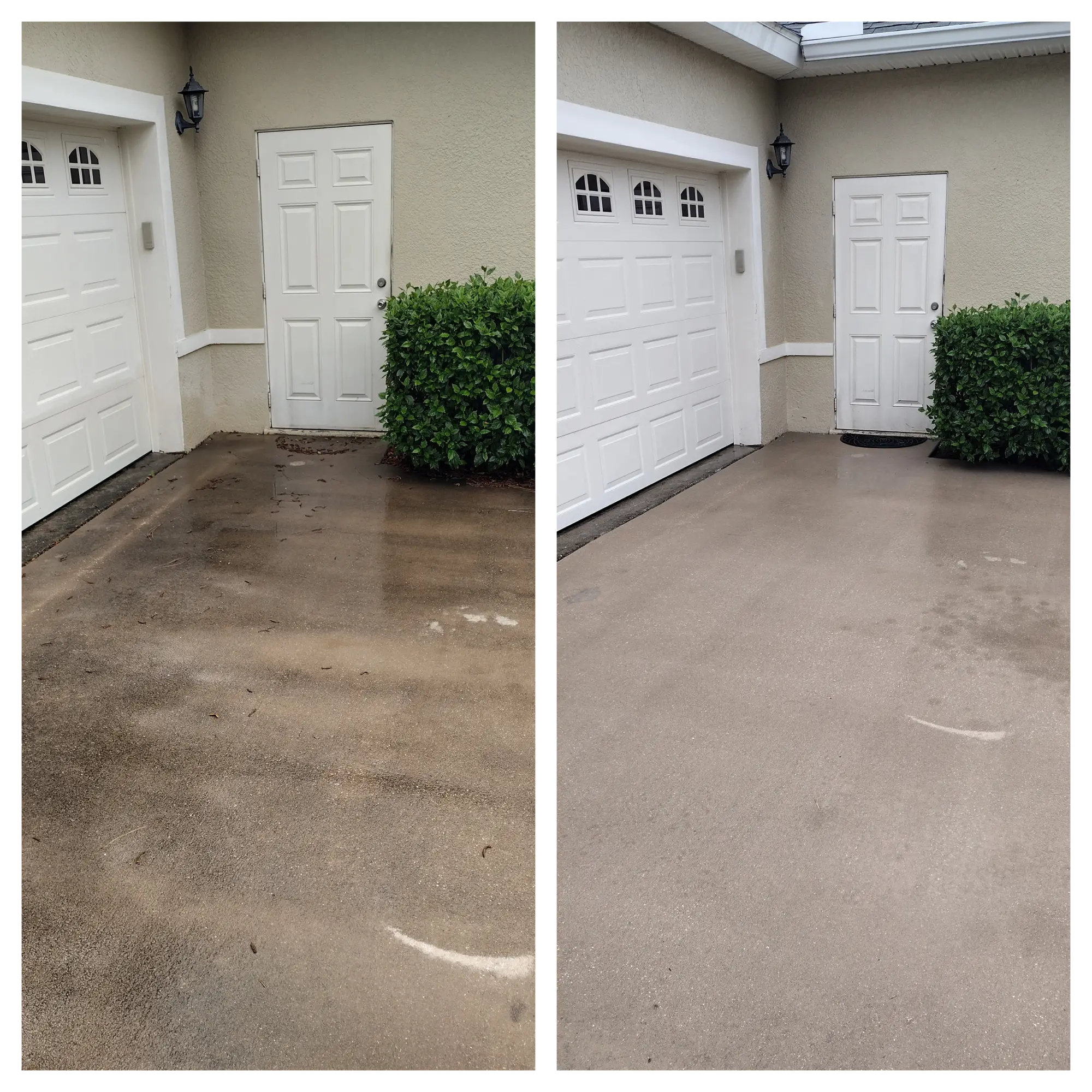
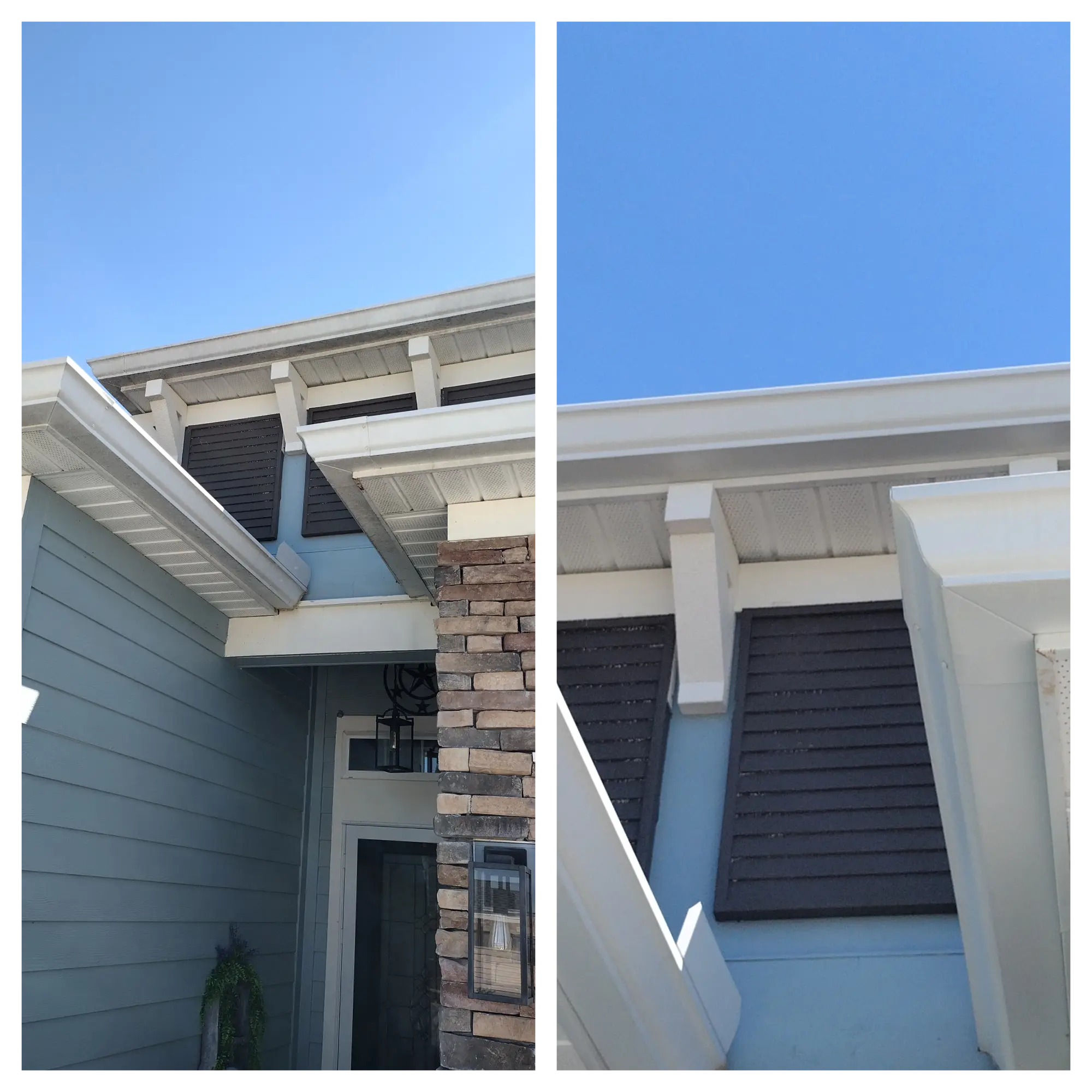
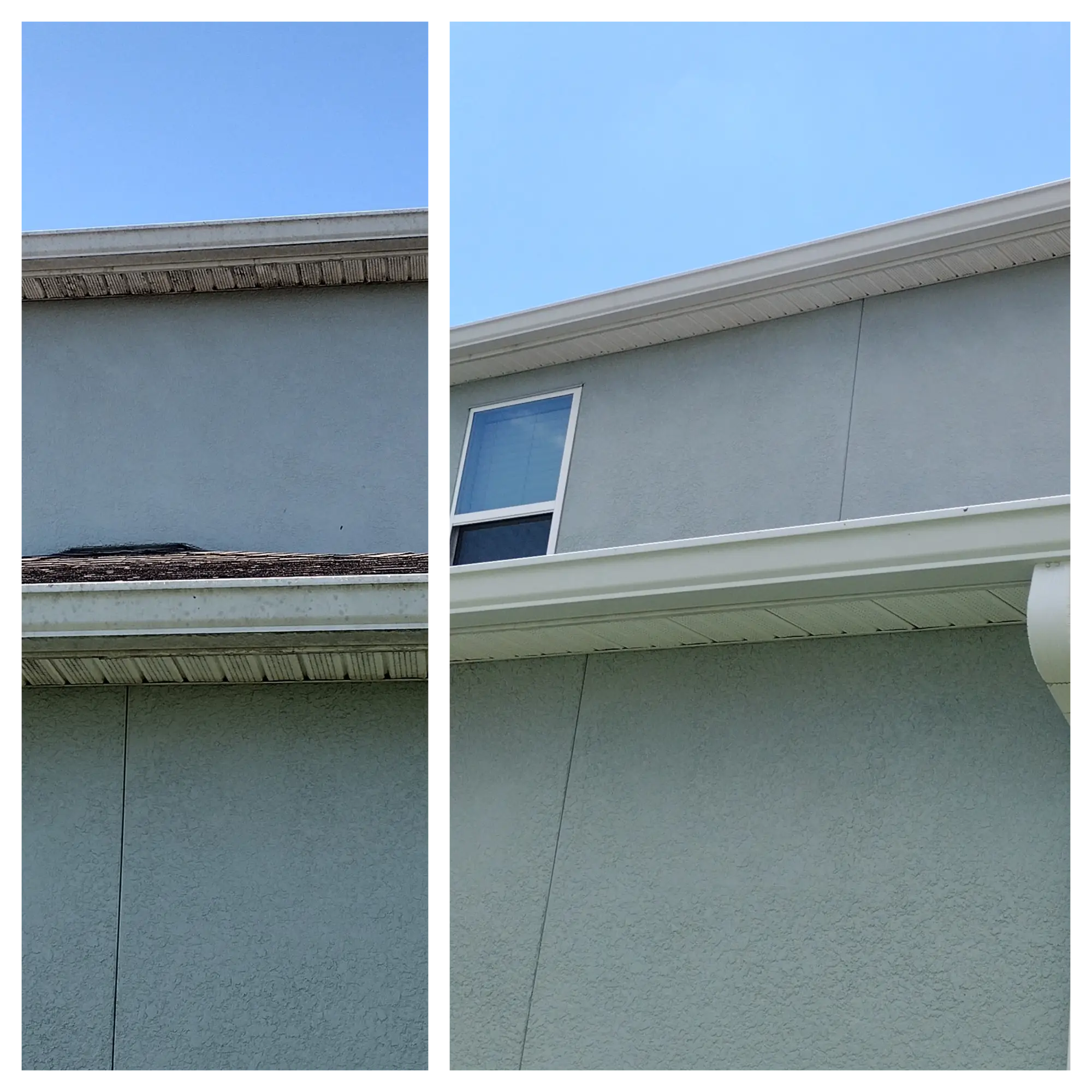
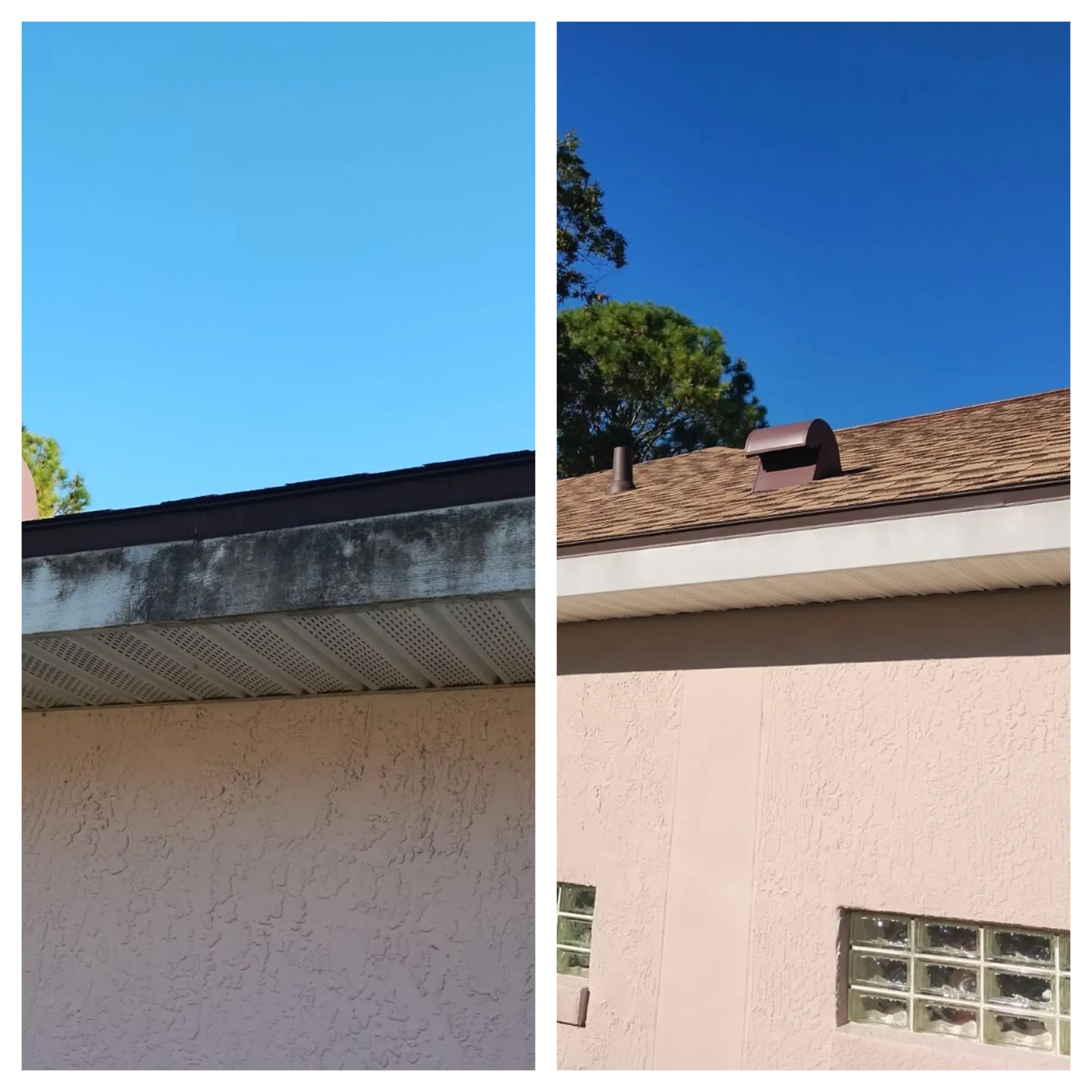
5-Star Rated on Google & Yelp
Trusted by Homeowners Across Marion, Citrus, Levy & Sumter Counties
Posted on Google
 Brandon Fairley
Trustindex verifies that the original source of the review is Google.
Randy and his team are true pros when it comes to power washing. They take the time to do the job right and treat your property with care. Highly recommend!Posted on Google Chad FilleyDoes and great job, extremely thorough job on a drive way and house.Posted on Google
 Gary StrikerStars and Stripes Power Washing does incredible work. Randy and his crew did an outstanding job on my horse trailer. It looks brand new. He is professional, shows up on time, paid attention to the details, and left everything clean when he finished. I’m a realtor, and I recommend Randy and Stars and Stripes Power Washing to all of my clients who need power washing. Reliable, high quality work every time..Posted on Google
 Gus BlancoWe own Complete Dryer Vent Services LLC and were really impressed with the work these guys performed. I can't believe how dirty my vinyl fence was. A week later and it's still glowing white! Got a good education on how lichen can cause staining and damage protective coating on vinyl fence. These guys know their stuff. They even washed our work trailer! Highly recommend Starr's and Stripes.Posted on Google
 Michael FetchRandy and Mathew from Starr's and Stripes Power Wash did an excellent job on our full house wash. Communication was clear and easy from start to finish, and they took the time to protect the plants and landscaping around the house. Our roof shingles had streaks all over them and now they are completely gone — the roof and house both look amazing. Honestly looks like a brand new home again. I would absolutely recommend them to anyone looking for pressure washing done right.Posted on Google
 Crystal LyonsReally great people! Prompt, courteous and professional while still being personable. Highly recommend!!! Edited to add that we are now repeat customers and our rating hasn't changed a bit! Same promptness, courtesy and professionalism!Posted on Google
 Kevin MckenzieRandy was very professional, friendly and thorough. I would highly recommend Starr's & Stripes Powerwash to anyone needing their home, roof or driveway cleaned.Posted on Google
 Angela NortonStarr's & Stripes PowerWash exceeded my expectations! Randy's team transformed my property, leaving everything spotless and looking brand new. Their attention to detail and dedication to quality are impressive. If you need reliable and thorough exterior cleaning, look no further—these guys are the best in the business!Posted on Google
 Mary RossiAbsolutely the nicest people to deal with and a great job.Posted on Google
 Jeannine PlummerI am a local Realtor, and I love that I can trust Starrs & Stripes to do a great job and with such professionalism that my clients reach out singing their praises after they leave. I highly recommend using this company for all of your power washing needs!
FAQs
Questions About HOA Community Cleaning in Ocala
Does exterior cleaning actually affect property values in an HOA community?
Yes, and the relationship is well-documented in residential real estate research. Community appearance is one of the primary factors prospective buyers evaluate when comparing HOA communities. Entrance monuments, clubhouse exteriors, pool area condition, and the general appearance of common area surfaces all factor into the impression a community makes during a buyer tour. Communities with consistently maintained common areas command higher resale prices and shorter days-on-market than comparable communities where maintenance is visible but inconsistent. For current residents, common area appearance is a leading driver of HOA satisfaction survey scores — which affects board elections, fee compliance, and the general social health of the association. A maintenance program that keeps common areas visually maintained is an investment in every homeowner’s property value, not just an operating expense.
Do you provide a certificate of insurance for HOA vendor approval?
Yes. We carry full liability and commercial insurance appropriate for HOA and community association work and can provide a certificate of insurance on request. Most HOA vendor approval processes require COI documentation naming the HOA as a certificate holder. We can typically provide COI documentation within one business day of the request. If your community has specific insurance minimums or additional insured requirements, share those requirements when requesting a proposal and we will confirm our coverage meets the standard before any work begins.
Do you provide service documentation for board records?
Yes. Every HOA program visit generates a service completion report that includes the date of service, the community name, all surfaces cleaned, treatment chemistry applied, and any conditions observed. This documentation is formatted for inclusion in board minutes, annual maintenance reports, or vendor payment records. The service report is provided to the community manager or board representative after each visit as a standard program component, not as an add-on service.
Can you work around community access rules and resident schedules?
Yes. HOA communities often have specific constraints on contractor access hours, noise restrictions, and traffic patterns through residential areas. We coordinate with the community manager before each visit to understand access gate procedures, parking area availability, hours of permitted contractor operation, and any community events that affect scheduling. For communities with resident-dense areas adjacent to common area cleaning zones, we schedule visits for lower-traffic times and notify the community manager so residents can be informed in advance if needed.
What common area surfaces do you clean for HOA communities?
We clean the full range of HOA common area surfaces: clubhouse and amenity center exteriors, community pool decks and enclosures, walking paths and sidewalks throughout the community, entrance monuments and perimeter walls, parking areas at community facilities, pickleball and tennis courts, community fencing, mailbox kiosks, gazebos and shade structures, and any other exterior surface that is part of the common area maintenance responsibility. We provide a written scope for each program that lists the specific surfaces included so the board has a clear record of what is covered.
Can you provide annual program pricing for HOA budget planning?
Yes. We provide written annual program proposals for HOA boards preparing maintenance budgets. The proposal includes the full surface scope, the cleaning frequency schedule, and the annual cost in a format appropriate for board review and approval. If your board has a specific proposal format required by the community’s governing documents or management company, let us know and we will structure our proposal accordingly. We can also provide per-visit pricing breakdowns for boards that prefer to approve individual visits rather than annual programs.
How much does HOA community cleaning cost in Ocala?
HOA community cleaning program pricing depends on the size of the community, the number and type of common area surfaces included, and the cleaning frequency. A small neighborhood HOA entrance and amenity area program typically ranges from 00 to ,500 per year depending on scope. Mid-size community programs covering a clubhouse, pool deck, walking paths, and entrance monuments range from ,000 to ,000 annually. Large community association programs covering extensive common area infrastructure are priced after an on-site property assessment. Starr’s and Stripes provides written annual program proposals at no charge for HOA boards. Call or text (352) 230-9299 to schedule a community assessment.