SOFT WASH ROOF CLEANING | OCALA, MARION, CITRUS, LEVY AND SUMTER COUNTIES | SHINGLE AND TILE SAFE
Eliminate Black Streaks and Protect Your Roof for Years.Safe Soft Wash Cleaning.
Those dark streaks are living bacteria eating your shingles and absorbing Florida's heat into your home. One professional soft wash treatment kills them at the root level and keeps your roof clean for years without voiding your warranty.
- Warranty-Safe Soft Wash Process
- No Damaging High Pressure
- Plant-Safe Chemistry
- Licensed and Insured
- HOA-Compliant Results
- All Roof Types Accepted
Stop Roof Streaks Before They Cause Damage
GET A FREE ROOF CLEANING ESTIMATE: (352) 230-9299
What Is Actually Living on Your Roof.
The black streaks on Central Florida roofs are not dirt, not mold, and not a sign that your roof is failing. They are a specific species of cyanobacteria called Gloeocapsa magma that has spread to more than 80 percent of homes in the southeastern United States. Ocala and the surrounding four-county area are deep inside what roofing industry researchers call the algae danger zone: the hot, humid southeastern climate where this organism thrives year-round.
Gloeocapsa magma has a survival mechanism that makes it look worse over time. The bacteria form a dark, hardened outer sheath to protect their cells from UV radiation. As colonies grow and cells die, this dark material accumulates on the shingle surface. The streaks start small and grow downward with gravity, spreading across the entire roof over months and seasons. By the time homeowners notice them, the colony has usually been established for a year or more.
Algae is not the only organism that uses a neglected roof. Once Gloeocapsa magma establishes itself, it creates conditions that invite moss and lichen. Moss holds moisture against the shingle surface and eventually lifts shingle edges, exposing the roof deck to wind and rain. Lichen forms a symbiotic relationship with algae and physically anchors into shingle granules, tearing them loose when the lichen is removed or dies. All three organisms are eliminated in a single professional soft wash treatment.
ORGANISM IDENTIFICATION GUIDE
What You Are Seeing on Your Roof
Gloeocapsa Magma (Cyanobacteria)
Looks like: Black or dark brown streaks running down the roof slope, starting on the north-facing and shaded sections first What it does: Feeds on limestone filler in asphalt shingles, causing granule loss. Dark pigment absorbs solar heat, increasing attic temperature and cooling costs. Spreads by wind from roof to roof throughout a neighborhood.
Moss
Looks like: Green, thick, cushion-like growth, usually on the north side and in shaded valleys What it does: Holds moisture against the shingle surface, creating freeze-thaw expansion damage and accelerating material degradation. Lifts shingle edges over time, exposing fasteners and roof deck.
Lichen
Looks like: Greenish-white or gray circular patches that look like paint marks or chemical stains What it does: Physically bonds to shingle granules with root-like structures. Tearing lichen loose pulls granules with it. The most damaging of the three organisms when removal is delayed too long.
THE ENERGY COST CONNECTION
Why a Dark Roof Costs More to Live Under.
Asphalt shingles are engineered with granule color and reflectivity specifications designed to manage how much solar energy a roof absorbs and how much it reflects. The dark pigmentation of Gloeocapsa magma staining overrides those specifications. A heavily stained roof absorbs significantly more solar heat than a clean roof of the same color. That heat transfers into the attic, raising the temperature in the living space below and forcing the air conditioning system to work harder during Florida’s long hot season.
Restoring a stained roof to its original color and reflectivity reduces attic heat gain and allows the home to cool more efficiently. For Ocala homeowners running central air eight or more months of the year, the energy benefit of a clean roof adds up meaningfully over time, in addition to the structural benefit of preserving the shingles.
Why Pressure Washing a Roof Is the Wrong Answer.
Pressure washing at 2,000 to 4,000 PSI is the correct tool for concrete driveways, sidewalks, and pool decks. It is one of the worst things you can do to an asphalt shingle roof.
The protective surface of an asphalt shingle is a layer of ceramic granules embedded in the asphalt mat. Those granules are your roof’s primary defense against UV radiation, impact damage, and weathering. Pressure washing at force blasts those granules loose at scale. The granules wash into the gutters. The bare asphalt mat left behind is exposed to direct UV, becomes brittle, cracks, and begins failing years ahead of the roof’s rated lifespan.
Most asphalt shingle manufacturers, including GAF, CertainTeed, and Owens Corning, explicitly state in their warranty documentation that high-pressure washing voids the product warranty. If you pressure wash your roof and then need to file a warranty claim for granule loss or premature shingle failure, the manufacturer will deny it.
High pressure also does not solve the biological problem. Blasting water at Gloeocapsa magma strips the visible dark cells but does not kill the bacteria. The root-like structures remain in the shingle pores, and the organism regrows within a season. The soft wash approach applies chemistry that kills the bacteria at the cellular level. The results last significantly longer because the organism is dead, not displaced.
Why a Dark Roof Costs More to Live Under.
- Sodium hypochlorite-based solution at professional-grade dilution, applied at low pressure
- Biodegradable surfactants that emulsify and lift biological matter from the shingle surface
- Application pressure under 100 PSI at the nozzle, comparable to a strong garden hose
- Dwell time on the surface, allowing the chemistry to penetrate and neutralize the biology
- Fresh water rinse to flush dissolved material away without pressure contact on shingles
- ARMA-approved methodology: the Asphalt Roofing Manufacturers Association endorses the chemical low-pressure approach as the industry standard for roof cleaning
Every Roof Type in Ocala's Four Counties. All Safe.
Asphalt Shingle
The most common roof type in Marion, Citrus, Levy, and Sumter County residential properties. Soft washing is the manufacturer-recommended cleaning method for asphalt shingles and preserves the granule surface that high pressure destroys. Works on 3-tab, architectural, and dimensional shingle profiles.
Safe method: Low-pressure sodium hypochlorite solution, dwell, fresh water rinse. No pressure contact with shingle surface.
Tile (Terracotta and Concrete)
Common in The Villages, On Top of The World, and newer construction throughout the four-county area. Tile roofs develop the same algae, moss, and lichen growth as shingle roofs in Florida’s climate. Soft washing cleans tile and grout lines without the risk of cracking tiles or dislodging mortar that pressure washing causes.
Safe method: Low-pressure solution application safe for both terracotta and concrete tile. Grout lines are treated without erosion.
Metal Roofing
Standing seam and corrugated metal roofs are increasingly common in Central Florida and are found on many older Ocala-area homes and commercial properties. Metal roofs develop oxidation, algae, and biological growth in the Florida climate. Soft washing removes biological staining without abrasive pressure contact that could compromise protective coatings.
Safe method: Low-pressure biodegradable solution safe for coated and bare metal roofing. No abrasive pressure that could damage surface coatings.
Flat and Low-Slope Roofing
Common on commercial buildings throughout Marion County and on some residential additions. Flat roofs pool water and develop biological growth faster than pitched roofs. Soft washing treatment clears biological growth from membrane surfaces without the water infiltration risk that pressure washing creates at seams.
Safe method: Low-pressure application appropriate for membrane and modified bitumen flat roof surfaces. No pressure at seams or transitions.
What Happens the Day of Your Roof Cleaning.
1
Property Walk and Roof Assessment
Before any equipment is set up, the crew walks the property and assesses the roof from ground level and from a ladder. The crew identifies the type of roof covering, the degree of biological growth and staining, any areas of existing damage or sensitivity, and the best access approach. All surrounding landscaping is noted for the plant-safe protocol. A specific chemical dilution is selected based on what the assessment finds.
2
Landscaping Pre-Wet and Property Protection
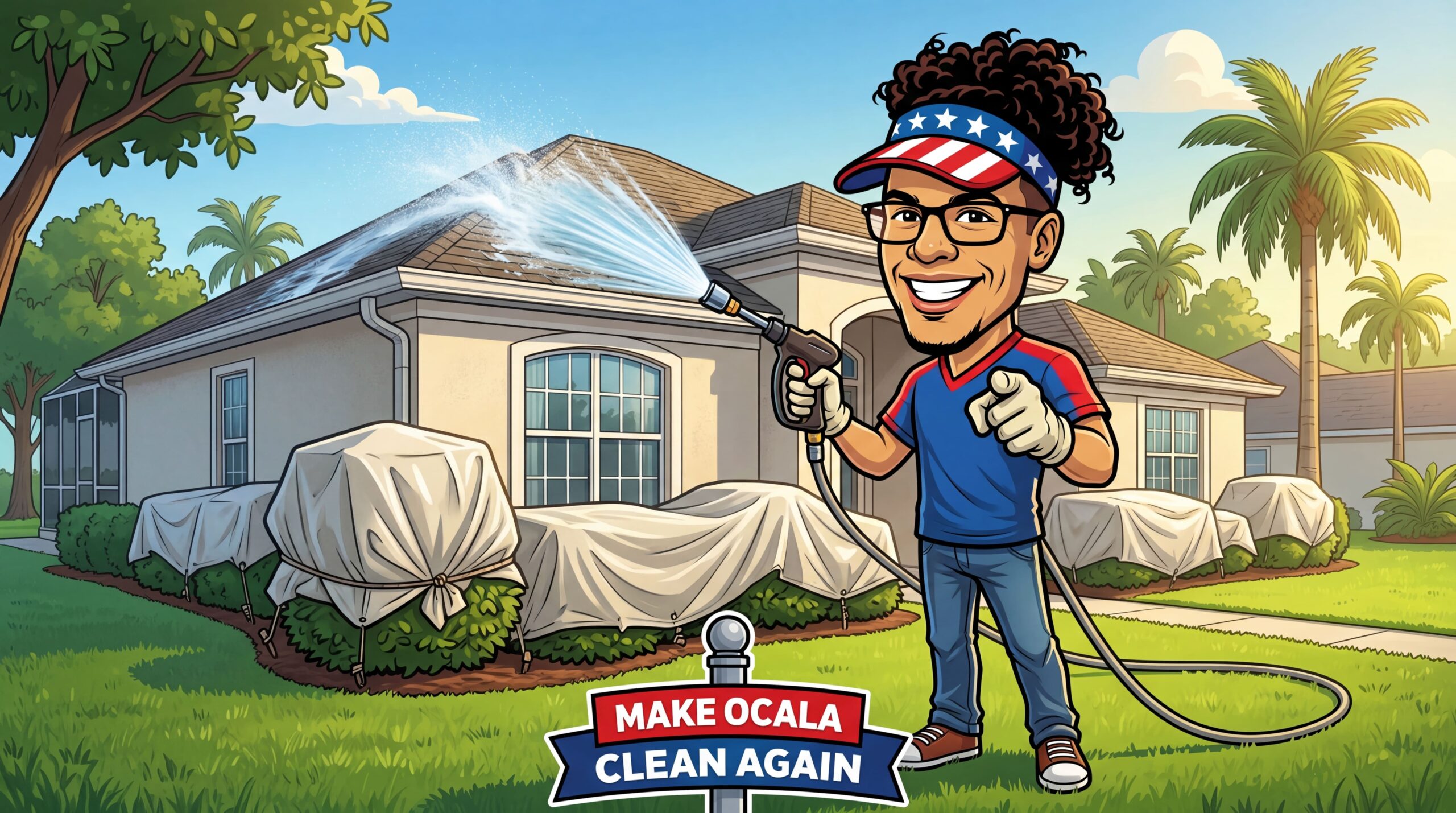
All plants, shrubs, beds, and landscaping within the runoff zone receive a thorough fresh-water pre-wet. This protects plant tissue from any solution contact during application. Particularly sensitive plantings can be covered on request. In many cases the roof can be treated entirely from ladder position or from the ground using extended equipment, avoiding the need to walk on the roof surface. Where roof access is required, the crew uses soft-soled footwear and avoids shingle edges and granule-bearing surfaces.
3
Soft Wash Solution Application and Dwell
The cleaning solution is applied to the roof surface at low pressure, covering all affected areas including the algae-stained sections, any moss or lichen growth, and the biological growth in shingle valleys and at transitions. The solution dwells on the surface for the time required to penetrate and neutralize the biological growth. The chemistry does the cleaning work during this phase. The roof may appear darker immediately after application as the dead biological material becomes saturated.
4
Gentle Rinse, Post-Flush, and Results Review
After the dwell period, the roof is rinsed with fresh water at low pressure, removing the dissolved biological material from the surface. All surrounding landscaping receives a second fresh-water flush to complete the plant-safe protocol. Results are visible immediately on most roofs, though the full visual transformation of some tile and metal roofs becomes more apparent as the surface dries and the dead biological material flakes away over the following days. The homeowner reviews the results before the crew departs.
The Difference Soft Wash Makes on a Roof.
The dark streaking visible before treatment is Gloeocapsa magma cyanobacteria. In one visit, the soft wash treatment kills the organism at the root level and restores the roof to its original appearance. This result is typical for Ocala-area asphalt shingle roofs.
HOA Letter About Your Roof? We Can Help You Resolve It.
COMMUNITY REFERENCE
- On Top of The World
- Stone Creek by Del Webb
- Ocala Preserve
- Del Webb Spruce Creek
- Candler Hills
- JB Ranch
- Oak Run
- Kingsland Country Estates
- Pine Run
and communities throughout The Villages development in Sumter County. If your community is not listed, call to confirm coverage.
If you live in On Top of The World, Stone Creek, Del Webb Spruce Creek, Ocala Preserve, The Villages, Kings Ridge, or any of the dozens of HOA-governed communities across Marion, Citrus, Levy, and Sumter Counties, you know that roof appearance is often a compliance requirement, not just a preference.
HOA violation notices for dirty roofs, black streaking, or biological growth are among the most common maintenance citations in active adult communities throughout Central Florida. The notice typically gives the homeowner 30 to 90 days to resolve the condition before fines begin.
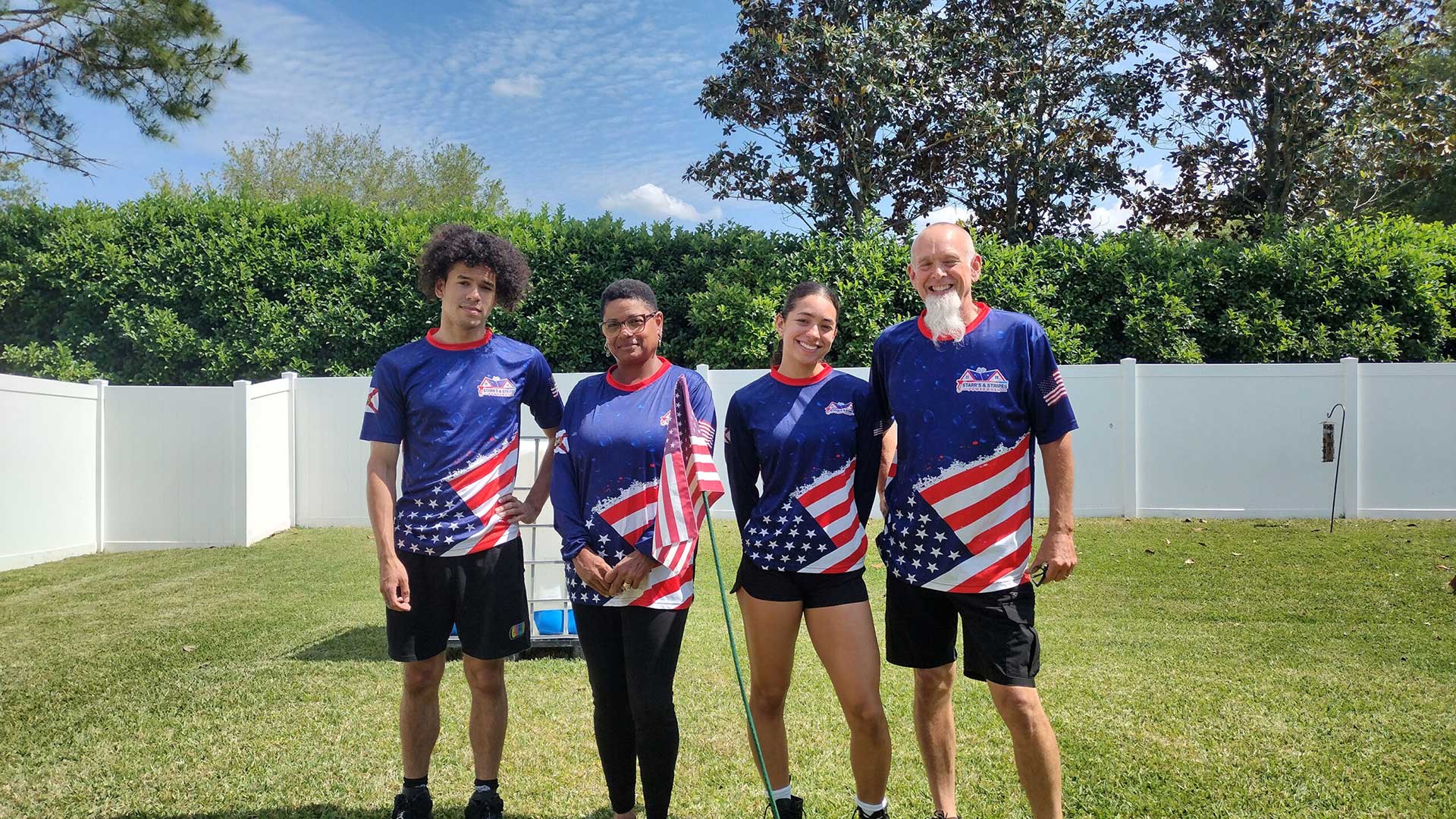
Starr’s & Stripes has cleaned roofs in HOA communities throughout the four-county service area. The soft wash process produces results that pass HOA inspection and satisfy the specific appearance standards these communities maintain. Most jobs are scheduled and completed within the compliance window without difficulty.
If you need documentation for your HOA after the cleaning, the team can provide a written confirmation of the service date, method used, and scope of work completed.
Need HOA Compliance Cleaned Up Fast?Call (352) 230-9299
Why Ocala Homeowners Trust the Team.
Star Rating
Across all verified Google and Yelp reviews
Counties Served
Marion, Citrus, Levy, and Sumter
Warranty Voided
Soft wash method is safe for all major shingle manufacturer warranties
Inspection Ready
Results documented for HOA compliance on request
WHAT OCALA HOMEOWNERS SAY
What Central Florida Homeowners Say About the Results.
“In 15 years of using other powerwash companies this has been the cleanest my driveway and sidewalks has ever been. I highly recommend Randy and Matthew.”
Frank Terracino, Ocala
“They showed up on time, were so careful of my many plants, taped and sealed all my locks, house looks great! I’ll definitely use them again and have already recommended them to a friend!”
Kitty Smallwood, Ocala
FAQs
Questions About Roof Cleaning in Ocala
What causes black streaks on roofs in Ocala, FL?
Black streaks on roofs in Central Florida are caused by Gloeocapsa magma, a species of cyanobacteria that feeds on the limestone filler in asphalt shingles. The bacteria form a dark, UV-protective outer sheath as they grow, and the accumulation of living and dead cells creates the characteristic dark streaking that runs down the roof slope. Ocala sits in what the roofing industry calls the algae danger zone: a hot, humid climate where Gloeocapsa magma thrives year-round. The streaks spread by airborne spores carried by wind, which is why entire neighborhoods often develop the problem simultaneously.
Why should I not pressure wash my roof?
High-pressure washing blasts away the ceramic granules on the surface of asphalt shingles. Those granules are your roof’s primary UV protection and weather defense. Removing them with pressure washing shortens shingle life by years, exposes the underlying asphalt to direct UV degradation, and voids the manufacturer warranty on most major shingle brands. High pressure also does not kill Gloeocapsa magma; it only removes the surface cells and leaves the bacterial root structures behind to regrow within a season. Soft washing uses chemistry to kill the organism at the root level, preserving granules and producing results that last significantly longer.
Is soft washing safe for tile roofs?
Yes. Soft washing is the recommended cleaning method for both terracotta and concrete tile roofs. The low-pressure application does not crack tiles, erode mortar joints, or dislodge the interlocking structure the way high-pressure washing can. Tile roofs in The Villages, On Top of The World, and other Ocala-area communities develop the same algae, moss, and lichen growth as shingle roofs and are effectively treated with the same biodegradable soft wash chemistry.
Do you have to walk on my roof to clean it?
In most cases, no. Starr’s & Stripes uses extended reach equipment that allows the crew to apply the soft wash solution and complete the rinse from ladder position or from the ground. Avoiding foot traffic on the roof reduces the risk of shingle surface compression, cracked tiles, and the accidental loosening of granules that even careful walking can cause. When roof access is necessary for a specific area of the job, the crew uses soft-soled footwear and avoids the granule-bearing shingle surface near edges.
Will the roof cleaning chemicals harm my plants or grass?
No, when applied correctly. The cleaning process includes a thorough fresh-water pre-wet of all landscaping before any solution is applied, careful low-pressure application technique that directs solution onto the roof rather than surrounding beds, and a second complete fresh-water post-flush of all landscaping after the rinse. The solutions used are biodegradable and formulated for use in residential environments. In two-plus years of roof cleaning jobs across four counties, Starr’s & Stripes has not damaged a planting bed, lawn area, or landscape feature as a result of the treatment process.
How long does roof cleaning take?
Most single-story residential roofs are completed in two to four hours from setup through post-flush. Two-story homes and larger roofs may take four to six hours. Commercial roofs and tile roofs with significant moss or lichen growth may require additional time. The estimate provided before the job will include a realistic time window based on your specific roof size and condition.
How often should I have my roof cleaned in Florida?
Most asphalt shingle roofs in Ocala and the surrounding area benefit from professional cleaning every two to three years. Homes with heavy shade coverage, significant oak canopy overhead, or north-facing roof sections that receive limited sunlight may need attention more frequently, as shade accelerates biological growth. Tile roofs under heavy shade may also need more frequent cleaning. HOA communities sometimes specify a cleaning interval in their maintenance requirements, which typically ranges from one to three years.
How much does roof cleaning cost in Ocala, FL?
Roof cleaning in the Ocala area is priced based on the square footage of the roof, the pitch and height of the structure, the roof type (shingle, tile, or metal), and the degree of biological growth. Most single-story homes fall in the range of $250 to $500 for a standard shingle roof treatment. Two-story homes and tile roofs with significant growth are priced proportionally. Starr’s & Stripes provides a free written estimate before any work begins. Call or text (352) 230-9299 for a same-day quote.