PATIO AND PAVER CLEANING IN OCALA AND ALL FOUR COUNTIES FOR CONCRETE, PAVERS, TRAVERTINE | SEALING AVAILABLE
Turn Your Patio Into an Outdoor Paradise Again.
Looking for safe, thorough patio cleaning in Ocala, Florida? Starr's & Stripes Power Wash provides specialized paver, concrete, travertine, and natural stone patio washing across Marion, Sumter, Citrus, and Levy Counties. Owners Randy and Matt Starr eliminate dark mold, slippery green algae, food stains, and weeds without etching delicate stone, washing away essential paver joint sand, or harming surrounding landscaping.
- Serving 4 Counties
- 75+ Communities
- Licensed & Insured
- Certified Power Wash & Soft Wash Pros
- Free Estimates
Your Patio Is a Room. It Should Feel Like One.
When the patio is clean and maintained, it does something that the inside of the house cannot: it makes the property feel larger, more open, and more complete. The outdoor furniture actually gets used. Guests end up outside instead of inside. The homeowner starts the morning outside instead of inside. The patio becomes the room the family gravitates to.
That does not happen when the surface is green and slick underfoot, when the paver joints are packed with biological growth, when the concrete has turned from warm gray to dark mottled green-brown, or when the furniture has to be wiped down before every use because the surface deposits debris on contact. A dirty patio is not just unappealing. It is unusable in any meaningful sense. The furniture stays inside. The outdoor room becomes a storage space. The homeowner stops thinking of the backyard as something they enjoy and starts thinking of it as something they need to deal with eventually.
MOMENTS WORTH GETTING BACK
Morning coffee outside before anyone else is awake, on a patio that is clean and quiet and genuinely pleasant to sit in.
A dinner outside in October when the Florida heat finally breaks and the air is exactly right.
Guests who end up on the patio and stay there because the space pulls them in rather than pushing them out.
The furniture set back out in its spot, on a surface that is bright and clean and ready.
What Florida Does to a Patio, Season by Season.
Central Florida patios face a specific combination of degradation forces that most of the country does not. The summer rainy season delivers consistent moisture that accelerates biological colonization on every horizontal outdoor surface. The year-round warmth means there is no winter dormancy period for algae and mold. The mature oak and pine canopy over most Ocala properties deposits tannins, pollen, and organic debris continuously. And the mineral content of the local water supply leaves calcium and iron deposits on concrete and pavers wherever irrigation overspray contacts them.
The result is a surface that changes character faster than most homeowners expect. A patio installed or last cleaned two years ago can look a decade older than that. The biological film, the organic staining, and the mineral deposits all compound each other. Once the surface is colonized, it holds moisture longer, which accelerates biological growth, which holds more moisture. The cycle is self-reinforcing until professional cleaning breaks it.
Every Patio Surface in Central Florida. Cleaned Right the First Time.
The right cleaning approach depends on the surface material. Too much pressure on travertine fractures the natural stone. The wrong pressure angle on a paver installation strips the polymeric joint sand that holds the paver system together. Professional assessment before cleaning protects the investment the homeowner made in their patio surface.
Concrete and Brick Pavers
Surface notes: The most common premium patio surface in Central Florida residential construction. Pavers provide drainage, visual appeal, and a surface texture that ages well when maintained. The primary cleaning challenges are biological growth in the joints between pavers and efflorescence, the white mineral blooms that form on the paver surface when calcium from the concrete base migrates upward through moisture movement.
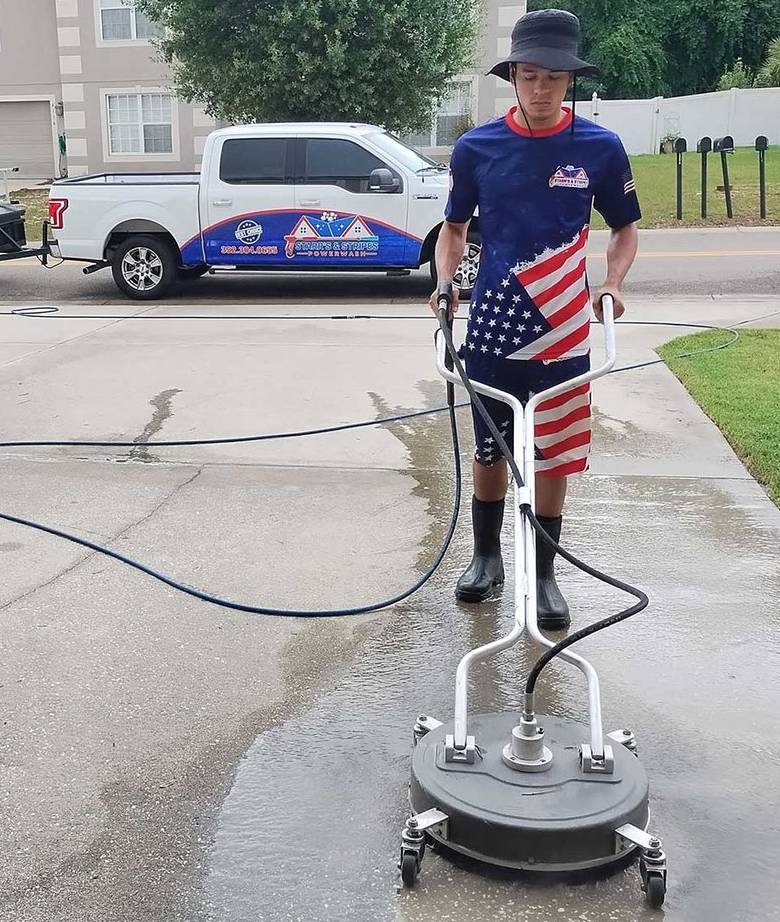
Cleaning method: Commercial surface cleaner on the paver field with targeted joint treatment. Pressure calibrated to preserve polymeric joint sand while fully cleaning the paver face. Efflorescence treated with an appropriate acidic solution before the main cleaning pass. Detail wand on borders and edge pavers.
After cleaning: Paver color restored, joints clean, efflorescence eliminated. Surface is in optimal condition for paver sealing if desired. Sealed pavers resist future biological colonization and staining significantly better than unsealed pavers.
Poured and Brushed Concrete
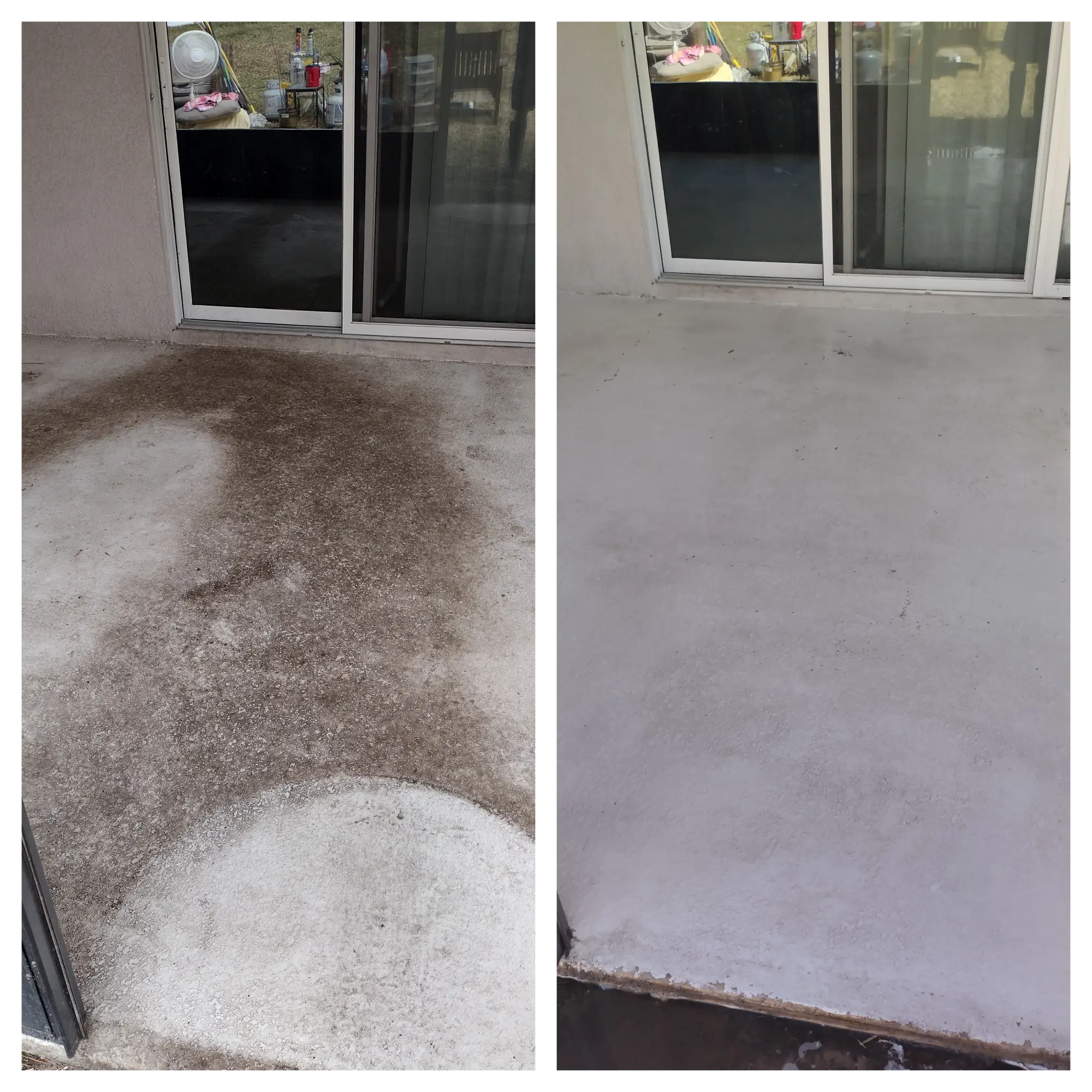
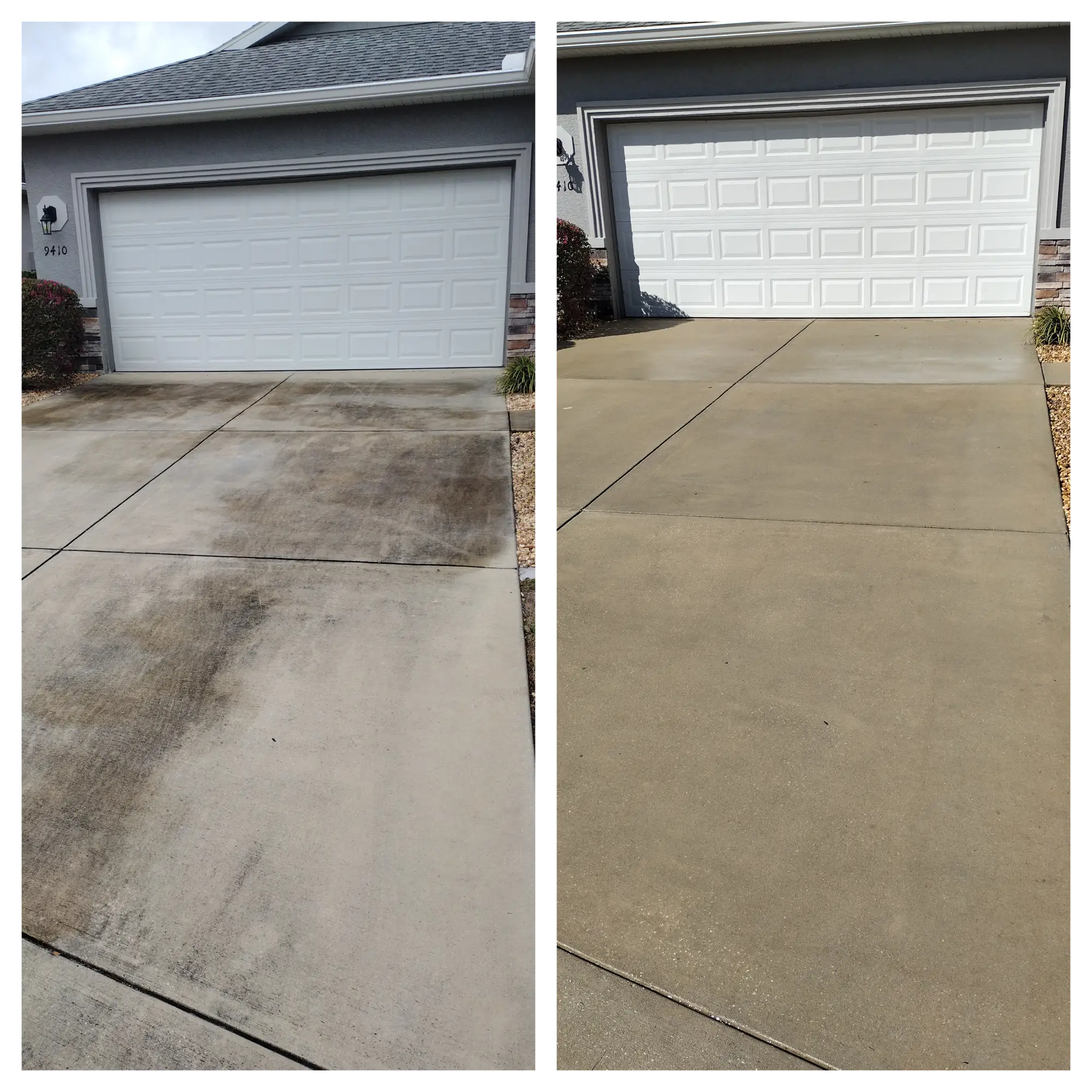
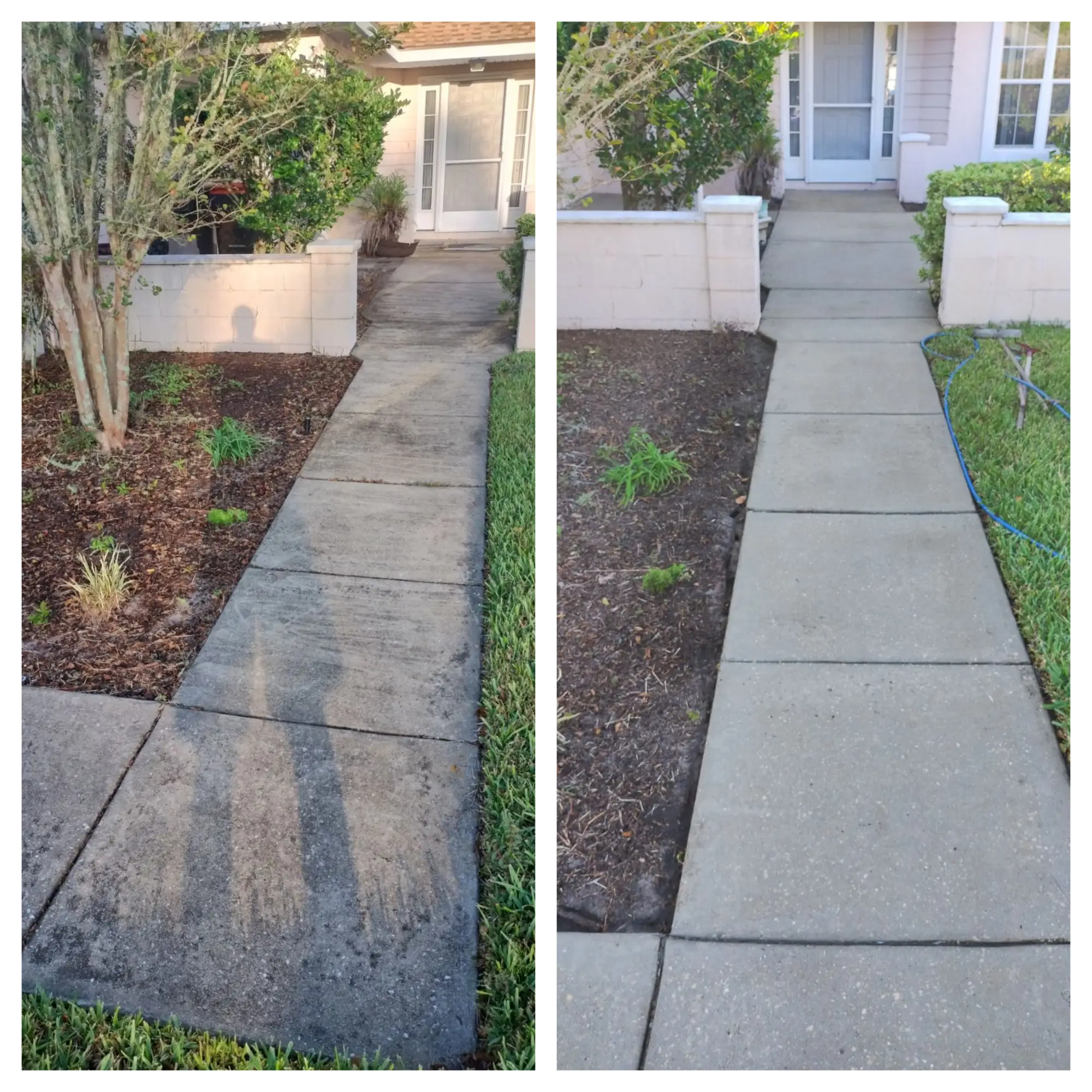
Surface notes: Standard broom-finish concrete is the most common budget patio surface. It is the most tolerant of higher cleaning pressure and typically shows the most dramatic visual transformation after cleaning because the before/after color contrast is so strong. Long-term concrete patios develop biological staining, tannin darkening from leaf debris, and iron staining from well-water irrigation.
Cleaning method: Commercial surface cleaner pass for uniform cleaning across the full field. Pre-treatment for biological growth, tannin staining, and rust or iron deposits as present. Detail wand on edges, expansion joints, and steps. Post-rinse inspection.
After cleaning: Original concrete color restored. Biological growth eliminated. Surface is bright and clean with the full expanse of the patio visible in its original specification.
Travertine and Natural Stone
Surface notes: Travertine patio surfaces are increasingly common in higher-end Ocala and Citrus County properties. Natural stone is the most pressure-sensitive patio material. High pressure penetrates the stone surface, accelerates pitting, and can fracture tile edges. Travertine also has natural voids and fill areas that collect organic matter.
Cleaning method: Low-pressure soft wash approach with stone-safe cleaning solution. No commercial surface cleaner on travertine. Gentle hand detail on natural voids and grout lines. All chemical contact with stone documented to preserve any manufacturer care guidance.
After cleaning: Natural stone color and texture restored. Organic growth removed from voids. Surface is clean and safe for outdoor use. Sealing after cleaning is strongly recommended for travertine to protect the porous surface.
Stamped and Decorative Concrete
Surface notes: Stamped concrete patios with decorative texture patterns and surface coloring are common throughout the Ocala area. The texture channels in stamped concrete collect organic debris and biological growth in the same way paver joints do. Surface sealant on stamped concrete can be degraded by high pressure or harsh chemicals.
Cleaning method: Medium pressure with surfactant pre-treatment targeting texture channels and biological growth. Pressure and chemical selection calibrated to preserve existing sealant where present. If sealant is visibly degraded, noted for homeowner with recommendation to reseal after cleaning.
After cleaning: Texture pattern clean and visible. Surface color enhanced. Ready for resealing if the existing sealant has degraded after cleaning assessment.
What Starr's & Stripes Includes in a Patio Cleaning.
- Full patio surface cleaning, edge to edge, all accessible areas
- Biological pre-treatment targeting algae, mold, and mildew at the root
- Efflorescence treatment on paver and concrete surfaces showing mineral blooms
- Tannin and organic stain pre-treatment where oak, pine, or organic debris staining is present
- Surface-appropriate pressure calibration based on patio material and condition
- Joint treatment on paver surfaces, pressure controlled to preserve polymeric sand
- Step and border detail with wand on all edges and transitions
- Final rinse and visual inspection pass before crew departs
NATURAL COMBINATIONS
Most patio cleanings combine naturally with one or more additional services. When the truck is already at the property, adding a driveway cleaning, a fence cleaning, or a pool deck cleaning to the same visit is more economical than scheduling each separately. Homeowners who clean the patio and the driveway in the same appointment cover the two surfaces that most affect the backyard and front of house together. Ask about combination pricing when requesting the estimate.
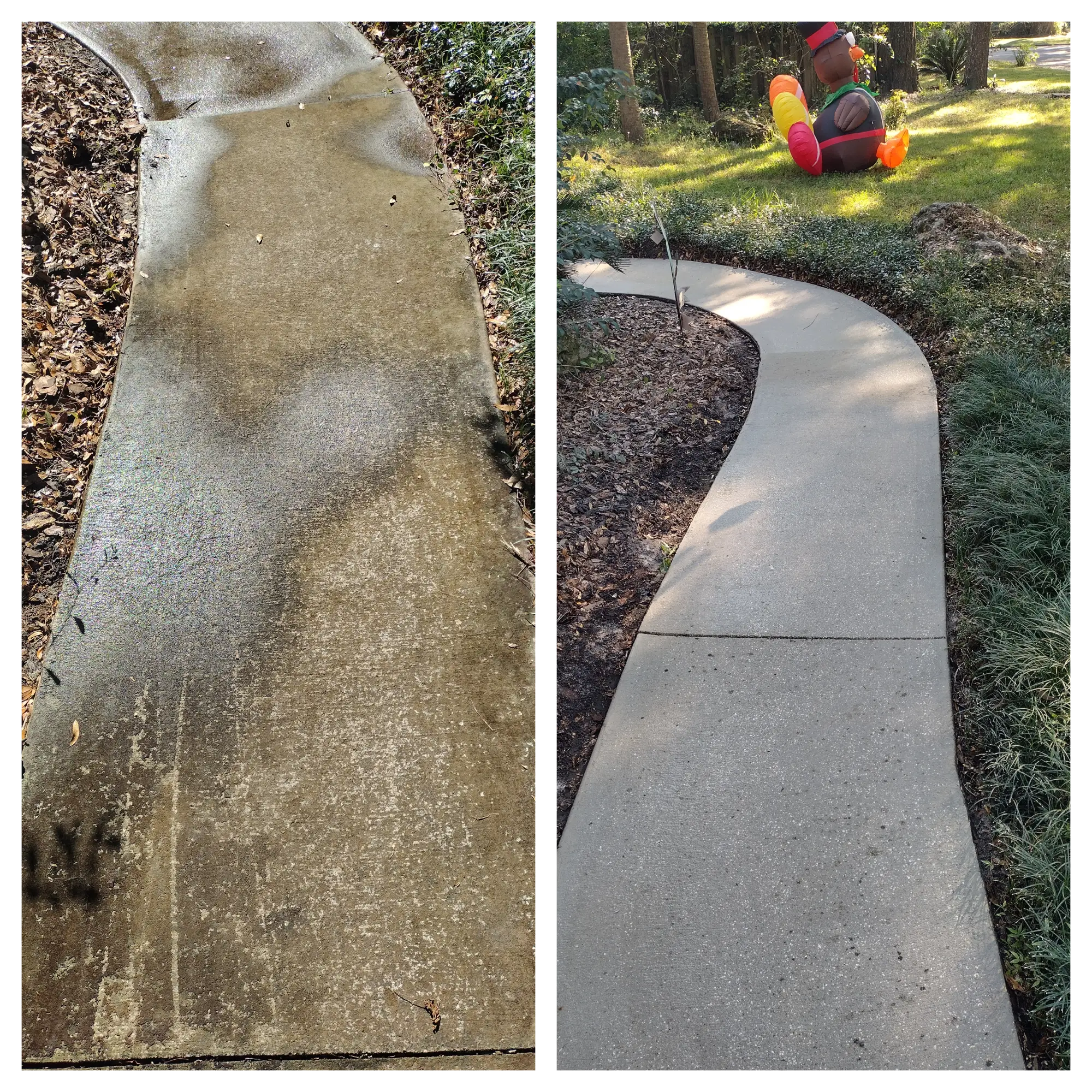
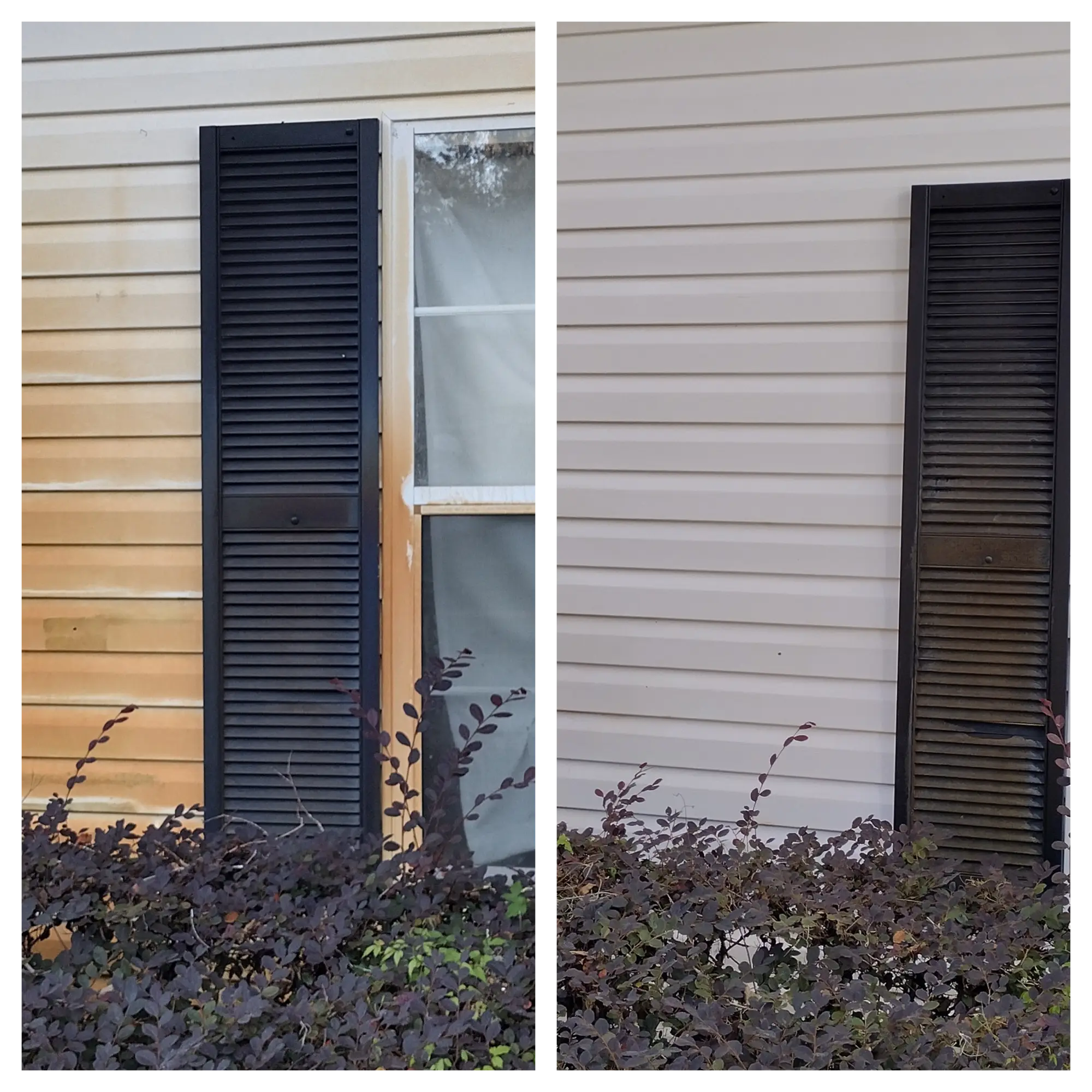
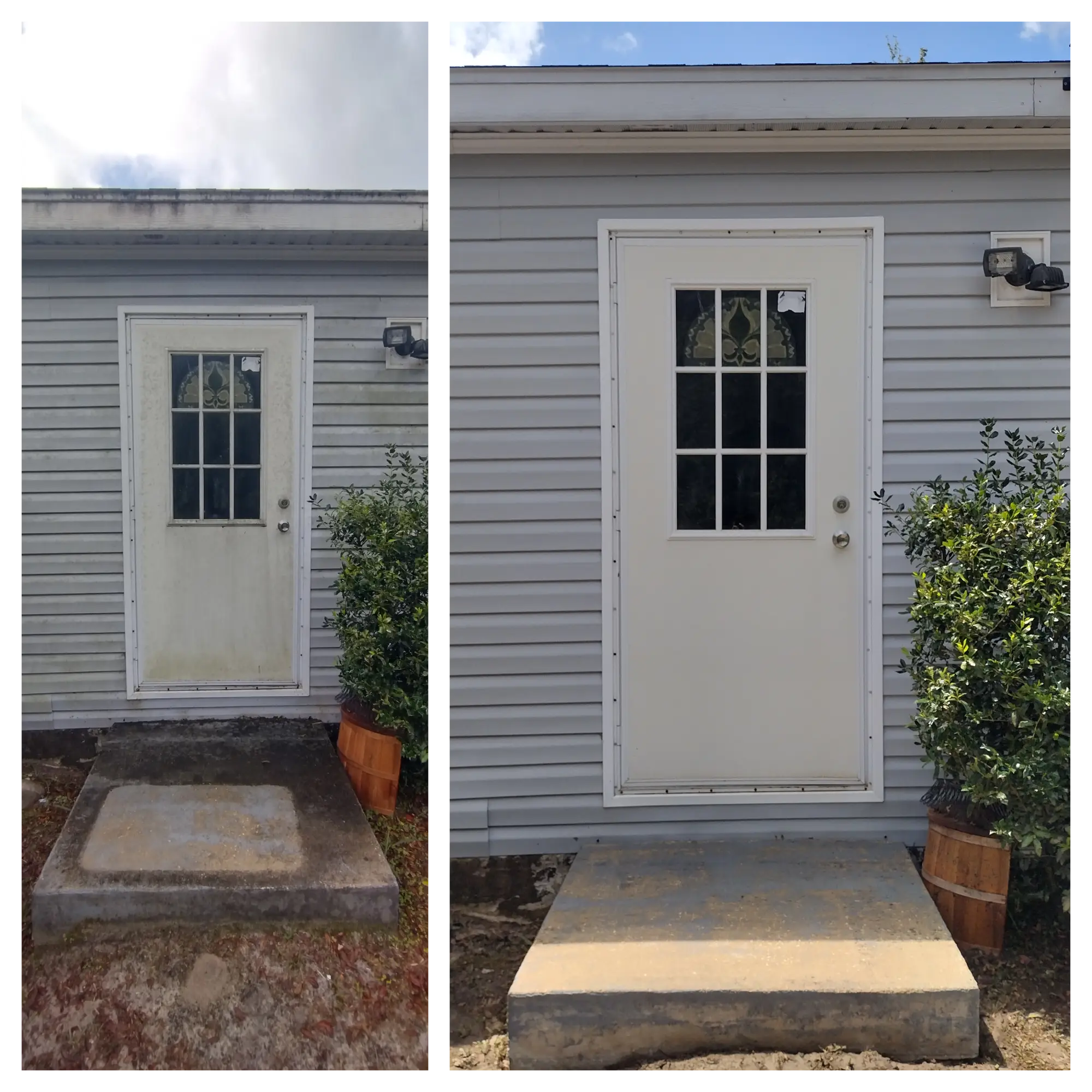
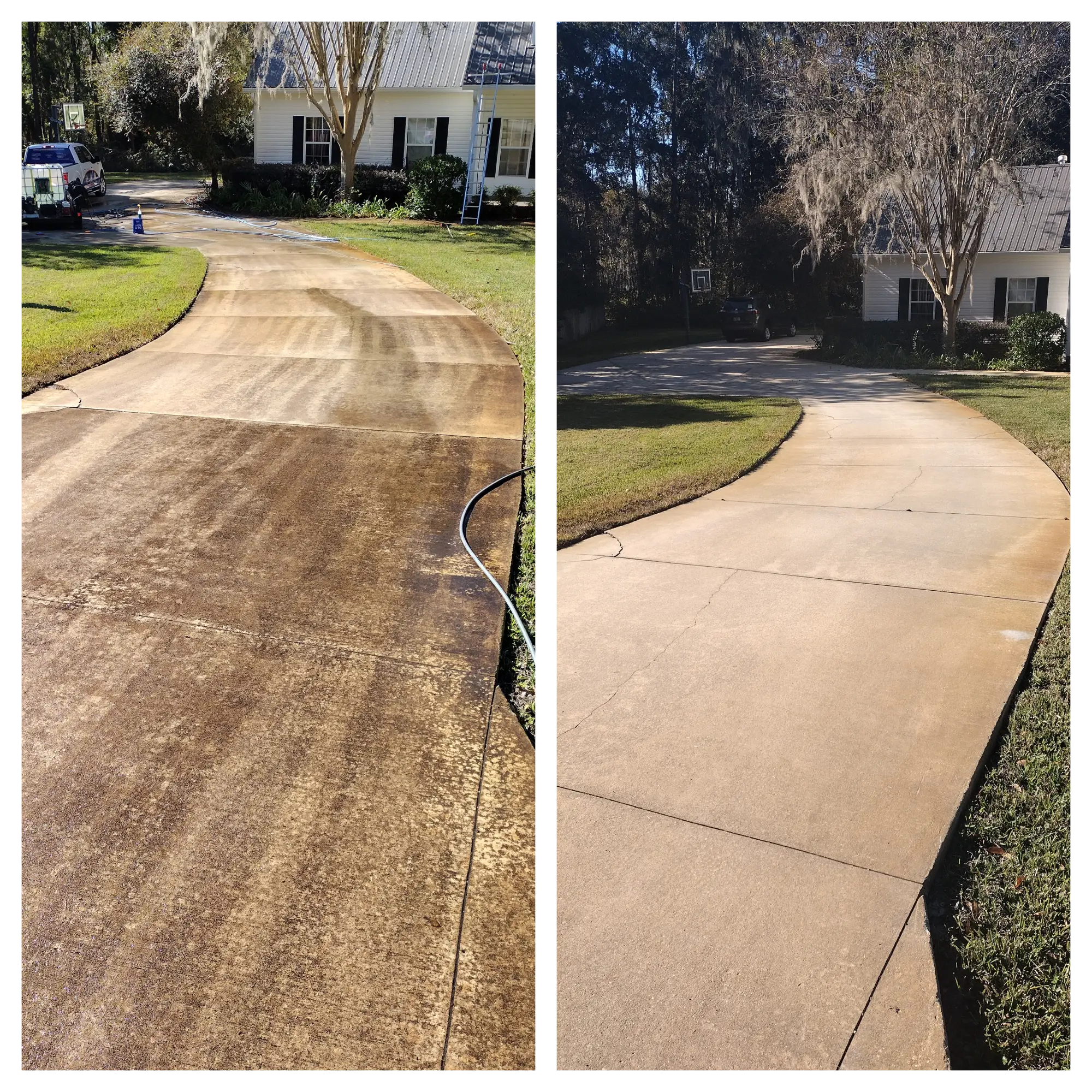
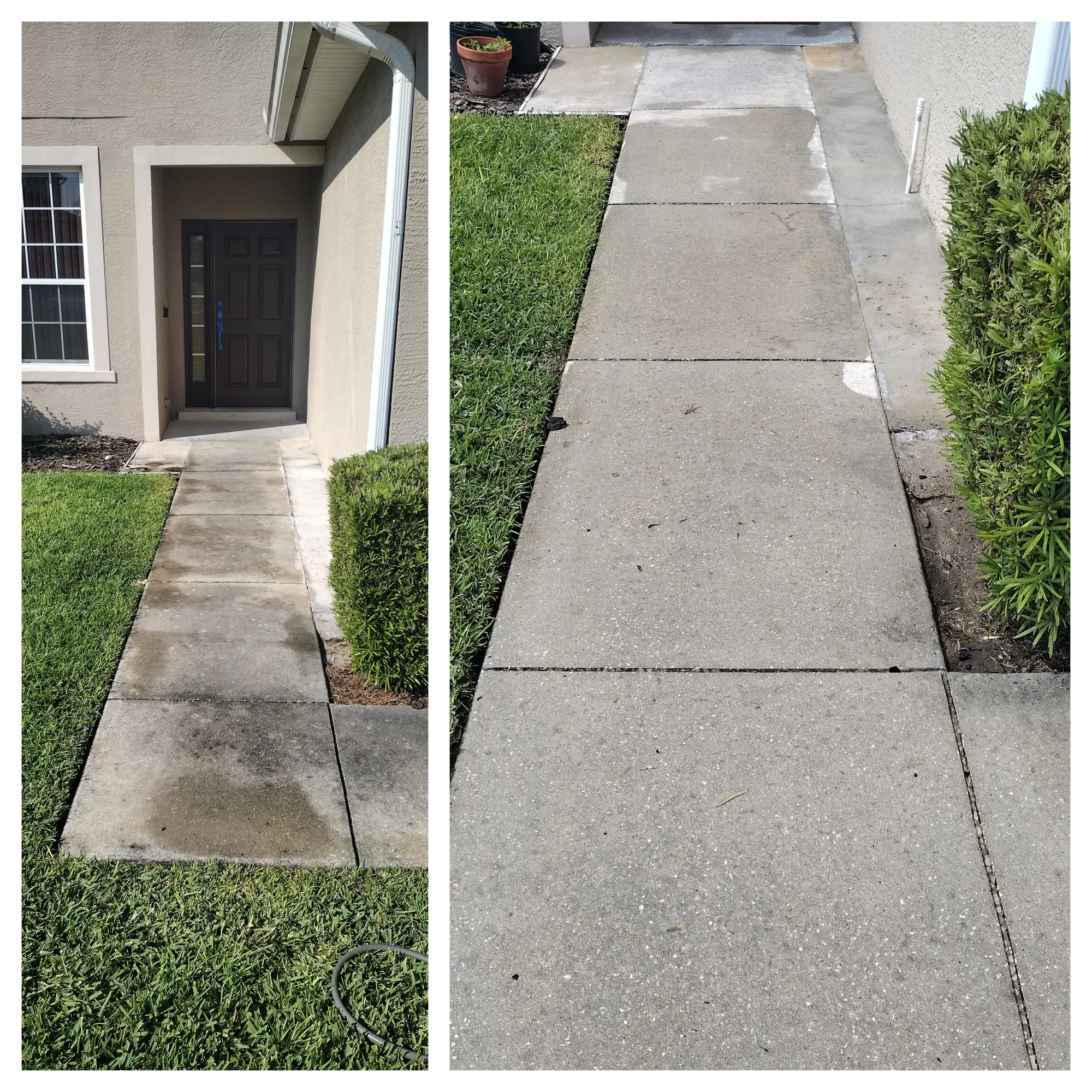
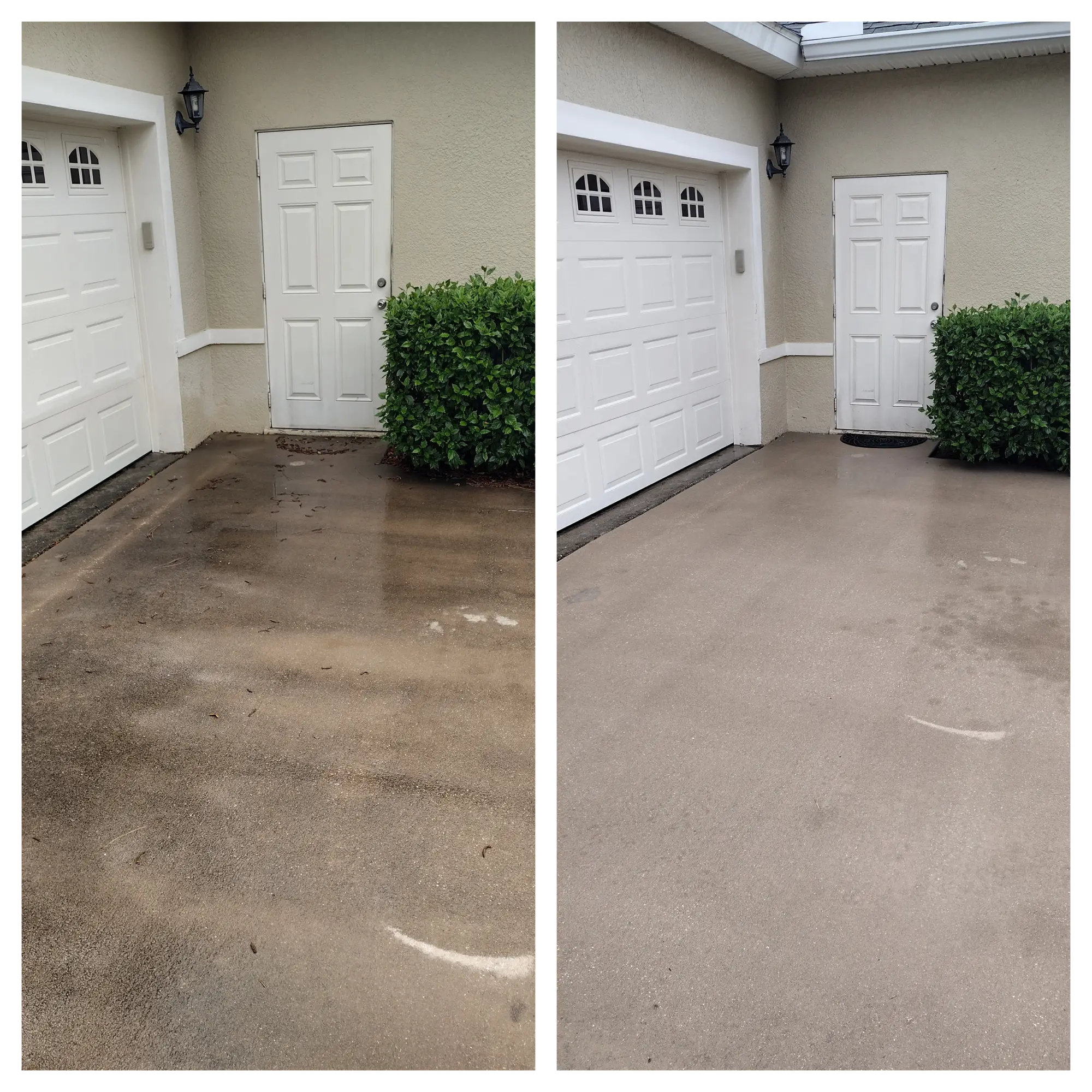
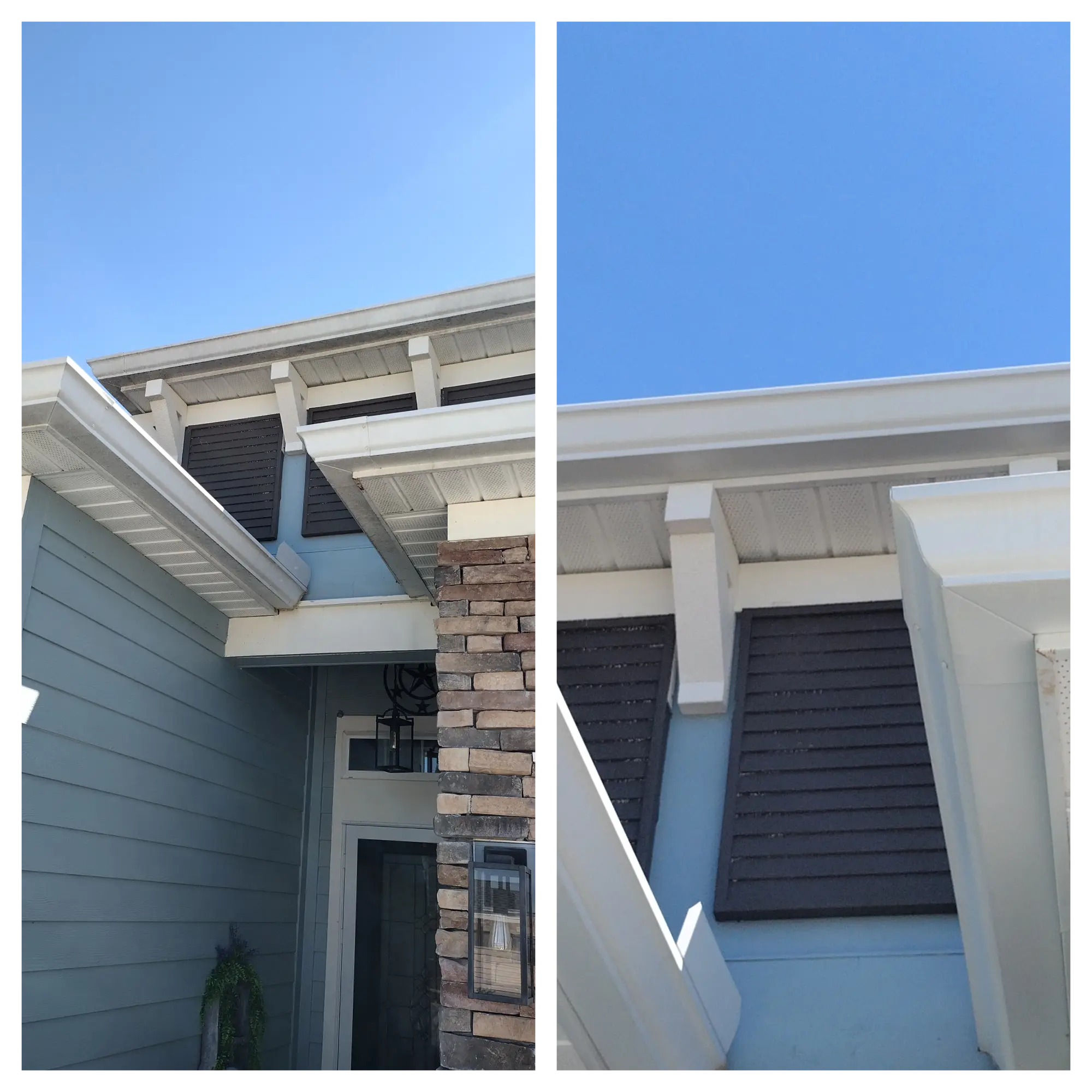
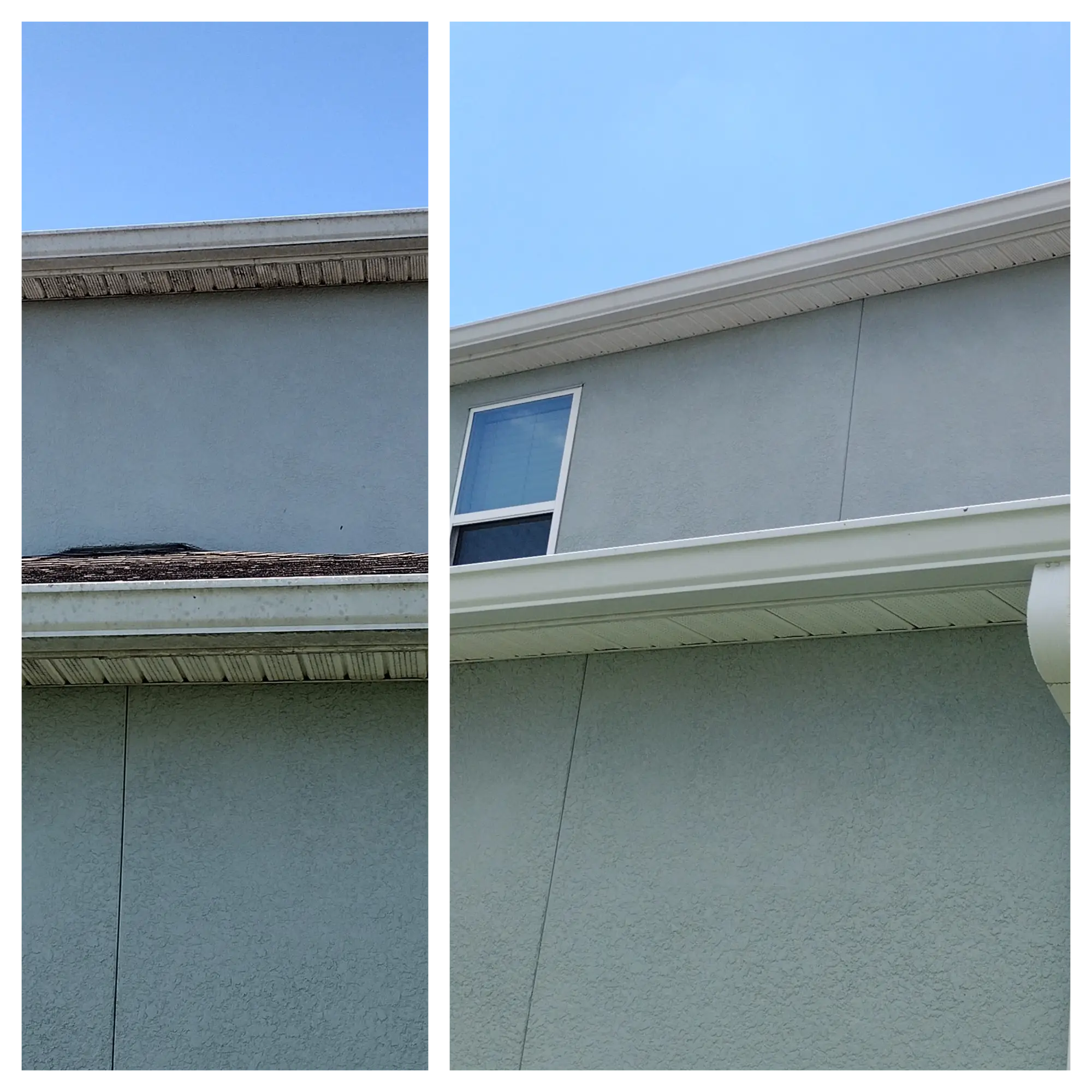
Real Work on Real Properties.
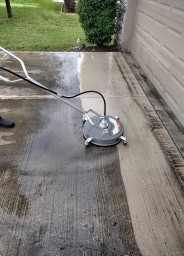
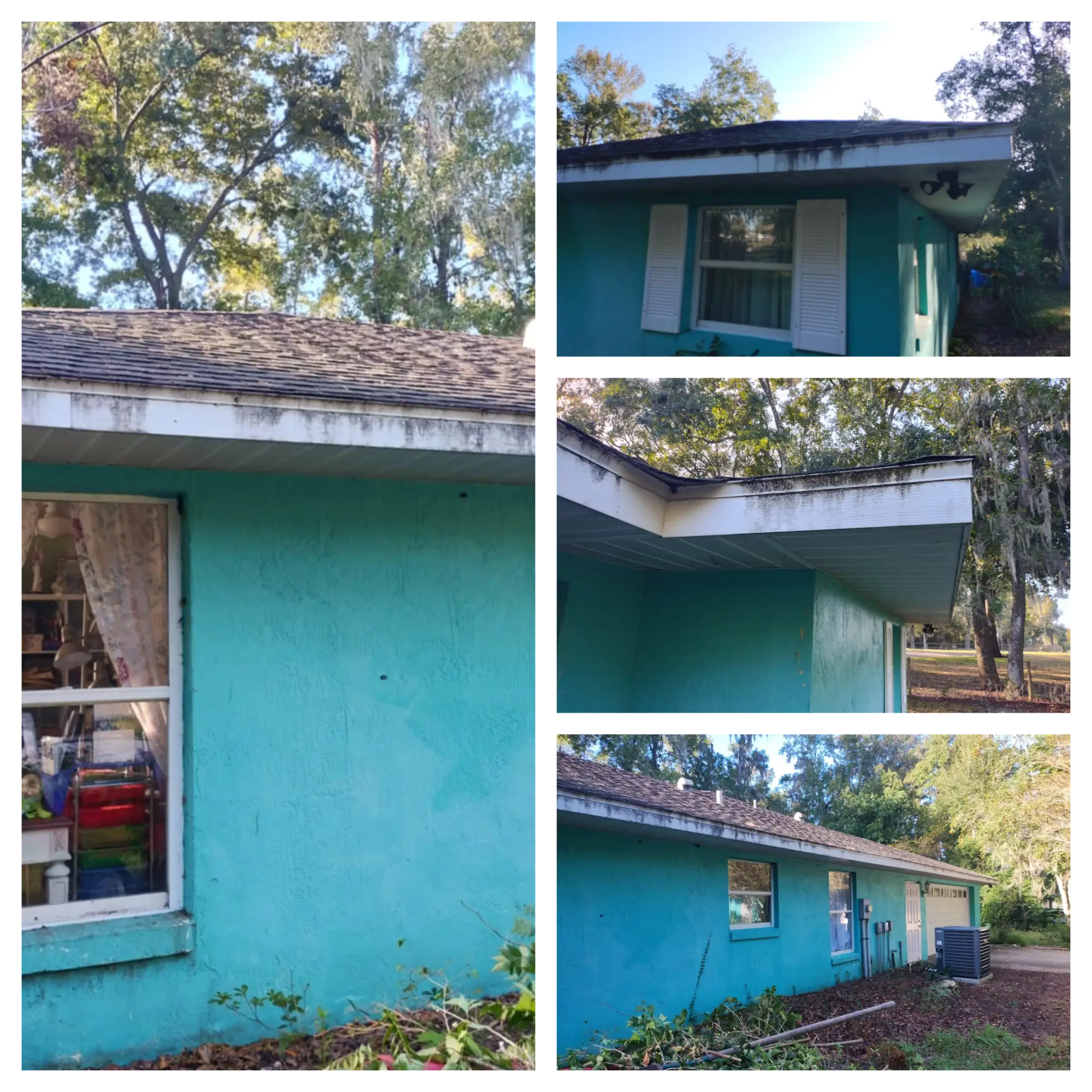
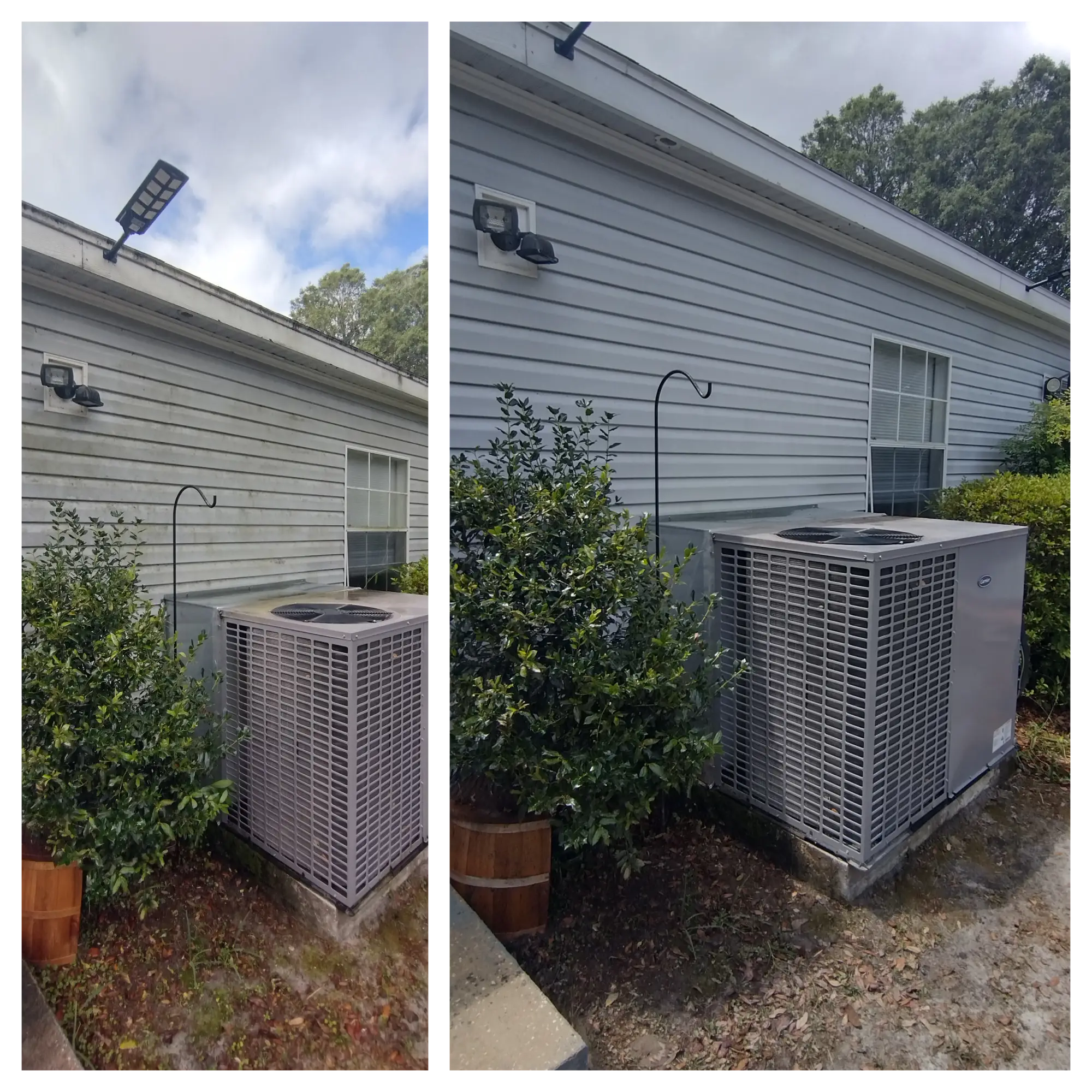
The distinction between pressure washing and soft washing is not academic for vinyl fences. The action shot shows controlled, professional technique that produces results without damage. Many homeowners who have tried to clean vinyl fences themselves with a pressure washer have created stress marks and surface scarring that require panel replacement. Soft wash chemical approach cleans the surface without touching the material integrity.
5-Star Rated on Google & Yelp
Trusted by Homeowners Across Marion,
Citrus, Levy & Sumter Counties
Posted on Google
 Brandon Fairley
Trustindex verifies that the original source of the review is Google.
Randy and his team are true pros when it comes to power washing. They take the time to do the job right and treat your property with care. Highly recommend!Posted on Google Chad FilleyDoes and great job, extremely thorough job on a drive way and house.Posted on Google
 Gary StrikerStars and Stripes Power Washing does incredible work. Randy and his crew did an outstanding job on my horse trailer. It looks brand new. He is professional, shows up on time, paid attention to the details, and left everything clean when he finished. I’m a realtor, and I recommend Randy and Stars and Stripes Power Washing to all of my clients who need power washing. Reliable, high quality work every time..Posted on Google
 Gus BlancoWe own Complete Dryer Vent Services LLC and were really impressed with the work these guys performed. I can't believe how dirty my vinyl fence was. A week later and it's still glowing white! Got a good education on how lichen can cause staining and damage protective coating on vinyl fence. These guys know their stuff. They even washed our work trailer! Highly recommend Starr's and Stripes.Posted on Google
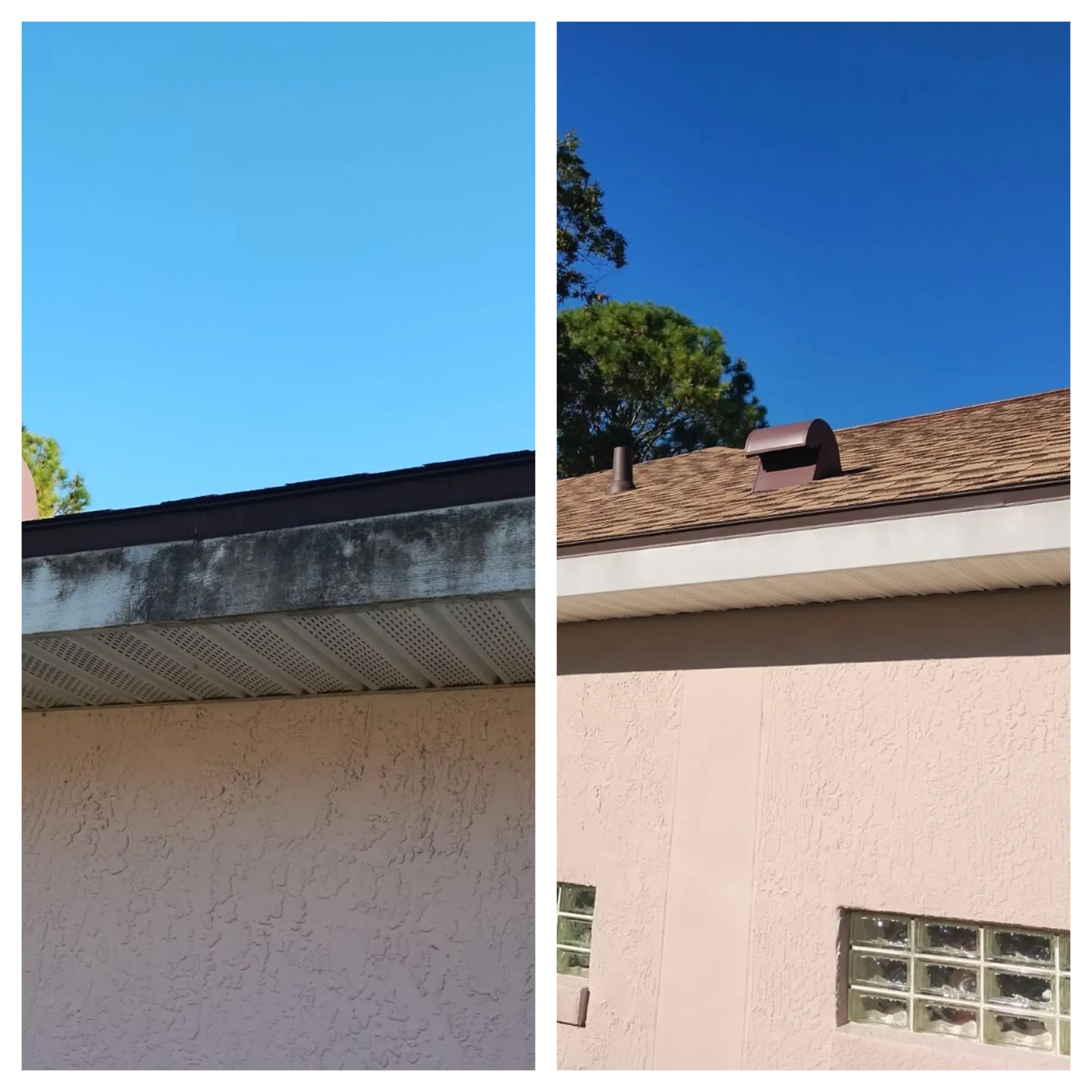
 Michael FetchRandy and Mathew from Starr's and Stripes Power Wash did an excellent job on our full house wash. Communication was clear and easy from start to finish, and they took the time to protect the plants and landscaping around the house. Our roof shingles had streaks all over them and now they are completely gone — the roof and house both look amazing. Honestly looks like a brand new home again. I would absolutely recommend them to anyone looking for pressure washing done right.Posted on Google
 Crystal LyonsReally great people! Prompt, courteous and professional while still being personable. Highly recommend!!! Edited to add that we are now repeat customers and our rating hasn't changed a bit! Same promptness, courtesy and professionalism!Posted on Google
 Kevin MckenzieRandy was very professional, friendly and thorough. I would highly recommend Starr's & Stripes Powerwash to anyone needing their home, roof or driveway cleaned.Posted on Google
 Angela NortonStarr's & Stripes PowerWash exceeded my expectations! Randy's team transformed my property, leaving everything spotless and looking brand new. Their attention to detail and dedication to quality are impressive. If you need reliable and thorough exterior cleaning, look no further—these guys are the best in the business!Posted on Google
 Mary RossiAbsolutely the nicest people to deal with and a great job.Posted on Google
 Jeannine PlummerI am a local Realtor, and I love that I can trust Starrs & Stripes to do a great job and with such professionalism that my clients reach out singing their praises after they leave. I highly recommend using this company for all of your power washing needs!
FAQs
Questions About Patio Cleaning in Ocala
What is efflorescence and can you remove it from my patio pavers?
Efflorescence is the white or gray powdery mineral deposit that forms on the surface of concrete and paver materials when calcium salts dissolved in moisture migrate upward through the material and crystallize on the surface as the moisture evaporates. It is extremely common on patio pavers and concrete in Central Florida because of the moisture-saturated conditions during the rainy season and the high mineral content of the local water supply. Standard pressure washing moves efflorescence around but does not dissolve the mineral deposit. Professional efflorescence treatment uses a pH-appropriate acidic solution that dissolves the calcium deposits before the main cleaning pass, eliminating the white bloom from the surface. The result is a paver surface that shows its original color rather than a chalky mineral overlay.
Will cleaning my pavers damage the joint sand between them?
Not with a professional cleaning that accounts for the joint material. The polymeric joint sand that holds paver systems together is vulnerable to high-pressure washing at certain angles and pressure levels. A commercial surface cleaner spinning at too high a pressure, or a direct high-pressure wand aimed into the joints, will strip the sand from between the pavers and require resanding after the cleaning. Professional patio cleaning calibrates the pressure and angle of the surface cleaner to clean the paver face thoroughly while preserving the joint sand. If existing joint sand is already significantly eroded before the cleaning begins, the crew should note this and the homeowner may want to plan for resanding after cleaning regardless.
What types of patio surfaces can you clean?
All patio surface materials common in Central Florida residential construction: concrete and brick pavers, poured broom-finish concrete, travertine and other natural stone, slate, and stamped or decorative concrete. Each surface requires different pressure settings and cleaning chemistry. Travertine and natural stone receive low-pressure soft wash treatment to avoid fracturing the stone or penetrating its surface. Standard concrete tolerates higher pressure. Pavers require careful pressure calibration to preserve joint integrity. Our crew assesses the surface material and condition before applying any cleaning process.
Can you remove the green and black staining from my concrete patio?
Yes. The green discoloration is algae. The black staining is typically a combination of mold, mildew, and in some cases black algae, which adheres to concrete more stubbornly than green algae. Both respond to professional biological pre-treatment with surfactant solutions formulated to kill the organism at the root rather than just rinse the surface. Tannin staining, the brown or dark gray discoloration from decomposing oak leaves and organic debris, responds to targeted pre-treatment as well. Most concrete patios in Central Florida that have not been professionally cleaned in several years show significant color restoration after a single cleaning.
Should I seal my pavers after cleaning?
Sealing pavers after cleaning is strongly recommended and represents the best return on the cleaning investment. Clean, dry pavers accept sealant well because the cleaning has opened the paver surface and removed the biological contamination that would prevent proper sealant adhesion. Paver sealant protects the surface from future biological colonization, makes the pavers resistant to staining from organic debris and iron deposits, and enhances the color of the paver surface. Sealed pavers also protect the joint sand from erosion during heavy rain. The cleaning session is the ideal preparation for sealing because the surface is in its best receptive condition immediately after cleaning and adequate drying time.
How often should I have my patio professionally cleaned in Florida?
Once per year is the standard recommendation for most patio surfaces in the Ocala area. Many outdoor living enthusiasts in Central Florida find that two cleanings per year, one in spring before the heavy outdoor season begins and one in fall after the rainy season ends, keep the patio consistently usable without allowing significant biological colonization to establish between visits. Patios under heavy oak or pine canopy, or those adjacent to ponds or water features, may benefit from more frequent cleaning because the continuous organic debris deposit accelerates biological growth.
How much does patio cleaning cost in Ocala, FL?
Patio cleaning is priced based on the square footage of the surface, the material type, and the degree of biological growth and staining present. Most residential patio cleanings in the Ocala area range from 00 to 50 for a standard single-surface cleaning. Patios with significant efflorescence requiring specialized treatment, travertine or natural stone requiring low-pressure methods, or heavily colonized surfaces requiring multiple treatment passes may be priced higher. Paver sealing is available as an add-on at additional cost. Starr’s & Stripes provides a free written estimate before any work begins. Call or text (352) 230-9299 for a same-day quote.