RESTAURANT EXTERIOR CLEANING FOR GREASE, GRIME AND BIOLOGICAL GROWTH REMOVAL WITH DBPR INSPECTION-READY, DUMPSTER PAD CLEANING AND NIGHT SERVICE AFTER CLOSE IN OCALA AND ALL FOUR COUNTIES
Pass Every Health Inspection With Flying Colors. Grease-Free Guarantee.
Looking for professional restaurant exterior cleaning in Ocala, Florida? Starr's & Stripes Power Wash provides specialized commercial hot-water degreasing, drive-thru lane washing, dumpster pad sanitization, and outdoor dining patio pressure washing across Marion, Sumter, Citrus, and Levy Counties. Owners Randy and Matt Starr deliver after-hours overnight cleaning—eliminating heavy cooking grease, spilled food oils, foul dumpster odors, and slick walkways without disrupting meal service or customer dining hours.
Stay Inspection-Ready, Always
Restaurant owners in Ocala operate under one of the most demanding regulatory environments of any commercial business category. The Florida Division of Hotels and Restaurants conducts unannounced inspections that evaluate both interior and exterior sanitation conditions. Exterior grease accumulation on exhaust walls, unsanitary dumpster enclosure conditions, and biological growth on drive-through surfaces are all documented inspection targets. A High Priority violation from a surprise inspection does not result in a fine and a future follow-up. It results in an immediate closure order until the violation is remediated.
Starr’s & Stripes provides restaurant exterior cleaning in the Ocala area with degreaser chemistry and equipment calibrated for food service environments. We work after your kitchen closes so the cleaning never intersects with your service. The grease on your exhaust wall, the dumpster pad that needs biological treatment, the drive-through lane that accumulates food spatter — all of it cleaned to inspection standard while your staff goes home and your customers never know the work was done. When the inspector arrives, your exterior is the least of your concerns.
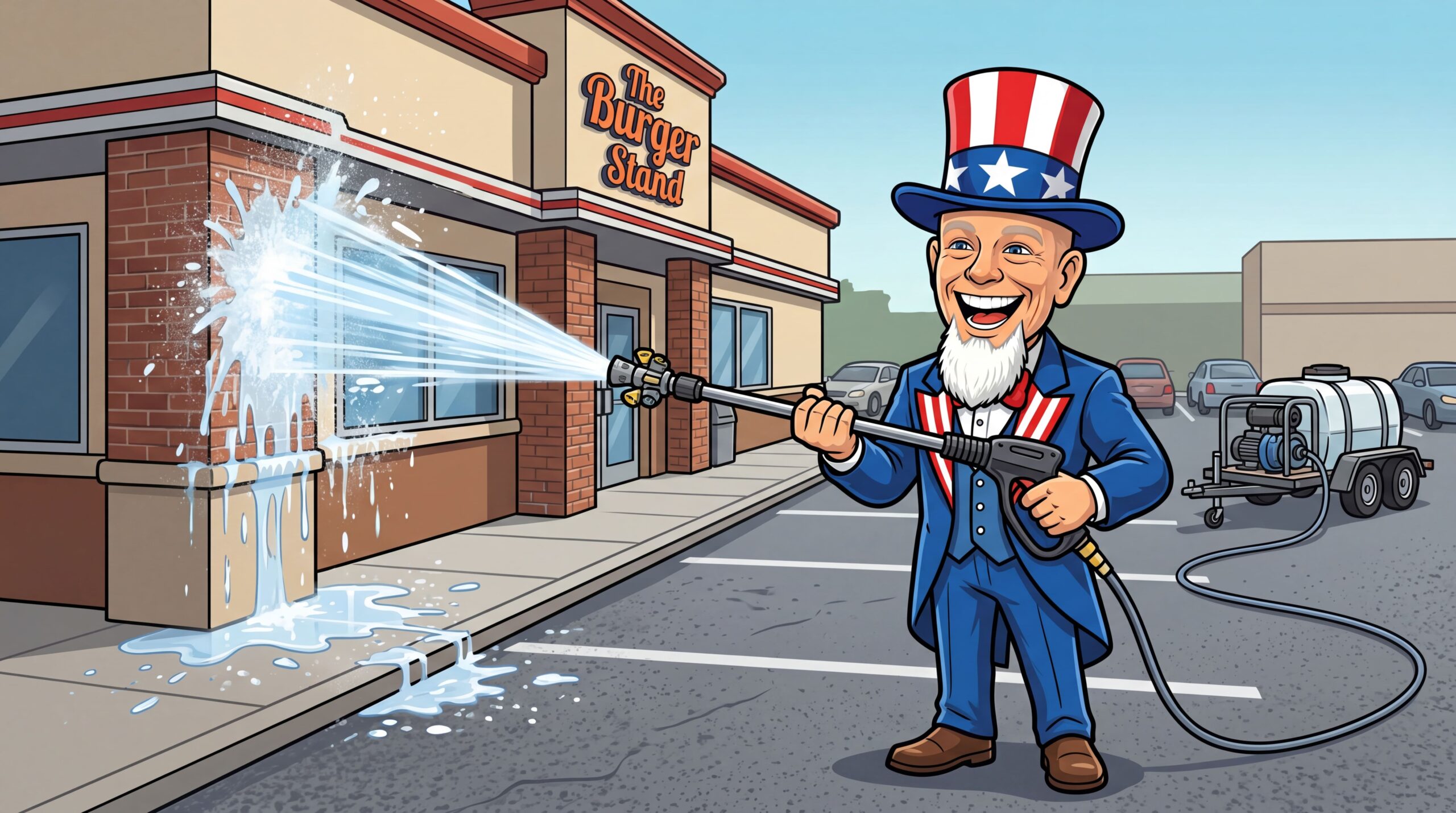
Florida DBPR Inspects Your Exterior Before They Come Inside.
The Florida Division of Hotels and Restaurants uses an inspection form that scores both interior and exterior conditions. Exterior inspection items include grease accumulation on building surfaces, dumpster area sanitation, pest evidence in outdoor areas, and the general condition of outdoor food preparation or storage areas. These are not peripheral items that inspectors note and move on from. They are scored violations that contribute to the inspection outcome and, in the case of active grease accumulation near a heat source, can be classified as High Priority violations requiring immediate correction.
Understanding what inspectors specifically look for on the exterior of your restaurant is the first step to ensuring your maintenance program meets the standard. The four inspection targets below cover the exterior areas where most Florida restaurants receive exterior-related violations.
Grease Accumulation on Exhaust Walls and Hood Surrounds
What inspectors look for: Inspectors look at the exterior wall surface directly below and around the kitchen exhaust discharge point — the area where cooking vapors, grease-laden air, and moisture from the kitchen exhaust system deposit on the building exterior over time. Grease accumulation here is visible as a dark, often sticky surface discoloration that runs down the wall from the exhaust cap. In high-volume kitchens, this accumulation can be significant within weeks of cleaning.
Consequence if cited: Grease accumulation on exterior surfaces adjacent to a heat source or ventilation system can be classified as a fire hazard under Florida food safety rules, making it a High Priority violation. High Priority violations require immediate corrective action and can be the basis for an emergency closure order if not addressed on-site during the inspection. A documented pattern of grease accumulation violations also increases the frequency of follow-up inspections.
How we address it: Hot-water pressure washing with commercial-grade alkaline degreaser applied at appropriate concentration and dwell time to the exhaust wall surface and all surrounding building materials. The alkaline degreaser emulsifies polymerized grease — the baked-on, hardened grease that has been subjected to repeated heating from the exhaust discharge. After degreaser treatment, high-pressure hot water removes both the degreaser and the emulsified grease. Performed after kitchen close to avoid any intersection with food service operations.
Dumpster Enclosure and Waste Area Sanitation
What inspectors look for: Inspectors evaluate the dumpster enclosure area for organic waste accumulation on the concrete pad, biological growth (mold, algae, bacterial film) on the enclosure walls and floor, standing water or drainage problems, evidence of pest activity, and persistent odor. A dumpster enclosure that is visibly contaminated, malodorous, or showing evidence of pest access from the exterior is a documented inspection concern in every Florida food service inspection framework.
Consequence if cited: Dumpster area violations are typically classified as Basic violations that accumulate points on the inspection score rather than triggering immediate closure. However, repeated Basic violations on the same item increase inspection frequency and can escalate to a call-back inspection with a mandated correction deadline. A dumpster enclosure that creates pest pressure also creates a pathway for pest entry into the restaurant — a separate and more serious inspection category.
How we address it: Dumpster pad pressure washing with biological growth treatment and degreaser pre-treatment for organic accumulation on the concrete surface. Enclosure wall surfaces treated for biological growth. Drainage channel cleared and cleaned. The goal is not just a surface clean but elimination of the organic material that drives both biological growth and pest attraction.
Drive-Through Lane and Service Window Surround
What inspectors look for: Inspectors evaluate drive-through lane surfaces for food and beverage contamination accumulation, biological growth in the lane concrete, and the condition of the service window surround, menu board area, and speaker post base. Drive-through surfaces receive continuous food and drink spatter from service operations. In Florida humidity, that organic material drives rapid biological growth. The service window area, where condensation from the kitchen combines with food service activity, is often the most contaminated zone.
Consequence if cited: Drive-through lane conditions that suggest unsanitary food service operations can be scored as Basic violations with accumulated point impact. More significantly, customer visibility of a contaminated drive-through service area affects perception of food safety standards at the restaurant — a concern that operates independently of the formal inspection score and affects revenue directly.
How we address it: Drive-through lane cleaning with degreaser pre-treatment at the service window zone and menu board surround. Biological growth treatment on all lane concrete. Speaker and menu board base cleaning. Service window exterior surface cleaning. All work done after service close to avoid intersection with drive-through operations.
Building Exterior, Outdoor Dining Areas, and General Sanitation
What inspectors look for: The overall exterior condition of the building — biological growth on the facade, staining and contamination on walls within customer view, outdoor dining surface conditions — contributes to the general cleanliness score on the inspection form. Inspectors also look at outdoor food preparation areas, service entrances, and any areas where food or waste is handled outside the building.
Consequence if cited: General exterior condition violations are Basic violations that accumulate toward the inspection score. A restaurant with multiple Basic exterior violations on the same inspection earns a lower score, which is publicly reported in Florida (inspection results are available on the DBPR website and searchable by location). Low inspection scores affect customer confidence independently of any closure or fine action.
How we address it: Full building exterior cleaning from the service areas and kitchen exhaust wall through the customer-facing facade and outdoor dining surfaces. Biological growth removal on all exterior wall sections. Outdoor dining surface treatment. All cleaning done to food-service appropriate standards with chemistry that is safe for restaurant environments.
Every Restaurant Exterior Surface. The Right Chemistry for Each One.
Restaurant exterior cleaning is not general commercial pressure washing applied to a food service property. The grease that accumulates on exhaust walls, dumpster pads, and drive-through surfaces requires alkaline degreaser chemistry and sufficient dwell time to emulsify before pressure washing. Standard biological treatment surfactant alone does not remove polymerized kitchen grease. Using the wrong chemistry on a restaurant exterior surface produces a surface that looks cleaner but still carries the grease residue that drives both inspection violations and fire risk.
Exhaust Wall and Hood Exhaust Surround (Exterior Only)
The challenge: The exterior wall surface below and around the kitchen exhaust discharge point accumulates grease-laden condensate from the kitchen exhaust air stream. This grease polymerizes on the wall surface under repeated heating and cooling cycles, creating a progressively thicker, harder grease deposit that bonds to the building material. Standard cold-water pressure washing does not remove polymerized grease effectively — it moves it around the surface and spreads the contamination field.
Chemistry and method: Commercial-grade alkaline degreaser applied at elevated concentration to the exhaust wall surface with sufficient dwell time for the degreaser to penetrate and emulsify the polymerized grease layer. Hot-water pressure washing following dwell time to flush the emulsified grease and degreaser residue from the surface. Multiple application cycles for heavily accumulated deposits. Note: this service covers the EXTERIOR wall surface and exhaust cap exterior only. Interior hood, duct, and fan cleaning is a separate specialized trade not included in exterior washing service.
Result: Exhaust wall surface restored to clean building material. Grease deposit removed from all treated surfaces. Fire hazard reduced. Inspection violation target addressed. Exhaust cap exterior cleaned. Wall section around exhaust discharge point clean to building facade standard.
Dumpster Enclosure Pad and Surround
The challenge: The concrete pad inside and surrounding the dumpster enclosure is the most heavily contaminated surface on any restaurant property. Organic waste from the dumpster, liquid waste runoff, grease from kitchen waste containers, and persistent biological growth from the consistently moist, nutrient-rich environment create a layered contamination that generates odor, drives pest activity, and produces the visual and sanitation conditions that inspectors cite.
Chemistry and method: Industrial degreaser pre-treatment on all pad surfaces with attention to the area directly below the dumpster container and at the enclosure drainage channel. Hot-water pressure washing following dwell time. Biological growth treatment on enclosure wall surfaces and curbing. Drainage channel cleared and cleaned. Rinse-out of any pooling areas. Post-clean deodorizing rinse where appropriate.
Result: Dumpster pad concrete cleaned to bare surface. Biological growth eliminated from enclosure surfaces. Drainage channel functional. Organic accumulation that was driving pest attraction removed. Enclosure reads as actively maintained on visual inspection.
Drive-Through Lane and Service Window Area
The challenge: Drive-through lane concrete accumulates food and beverage spatter from service operations, biological growth from the organic base that spatter creates in Florida humidity, tire rubber deposits, and the general contamination of a high-traffic vehicle surface. The service window zone — the 6-foot area of wall and concrete directly below and around the service window — receives the highest intensity food contact and is typically the most contaminated area in the drive-through.
Chemistry and method: Degreaser pre-treatment at the service window zone and menu board surround. Biological growth treatment on all lane concrete surfaces. Commercial surface cleaner for uniform lane field cleaning. Targeted hand cleaning of speaker post bases, menu board supports, and service window frame exterior. Hot-water rinse of all food-contact adjacent surfaces.
Result: Drive-through lane concrete cleaned uniformly. Service window area free of food accumulation and biological growth. Menu board surround and speaker bases clean. Surfaces at the customer interaction point read as food-safe and maintained.
Building Exterior and Customer-Facing Facade
The challenge: The customer-facing building exterior accumulates biological growth, pollution staining, and the general contamination of any commercial building face in Florida humidity. For restaurants specifically, any exhaust outlet on the customer-facing facade creates a localized grease accumulation zone similar to the kitchen exhaust wall. Restaurants near the cooking line may have secondary exhaust or ventilation points that accumulate grease on customer-visible wall sections.
Chemistry and method: Soft wash or pressure wash calibrated to building material for biological growth and general contamination removal. Degreaser treatment at any secondary exhaust or ventilation points on the customer-facing facade. Building material assessment to identify any EIFS or stucco sections that require soft wash approach. Full customer-facing facade from roofline to ground cleaned in a single visit.
Result: Customer-facing building exterior clean and bright. Biological growth removed. Any secondary grease accumulation points treated. The exterior that customers see on approach communicates the same cleanliness standard as the interior they experience.
Outdoor Dining Areas, Patios, and Service Entrances
The challenge: Outdoor dining surfaces — concrete, pavers, tile — accumulate food spill residue, beverage staining, biological growth, and general soiling from dining traffic. These surfaces require cleaning chemistry safe for areas adjacent to food service. Service entrances and back-of-house areas accumulate kitchen waste, grease spatter, and biological growth from the high organic load in a food service environment.
Chemistry and method: Outdoor dining surface cleaning with food-safe surfactant appropriate for surfaces adjacent to or used during dining service. Paver or tile cleaning calibrated to surface material. Service entrance and back-of-house concrete cleaning with degreaser pre-treatment at any grease accumulation zones. All rinse chemistry appropriate for food service environments and safe for storm drain discharge.
Result: Outdoor dining area clean and ready for service. Service entrance and back-of-house surfaces maintained to back-of-house hygiene standard. All surfaces cleaned with chemistry appropriate for food service proximity.
Grease Trap Surrounds and Utility Area Concrete
The challenge: The concrete surrounding grease trap access points accumulates grease overflow and spillage from routine grease trap service operations. This area is typically a continuous contamination source because grease trap pumping operations inevitably deposit some grease on the adjacent concrete. Biological growth in this area is accelerated by the continuous organic nutrient source.
Chemistry and method: Degreaser pre-treatment on all grease trap surround concrete with extended dwell time for the persistent grease contamination typical of this area. Hot-water pressure washing following dwell time. Biological growth treatment. This area is typically cleaned on the same visit schedule as the dumpster pad given similar contamination intensity.
Result: Grease trap surround concrete clean of grease accumulation and biological growth. Contamination source addressed at each scheduled maintenance visit rather than accumulating between visits.
Restaurant Cleaning Happens After Your Last Customer Leaves. Every Time.
Night service for restaurant exterior cleaning is not a scheduling convenience. It is the only professionally appropriate approach for active food service operations. Three specific operational reasons drive this standard.
1
No Wet Surfaces During Kitchen or Dining Service
Cleaning operations create wet surfaces at all treated areas. Wet concrete at service entrances, wet wall surfaces near the kitchen, wet drive-through lanes during service are staff safety hazards and customer hygiene concerns. An exterior cleaning operation intersecting with an active kitchen or dining room service is not a professional restaurant cleaning service. Night cleaning ensures all wet surfaces are dry before the first staff member arrives for morning prep.
2
Degreaser Chemistry Requires Dwell Time Without Traffic Interruption
Commercial alkaline degreaser applied to exhaust walls and dumpster pads requires controlled dwell time -- the period between application and pressure washing -- to penetrate and emulsify the polymerized grease. Traffic through the treatment area during dwell time disrupts the chemistry, reduces effectiveness, and spreads degreaser residue beyond the treatment zone. Night cleaning provides uninterrupted dwell time that produces complete grease removal rather than partial surface treatment.
3
Customer Perception of Cleaning Operations
Pressure washing operations near an active restaurant -- noise, visible equipment, wet surfaces, chemical odors from degreaser application -- affect customer dining experience and food safety perception regardless of whether any actual contamination risk exists. A customer who drives through a drive-through lane being actively pressure washed, or who passes a dumpster pad cleaning operation near the restaurant entrance, forms an impression that the operator may not intend. Night service keeps all cleaning operations invisible to the customer experience.
4
NIGHT SERVICE SCHEDULING
Starr's and Stripes schedules restaurant exterior cleaning visits to begin after the kitchen closes and the last service staff has left the property. Most restaurant visits are completed between 10:00 PM and 4:00 AM depending on restaurant close time, surface scope, and distance from the Ocala base. The property is ready for morning prep staff arrival by the time cleaning is complete. Contact us to discuss the right scheduling window for your operation.

The Grease-Free Guarantee Only Works on a Schedule.
A single restaurant exterior cleaning visit removes what has accumulated and resets the baseline. But grease from kitchen exhaust operations accumulates continuously. Biological growth on dumpster pads begins immediately after a clean. Drive-through contamination resumes the next service day. A one-time clean does not maintain compliance between inspections — it addresses the current condition only.
A scheduled maintenance program is what the Grease-Free Guarantee is built on. Regular cleaning intervals prevent grease and biological contamination from reaching the inspection-violation threshold. The program keeps your restaurant exterior between clean and the threshold at all times, not just immediately after a service visit.
Monthly Maintenance Program
Best for: High-volume QSR and fast-casual restaurants with drive-through service, restaurants with outdoor dining adjacent to busy traffic, and any location where grease accumulation on the exhaust wall is a documented inspection concern from a prior violation
Covers: Full restaurant exterior clean: exhaust wall and hood surround, dumpster pad and enclosure, drive-through lane and service window zone, building exterior customer-facing sections, outdoor dining and service areas
Frequency: Once per month, scheduled night service after close
Primary benefit: Grease never accumulates to inspection-violation level between visits. Most protective program for high-volume kitchens. Eliminates inspection anxiety for exterior conditions.
Quarterly Maintenance Program
Best for: Full-service casual dining, sit-down restaurants without drive-through service, and any restaurant whose prior inspection record shows no exterior violations and whose kitchen volume is moderate
Covers: Complete exterior clean at all four visits. Summer and fall visits timed to address peak Florida wet season biological growth. Winter and spring visits address grease accumulation from cooler weather kitchen operations.
Frequency: Four times per year, all scheduled as night service
Primary benefit: Matches the seasonal biological growth cycle and the grease accumulation timeline for moderate-volume kitchens. Minimum effective program for documented compliance maintenance.
Single Visit Plus Assessment
Best for: New restaurant operators establishing a maintenance baseline, restaurants with a recent inspection violation who need immediate remediation plus a forward program recommendation, and properties under new management evaluating the existing exterior condition
Covers: Complete exterior clean with written post-visit assessment of each surface area, estimated time to next cleaning need based on observed conditions, and program recommendation
Frequency: One visit with program enrollment option after assessment
Primary benefit: Establishes the documented baseline. Provides the forward maintenance plan. Appropriate first step for any new restaurant exterior cleaning relationship.
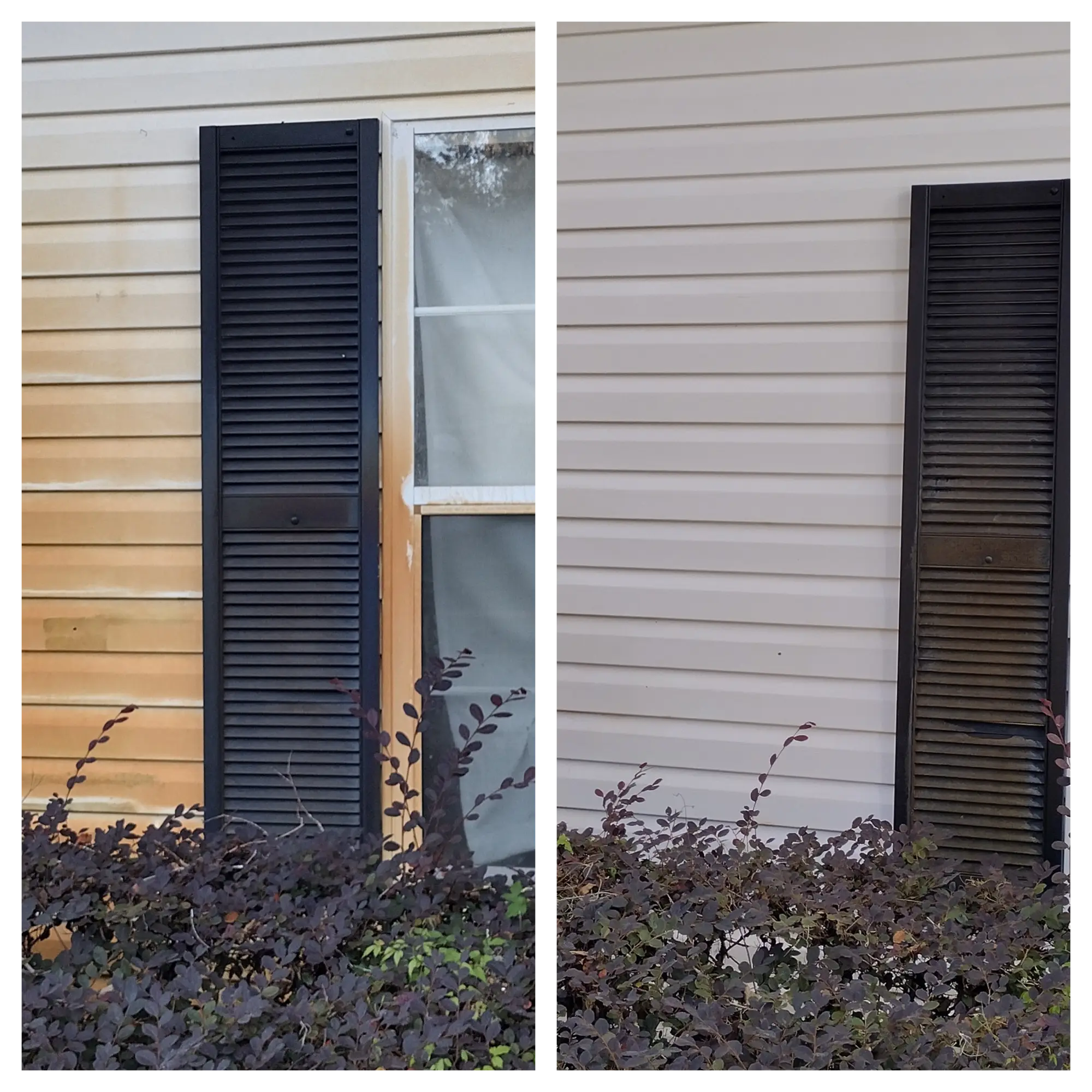
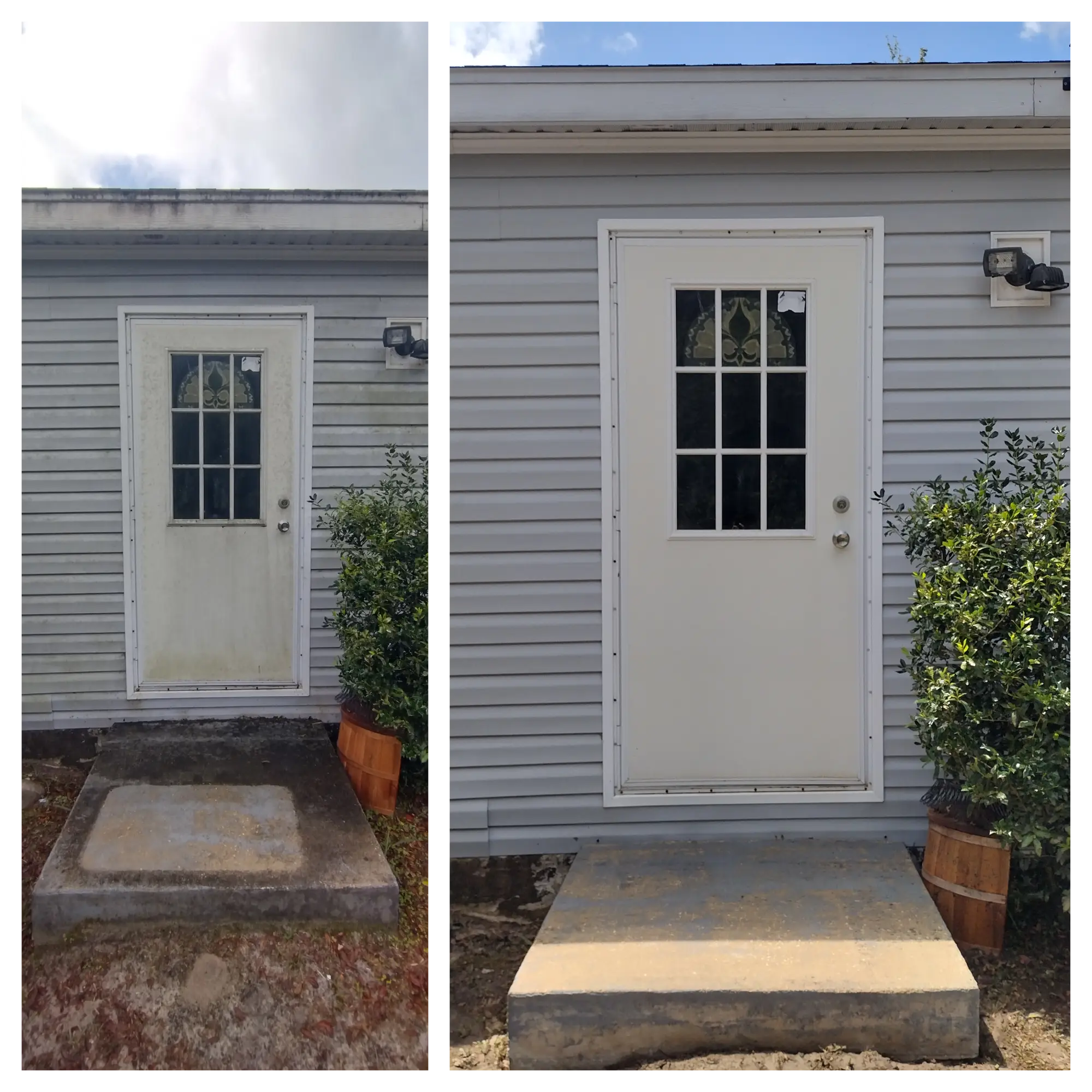
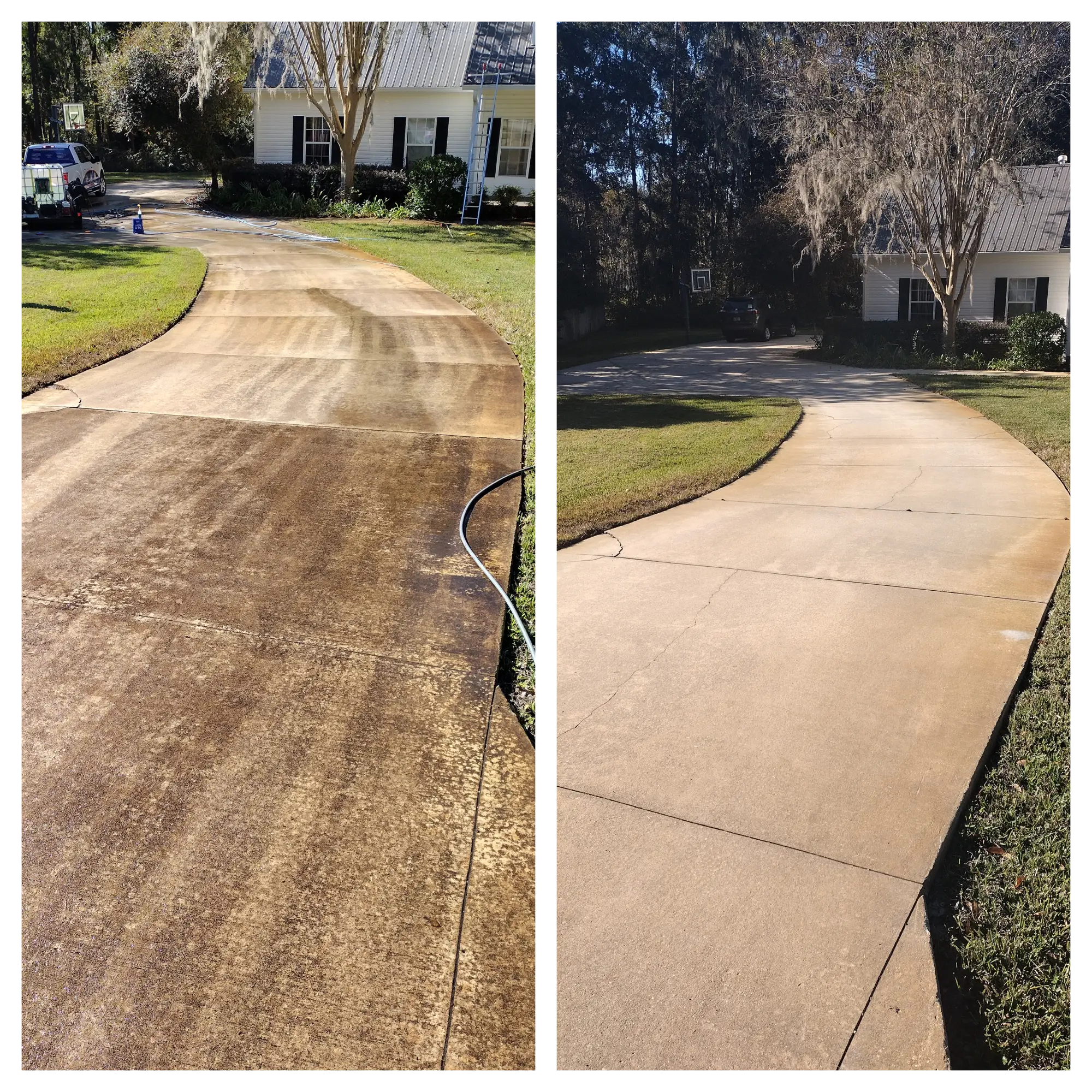
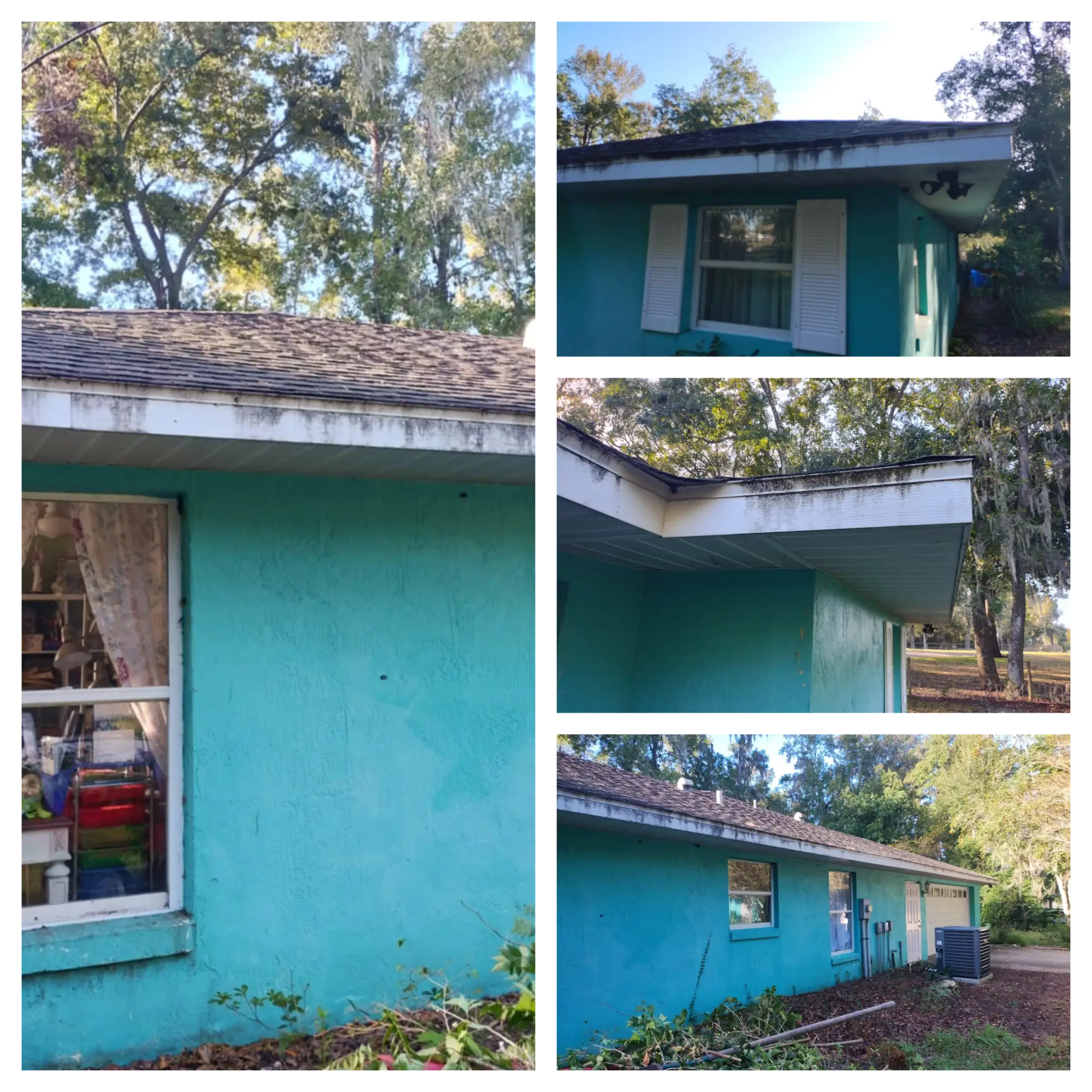
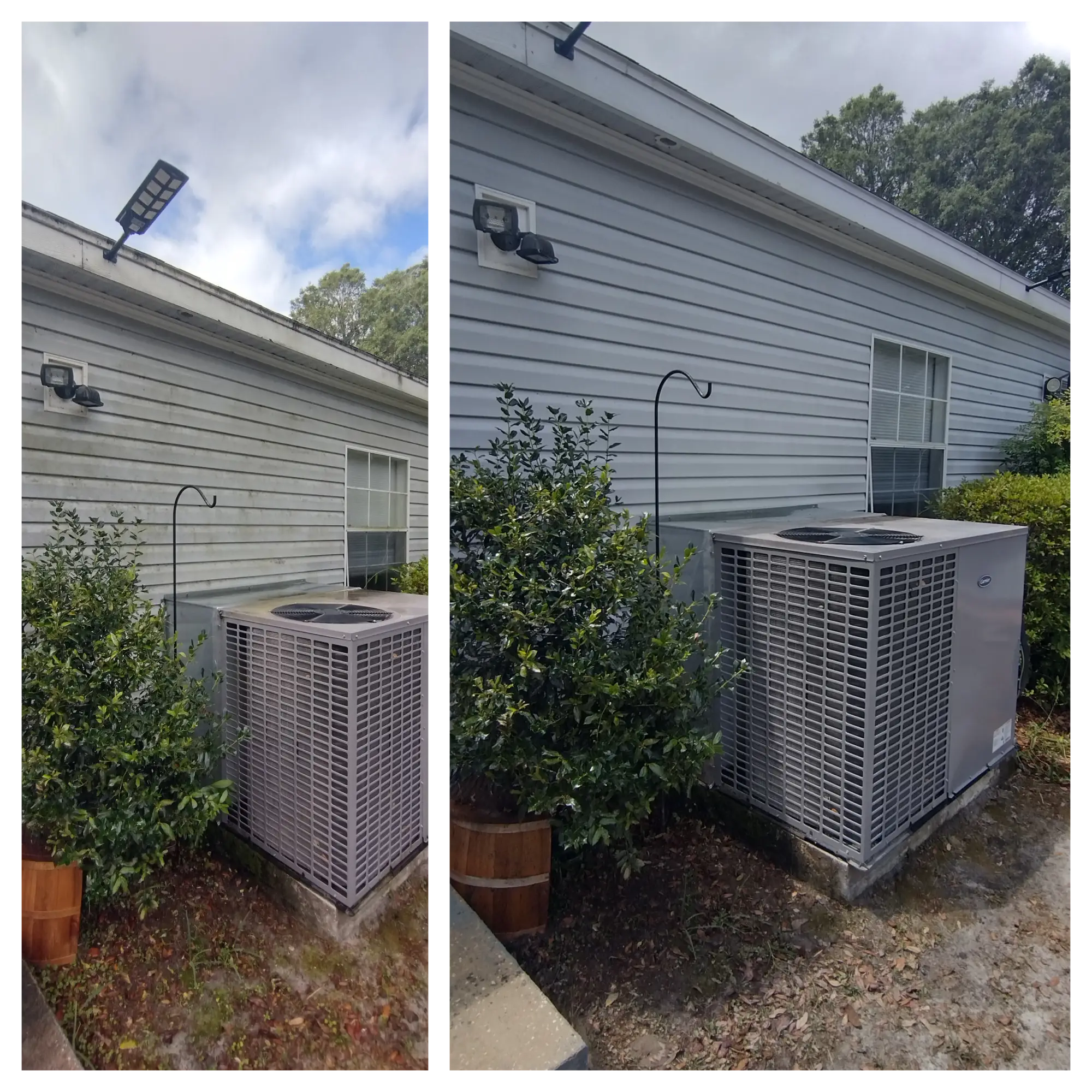
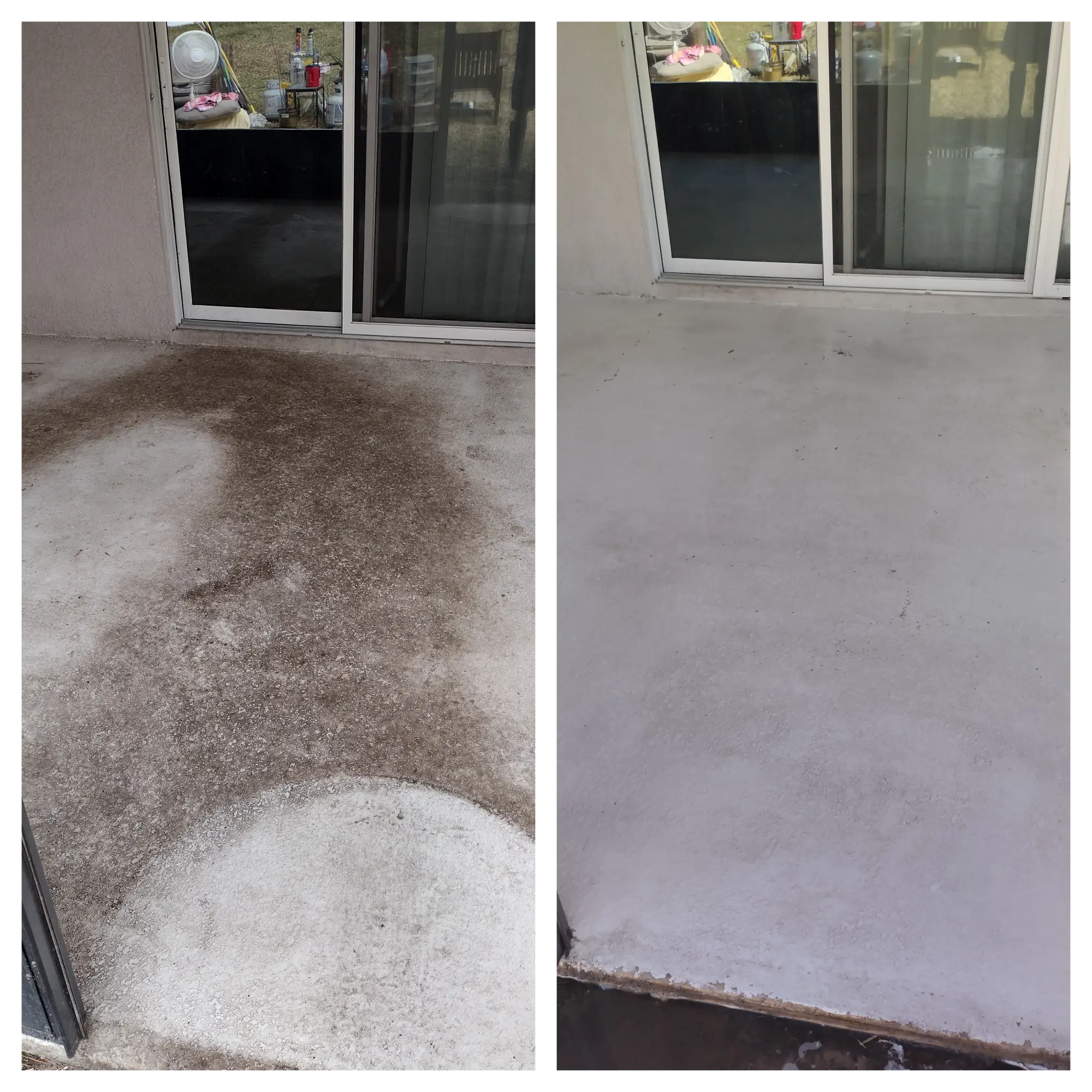
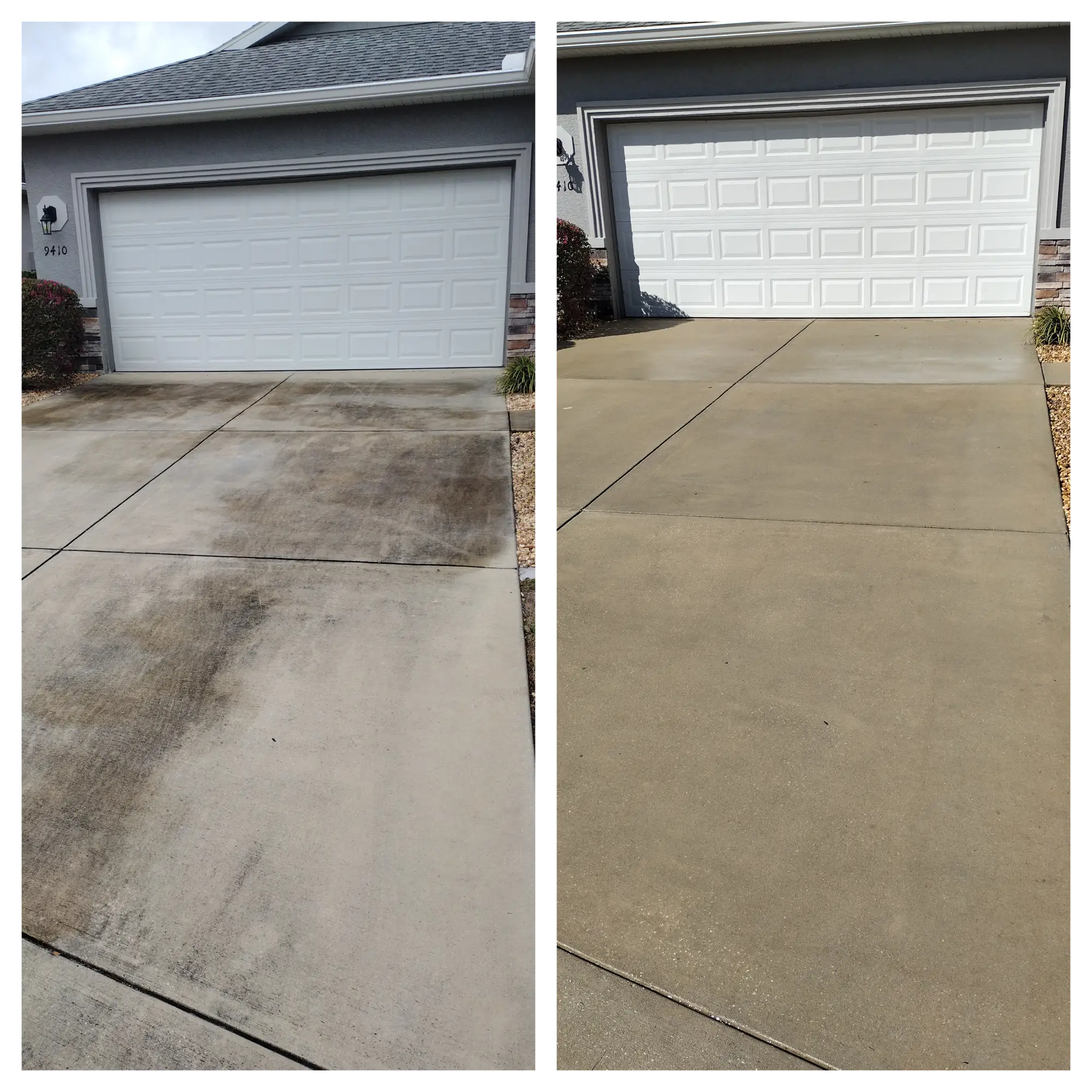
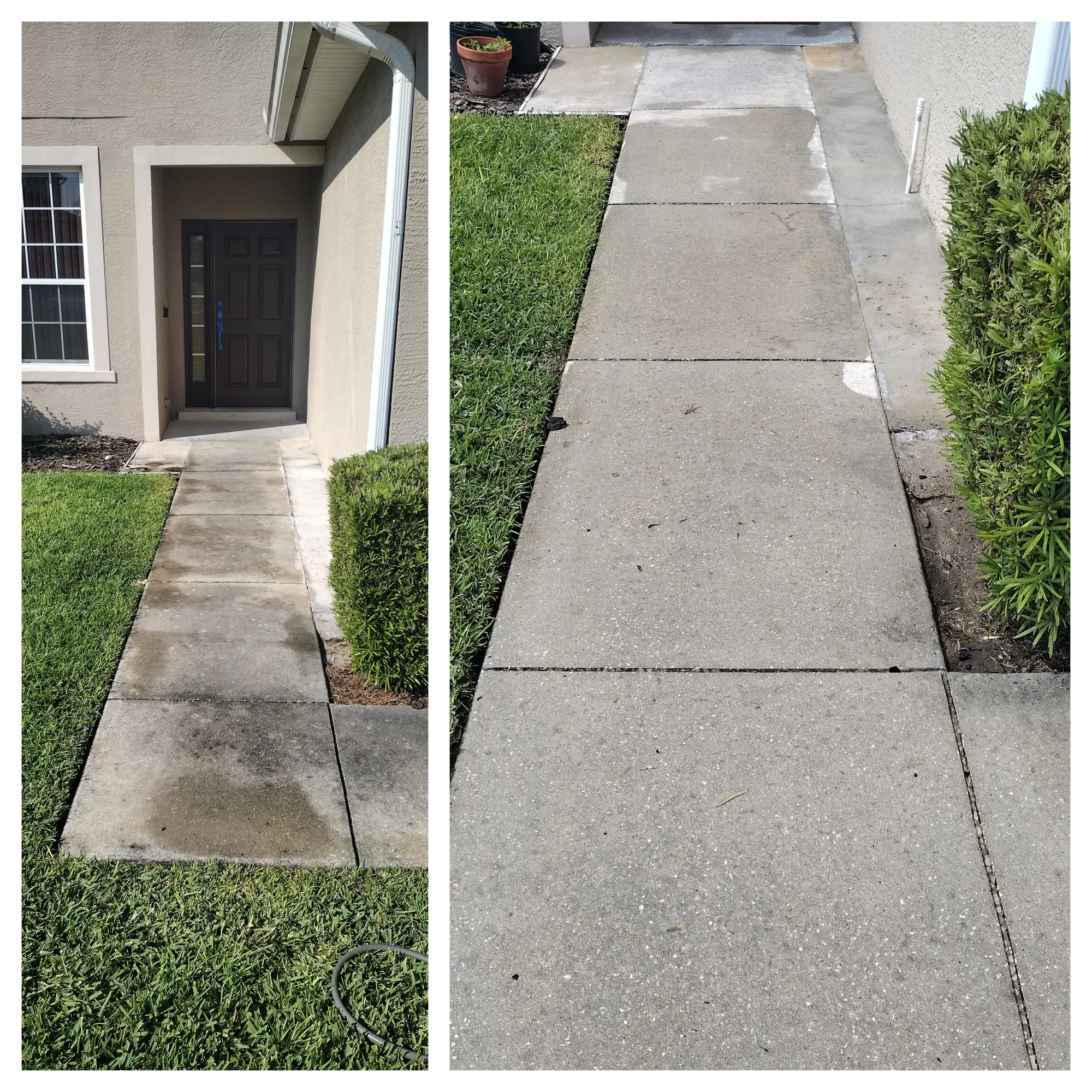
5-Star Rated on Google & Yelp
Trusted by Homeowners Across Marion, Citrus, Levy & Sumter Counties
Posted on Google
 Brandon Fairley
Trustindex verifies that the original source of the review is Google.
Randy and his team are true pros when it comes to power washing. They take the time to do the job right and treat your property with care. Highly recommend!Posted on Google Chad FilleyDoes and great job, extremely thorough job on a drive way and house.Posted on Google
 Gary StrikerStars and Stripes Power Washing does incredible work. Randy and his crew did an outstanding job on my horse trailer. It looks brand new. He is professional, shows up on time, paid attention to the details, and left everything clean when he finished. I’m a realtor, and I recommend Randy and Stars and Stripes Power Washing to all of my clients who need power washing. Reliable, high quality work every time..Posted on Google
 Gus BlancoWe own Complete Dryer Vent Services LLC and were really impressed with the work these guys performed. I can't believe how dirty my vinyl fence was. A week later and it's still glowing white! Got a good education on how lichen can cause staining and damage protective coating on vinyl fence. These guys know their stuff. They even washed our work trailer! Highly recommend Starr's and Stripes.Posted on Google
 Michael FetchRandy and Mathew from Starr's and Stripes Power Wash did an excellent job on our full house wash. Communication was clear and easy from start to finish, and they took the time to protect the plants and landscaping around the house. Our roof shingles had streaks all over them and now they are completely gone — the roof and house both look amazing. Honestly looks like a brand new home again. I would absolutely recommend them to anyone looking for pressure washing done right.Posted on Google
 Crystal LyonsReally great people! Prompt, courteous and professional while still being personable. Highly recommend!!! Edited to add that we are now repeat customers and our rating hasn't changed a bit! Same promptness, courtesy and professionalism!Posted on Google
 Kevin MckenzieRandy was very professional, friendly and thorough. I would highly recommend Starr's & Stripes Powerwash to anyone needing their home, roof or driveway cleaned.Posted on Google
 Angela NortonStarr's & Stripes PowerWash exceeded my expectations! Randy's team transformed my property, leaving everything spotless and looking brand new. Their attention to detail and dedication to quality are impressive. If you need reliable and thorough exterior cleaning, look no further—these guys are the best in the business!Posted on Google
 Mary RossiAbsolutely the nicest people to deal with and a great job.Posted on Google
 Jeannine PlummerI am a local Realtor, and I love that I can trust Starrs & Stripes to do a great job and with such professionalism that my clients reach out singing their praises after they leave. I highly recommend using this company for all of your power washing needs!
FAQs
Questions About Restaurant Exterior Cleaning in Ocala
Can a dirty restaurant exterior actually cause a failed health inspection?
Yes. Florida DBPR inspectors evaluate exterior conditions as part of the standard inspection form for licensed food service establishments. Exterior grease accumulation on the building wall near kitchen exhaust systems is classified as a potential fire hazard and can be cited as a High Priority violation requiring immediate corrective action. Dumpster enclosure conditions that suggest unsanitary waste management, pest evidence in outdoor areas, and the general condition of service areas visible from the exterior all contribute to the inspection score. High Priority violations from an exterior inspection can require on-site correction before the inspector leaves the property. Restaurants with a history of exterior violations are placed on increased inspection frequency, meaning inspectors return more often.
Do you clean at night after the restaurant closes?
Yes. Night service after kitchen close is our standard approach for restaurant exterior cleaning. Cleaning during service hours creates wet surface hazards for kitchen and service staff, disrupts degreaser dwell time chemistry with foot and vehicle traffic, and creates customer perception issues from visible cleaning operations during dining hours. We schedule cleaning visits to begin after the last service staff leaves and complete the work so all surfaces are dry before morning prep staff arrives. Contact us with your kitchen close time and we will schedule the cleaning window around your operation.
Do you clean the inside of the kitchen hood and exhaust ducts?
No. Interior kitchen hood, duct, and exhaust fan cleaning is a separate specialized trade performed by certified hood cleaning companies. Our restaurant exterior cleaning covers the EXTERIOR surfaces only: the exterior wall below and around the kitchen exhaust discharge point, the exterior of the roof exhaust fan cap, and the building wall surfaces around exterior ventilation points. Interior hood cleaning certification and equipment are separate from exterior pressure washing service. If you need interior hood cleaning, we can recommend certified hood cleaning services in the Ocala area.
What cleaning chemistry do you use on grease surfaces?
Commercial-grade alkaline degreaser at concentration appropriate for the type and age of grease contamination. Alkaline degreaser chemistry works by saponification — it reacts with the fatty acid chains in the grease and converts them to a water-soluble form that can be rinsed away with pressure washing. Fresh grease responds quickly to degreaser at standard concentration. Polymerized grease — grease that has been repeatedly heated and hardened on the surface over months of exhaust operation — requires higher concentration, longer dwell time, and in some cases multiple application cycles. We assess the grease condition before applying chemistry and adjust the protocol accordingly.
Is your cleaning chemistry safe for restaurant environments and storm drain discharge?
Yes. All cleaning chemistry used for restaurant exterior cleaning is food-service appropriate — meaning it is formulated for use in environments where food is handled and where incidental contact with food service equipment or surfaces is possible. Runoff from restaurant exterior cleaning is managed to minimize storm drain discharge volume and chemistry load. We use biodegradable surfactant and degreaser formulations and manage rinse water to the extent possible with the property drainage configuration. If your municipality has specific requirements for commercial cleaning discharge, let us know when scheduling and we will confirm compliance with those requirements.
How often should a restaurant exterior be professionally cleaned?
High-volume QSR and fast-casual restaurants with drive-through service should plan for monthly cleaning of exhaust wall, dumpster pad, and drive-through surfaces — these surfaces accumulate contamination quickly under continuous heavy service. Full-service casual dining and sit-down restaurants without drive-through service can typically maintain inspection-ready exterior condition on a quarterly program. The specific interval depends on kitchen volume, the configuration of the exhaust system, and the drainage and shade conditions around the dumpster enclosure. We provide a maintenance frequency recommendation after the initial assessment visit based on what we observe on the property.
How much does restaurant exterior cleaning cost in Ocala?
Restaurant exterior cleaning is priced based on the scope of surfaces covered, the degree of grease and biological contamination, and the time required for degreaser dwell cycles on heavily accumulated surfaces. A standard restaurant exterior clean covering exhaust wall, dumpster pad, drive-through lane, and building facade typically ranges from 00 to 00 depending on restaurant size and contamination level. Heavily contaminated properties requiring extended degreaser treatment or multiple application cycles may be priced higher. Scheduled maintenance program pricing reflects a per-visit discount for the ongoing relationship. Starr’s and Stripes provides a free on-site written estimate for all restaurant exterior cleaning projects. Call or text (352) 230-9299 to schedule an assessment.