POST-CONSTRUCTION EXTERIOR CLEANING FOR CONCRETE OVERSPRAY, PAINT OVERSPRAY, STUCCO HAZE REMOVAL, FAST MOBILIZATION, NEW CONSTRUCTION SPECIALISTS IN RESIDENTIAL AND COMMERCIAL OCALA HOMES
Pass Final Inspection Faster. Construction Cleanup Experts.
Looking for post-construction exterior cleaning in Ocala, Florida? Starr's & Stripes Power Wash provides specialized pressure washing, soft washing, and concrete splatter removal for general contractors, home builders, and commercial developers across Marion, Sumter, Citrus, and Levy Counties. Owners Randy and Matt Starr deliver flexible site scheduling—eliminating mortar haze, drywall dust, stucco slurry, paint overspray, and concrete splatter without scratching new glass or etching fresh masonry.
Post-Construction Clean Done Right
Builders and general contractors in the Ocala area trust post-construction exterior cleaning to specialists who understand construction timelines and new construction surfaces. The contaminants on a freshly completed property — concrete overspray, paint overspray, stucco haze, mortar residue, construction adhesive — are not what standard pressure washing surfactant is designed to remove. Using the wrong chemistry or wrong pressure on brand-new surfaces creates damage on surfaces that are still under your warranty. One call to the wrong contractor turns a schedule problem into a warranty problem.
Starr’s & Stripes provides post-construction exterior cleaning calibrated for new construction surfaces and builder timelines. We mobilize fast, identify the correct treatment chemistry for each contaminant type on the property, and deliver a finished exterior that passes final inspection and impresses at the buyer walkthrough. Residential new builds, commercial properties, renovation projects, and multi-unit developments — all cleaned to a standard that moves your close date forward, not back.
Construction Contamination Is Not a Cleaning Problem.It Is a Schedule Problem.
Builders and general contractors measure post-construction cleanup against a specific timeline benchmark: the date the property needs to be clean for the next scheduled stage. That might be the final inspection, the buyer walkthrough, the certificate of occupancy application, or the property listing photos. When construction contamination delays any of those stages, the cost is not the cleaning bill — it is the carrying cost of the delay, the buyer relationship risk, and in some cases the contract penalty for a missed close date.
Final Inspection Readiness
What gets delayed: Certificate of occupancy inspection requires the property to present as complete and ready for occupancy. Concrete overspray on windows, paint splatter on exterior surfaces, and construction debris embedded in new concrete flatwork are visible incompletion indicators that inspectors note.
What that delay costs: A failed or delayed CO inspection pushes the entire close date. Carrying costs on a finished property accumulate at the full construction financing rate. Buyers waiting for a close date receive updates that erode confidence. In competitive markets, a buyer who has been waiting through inspection delays begins looking at alternatives.
How fast cleanup resolves it: A complete post-construction exterior clean removes the contamination before the inspection date. The property presents as finished, not as a construction site in cleanup mode. CO inspection finds no exterior completion issues to note.
Buyer Walkthrough Impression
What gets delayed: The buyer walkthrough is the moment the buyer transitions from anticipation to commitment. Everything they see on the walkthrough confirms or complicates the purchase decision they have already made emotionally. Concrete overspray on new windows, construction debris on the driveway, paint splatter on the front entry — these do not read as normal construction byproducts to a buyer. They read as incomplete work and insufficient care.
What that delay costs: A buyer who raises exterior cleanliness concerns at the walkthrough has a documented basis for post-close punch list items and in some cases for delaying final payment pending completion. More significantly, a buyer whose walkthrough generates a list of exterior concerns arrives at the close table with a different emotional state than one whose walkthrough confirmed their decision. Buyer confidence at close affects referral behavior after close.
How fast cleanup resolves it: A clean exterior before the walkthrough removes the category of concern entirely. The buyer’s attention goes to the finishes and features, not to the construction residue on the driveway. The walkthrough confirms the purchase rather than complicating it.
Listing Photography
What gets delayed: New construction listing photos are taken before the property goes on the MLS or builder website. Photography with construction contamination visible on the exterior — streaked windows, stained concrete flatwork, debris in the landscaping — produces listing photos that sell the builder’s product at a lower price point than the finished quality of the property deserves.
What that delay costs: Listing photos with visible construction contamination stay on the MLS for the life of the listing and on aggregator sites after close. They are the first impression prospective buyers have of the property and the standard against which they price their offer. Underpriced listing photos are a recurring cost across every property the builder photographs in that condition.
How fast cleanup resolves it: Post-construction exterior cleaning before photography produces listing photos that show the property at its actual finished quality. The investment in cleanup before photography pays forward in offer price and buyer qualification on every property that gets photographed clean.
Multi-Unit and Development Phase Transitions
What gets delayed: Multi-unit residential developers and commercial construction GCs often need individual units or phases cleaned on a rolling schedule as each unit reaches completion, not as a single end-of-project cleanup. When cleanup scheduling cannot keep pace with construction completion, finished units sit in a contaminated state while subsequent phases complete, creating compounding schedule pressure.
What that delay costs: Multi-unit developments where cleanup lags behind completion create a visual contradiction: finished construction quality on the building with construction-site contamination on the exterior. This affects model unit presentation, pre-sale tours, and the schedule for activating each phase of the development. The longer cleanup lags completion, the more contamination bonds to surfaces and requires more intensive treatment.
How fast cleanup resolves it: Recurring post-construction cleanup service timed to construction phase completion keeps pace with multi-unit development schedules. Each unit or phase is cleaned to presentation standard as it completes rather than after an accumulated backlog. Discuss rolling schedule arrangements when requesting an estimate.
Post-Construction Contamination Is Not Maintenance Dirt. It Requires Different Chemistry.
Every contaminant type on a post-construction property requires a specific treatment approach. Applying standard biological growth surfactant to concrete overspray does not remove it — it wets it and leaves it. Applying high pressure to new paint overspray on concrete removes some of it while driving the rest deeper into the substrate. Post-construction exterior cleaning is a specialty application, not a standard maintenance wash on a newly built surface. The six contaminant types below are the primary post-construction cleaning challenges on new residential and commercial properties in the Ocala area.
Concrete Overspray on Windows, Siding, and Adjacent Surfaces
What it is: Concrete overspray occurs during flatwork pours — driveways, sidewalks, patios, garage floors — when concrete slurry splashes, blows, or runs onto adjacent surfaces before curing. On new construction, this most commonly appears on the lower sections of window glass, foundation siding, brick or stone veneer, and any landscaping hardscape adjacent to concrete flatwork.
Why it needs specialist treatment: Cured concrete bonds to glass, siding, and masonry through a carbonate crystallization process that standard pressure washing surfactant cannot dissolve. Applying high pressure to cured concrete overspray scratches the glass surface as the concrete particles are dragged across it rather than dissolved. Incorrect acid application concentration etches window glass permanently — a warranty claim on new windows.
Our treatment: Diluted acid wash (phosphoric or muriatic acid at appropriate concentration for the surface type) applied to dissolve the carbonate bond of cured concrete overspray. Glass surfaces require careful concentration calibration and short dwell time to dissolve the overspray without etching the glass coating. Masonry and siding surfaces tolerate higher concentration. Full neutralization rinse after treatment to stop acid activity. Test patch on an inconspicuous section before full treatment on any new glass surface.
Paint Overspray on Concrete, Masonry, and Hardscape
What it is: Exterior paint overspray occurs during the application of exterior house paint, trim paint, and any spray-applied exterior finish. Wind drift during spray application deposits fine mist on concrete driveways, walkways, and any masonry surface downwind of the painting operation. On new construction, paint overspray on new concrete flatwork is among the most common post-construction contaminants.
Why it needs specialist treatment: Fresh paint overspray responds to pressure washing when addressed immediately. Cured paint overspray bonds to concrete and masonry surfaces and requires chemical treatment to release. High-pressure wand washing alone on cured paint overspray scours the concrete surface around the paint spots, creating visible texture inconsistency while leaving the paint spots embedded.
Our treatment: Paint overspray treatment chemistry depends on paint type (latex versus oil-based) and surface type (concrete, masonry, brick). Latex paint overspray on concrete responds to biodegradable paint stripper applied at appropriate dwell time followed by pressure washing. Oil-based paint overspray requires solvent-based treatment chemistry. Surface type determines whether acid pre-treatment is needed to open the concrete surface before paint remover application. All treatment is tested on a small section before full application.
Stucco Haze on New Construction Windows
What it is: Stucco haze is the thin film of calcium carbonate and silicate that transfers from freshly applied stucco onto adjacent window glass during and after stucco application. It appears as a hazy, milky film on new construction windows that does not wipe off and that becomes progressively harder to remove as it cures and bonds to the glass surface. Stucco haze is one of the most common new construction complaints from buyers at walkthrough.
Why it needs specialist treatment: Stucco haze that has fully cured on glass is a crystalline carbonate deposit similar to concrete overspray but thinner and more uniformly distributed across the glass surface. Dry wiping or standard glass cleaner does not remove cured stucco haze — it polishes the film and makes it more visible. High-pressure water spreads the haze residue and can drive it into window seal perimeters. Incorrect acid application on coated or low-e window glass etches the glass coating permanently.
Our treatment: Diluted acid solution (white vinegar or phosphoric acid at low concentration) applied to the glass surface with controlled dwell time to dissolve the calcium carbonate film without affecting the glass coating. For windows with low-e or specialty glass coatings, confirm coating compatibility before any acid application. Application by hand using non-abrasive applicator, not pressure washing. Post-treatment polish with professional glass cleaning solution to confirm haze elimination and restore clarity. This is the highest-precision treatment on any new construction surface and is done with hand tools, not pressure equipment.
Construction Adhesive and Sealant Residue
What it is: Construction adhesive, caulk overapplication, and sealant residue appear on exterior surfaces adjacent to adhesive application points — window frames, door surrounds, foundation transitions, and trim joints. During construction activity, adhesive and sealant deposits accumulate on concrete, masonry, and siding surfaces where excess material was not cleaned during installation.
Why it needs specialist treatment: Cured construction adhesive and silicone sealant residue does not respond to water-based pressure washing chemistry. Standard surfactant leaves it in place. High pressure can delaminate fresh sealant beads from their intended application surfaces if the cleaning wand approaches too closely, creating re-installation work on surfaces just sealed.
Our treatment: Solvent-based adhesive remover appropriate for the surface type applied to adhesive deposits with controlled contact time. Mineral spirits or commercial adhesive remover for most construction adhesive types. Silicone removal requires specialized silicone solvent. All solvent treatment is followed by water rinse and surface verification. Pressure equipment is not used on or near fresh sealant application areas.
Mortar and Grout Residue on Brick, Stone, and Masonry
What it is: Mortar residue appears on brick veneer, stone masonry, and retaining wall surfaces when mortar is applied without adequate protection of the exposed face. During new construction, mortar and grout residue on masonry surfaces accumulates from both initial installation and from subsequent construction activity that deposits mortar splash and smear on previously completed masonry sections.
Why it needs specialist treatment: Mortar residue on masonry bonds through the same carbonate crystallization process as concrete overspray but typically at higher thickness and with more irregular distribution. High-pressure washing without chemical pre-treatment embeds mortar residue into the masonry texture and scours the mortar joint face. Incorrect acid concentration on colored or specialty masonry can bleach or etch the surface permanently.
Our treatment: Masonry cleaning acid (muriatic or phosphoric acid at concentration appropriate for the masonry type) applied after pre-wetting the masonry surface to prevent acid absorption into the substrate. Controlled dwell time for mortar dissolution. Neutralization rinse and final pressure wash to remove dissolved residue. Brick and natural stone require different acid concentration calibration. All masonry acid treatment is tested on an inconspicuous section before full application.
First-Cycle Biological Growth and General Construction Period Contamination
What it is: Construction projects take weeks or months to complete. During that period, exposed concrete flatwork, exterior wall surfaces, and hardscape accumulate the first cycle of biological growth from Florida humidity and organic material from construction activity — sawdust, wood chips, soil disturbance from grading. The biological growth on new construction surfaces is often heavier than on maintained properties because the rough surface texture of new concrete and fresh stucco provides better anchor points for growth.
Why it needs specialist treatment: First-cycle biological growth on new construction concrete is treated the same as on maintained concrete, but the rough surface texture of new flatwork requires longer surfactant dwell time for the growth to be fully treated before pressure washing. Sawdust and organic debris embedded in expansion joints or between paver units requires physical removal before washing to prevent biological contamination of the cleaned surface.
Our treatment: Standard soft-wash biological growth surfactant at appropriate dwell time for new construction surface texture. Expansion joint clearing before surfactant application. Surface cleaner attachment for uniform concrete field cleaning. Post-construction biological growth treatment is typically the final step after all chemical-specific contaminant treatments are complete so the clean surface can be assessed uniformly.
Complete Exterior Surface Coverage on New Construction Properties.
Post-construction exterior cleaning covers every exterior surface that accumulated construction contamination during the build. For a typical new construction residential property, that means every surface from the foundation to the roof edge that was exposed to construction activity. We assess the full scope on the initial estimate visit and provide surface-by-surface pricing transparency before beginning any work.
1
Driveways, Walkways, and Concrete Flatwork
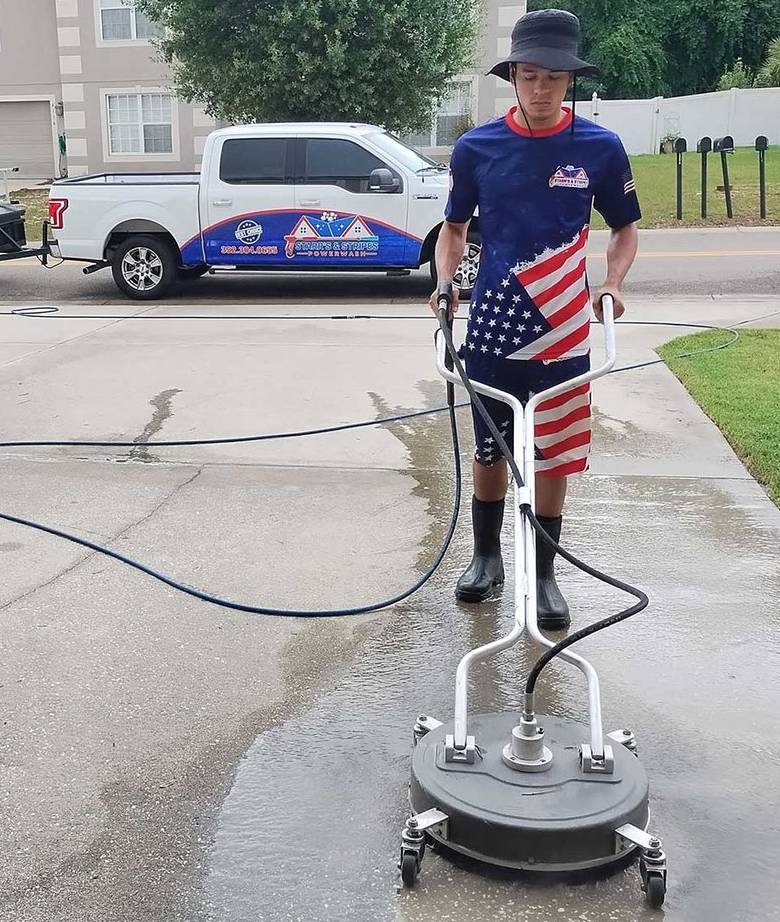
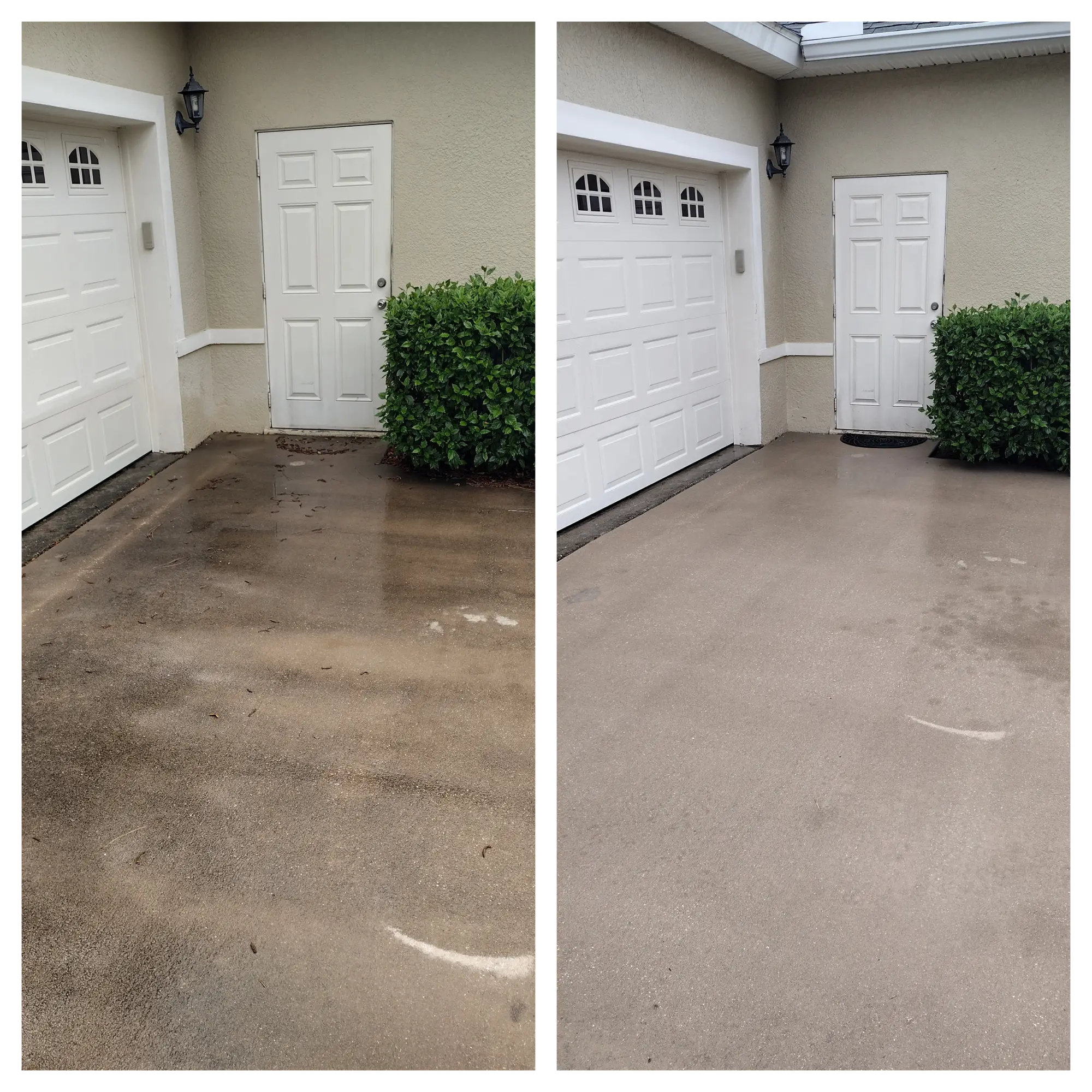
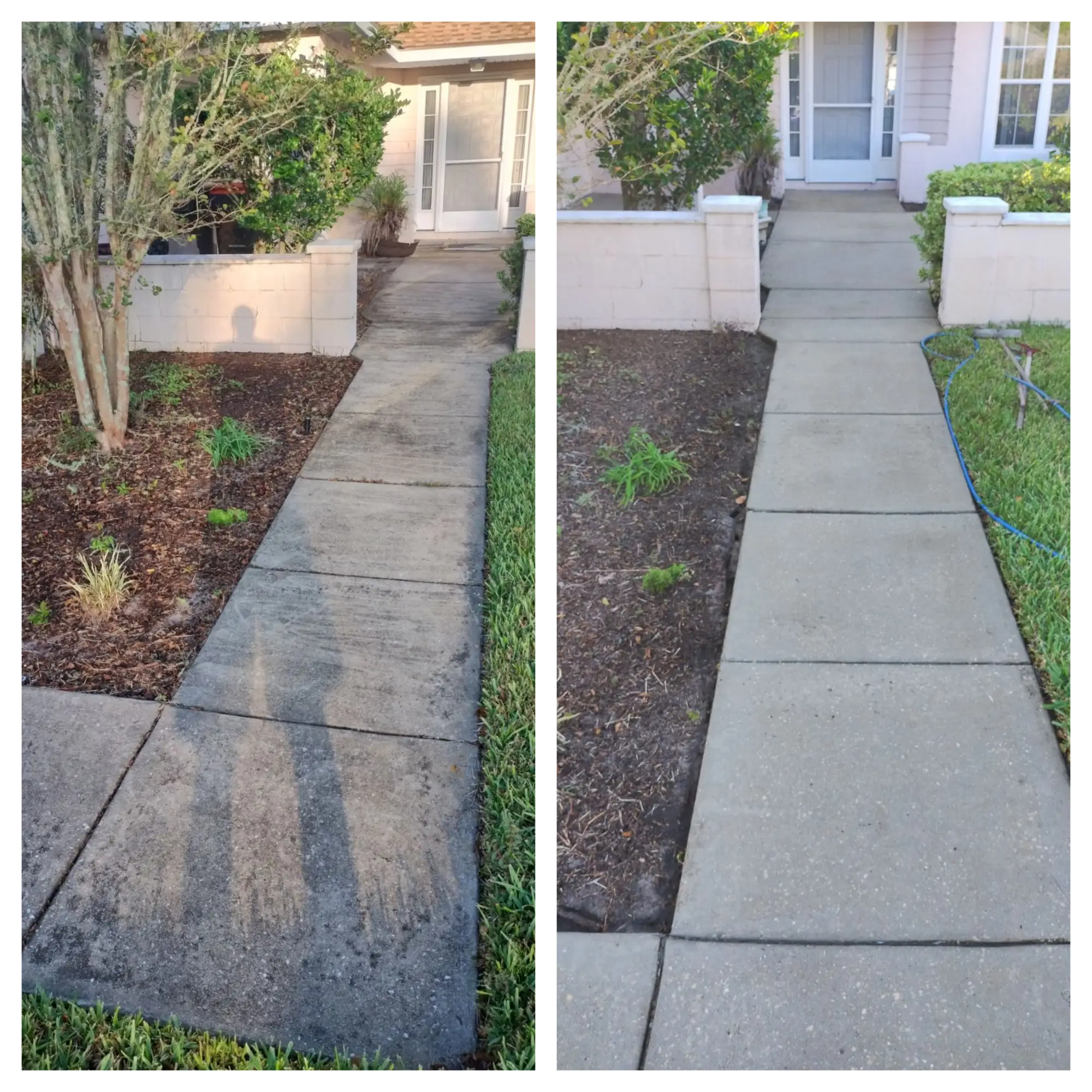
New concrete driveways and walkways are the most visible post-construction contamination surfaces and the most photographed for listing photos. Concrete overspray, paint overspray, tire marks from construction vehicles, and first-cycle biological growth all accumulate on new flatwork during construction. New concrete requires careful treatment calibration -- it is more porous and surface-sensitive than cured older concrete.
Builder note: New concrete should not be acid washed within the first 30 days of pour unless the contamination requires it. Chemical treatment on new concrete is calibrated for the cure age. Note the pour date when scheduling so treatment chemistry can be adjusted accordingly.
2
Windows and Glass Surfaces
New construction windows accumulate stucco haze, concrete overspray, paint overspray, and construction dust film during the build. Glass cleaning on new construction is the highest-precision surface on any post-construction job because incorrect treatment creates permanent damage on brand-new windows. Window cleaning is performed after all other surface treatments are complete to avoid re-contamination.
Builder note: Low-e glass, coated glass, and specialty window products (including impact-rated glass common in Florida construction) require treatment chemistry confirmation before any acid or chemical application. Identify window glass specification when requesting estimate if known. If unknown, we assess the glass type before beginning window treatment.
3
Building Exterior, Siding, and Facade
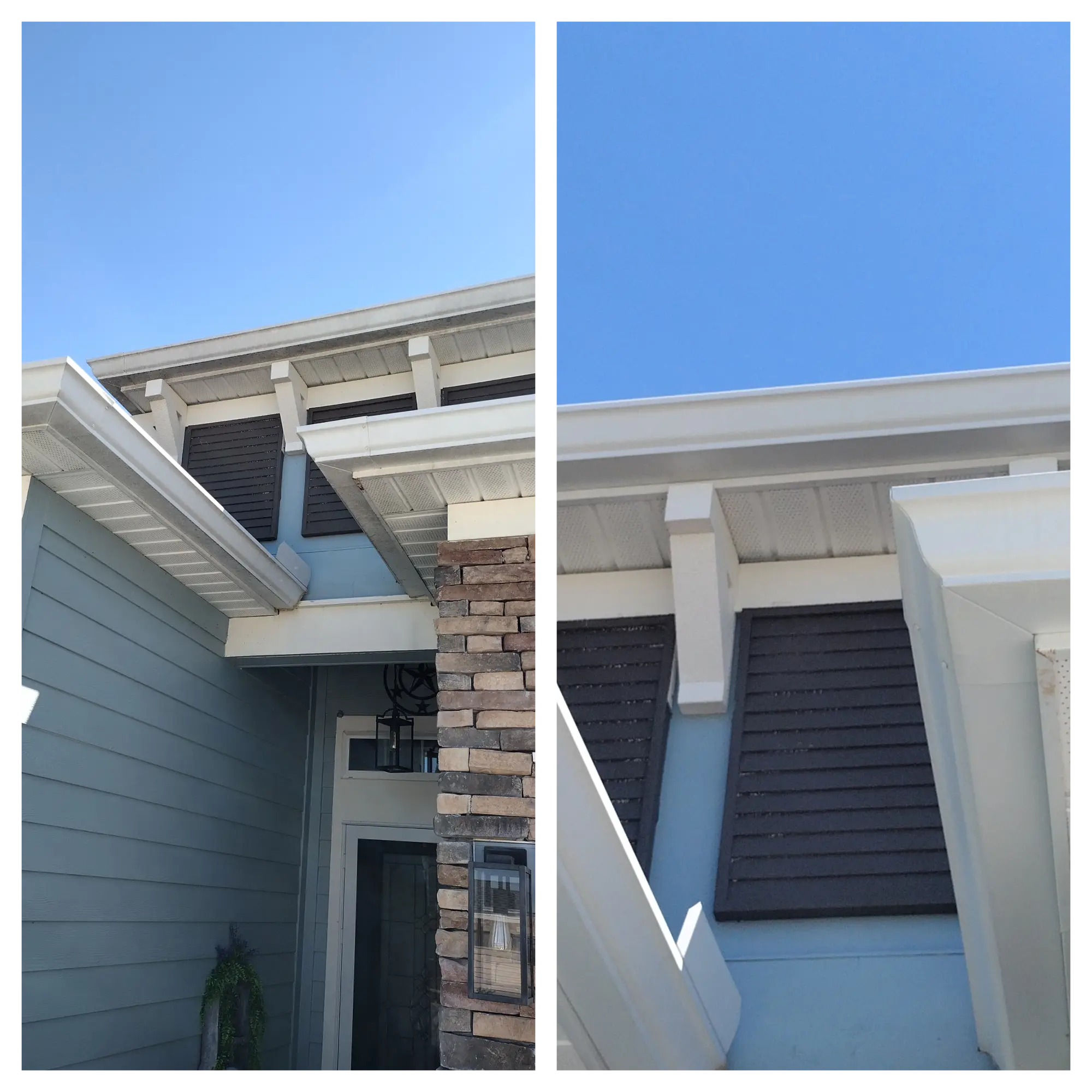
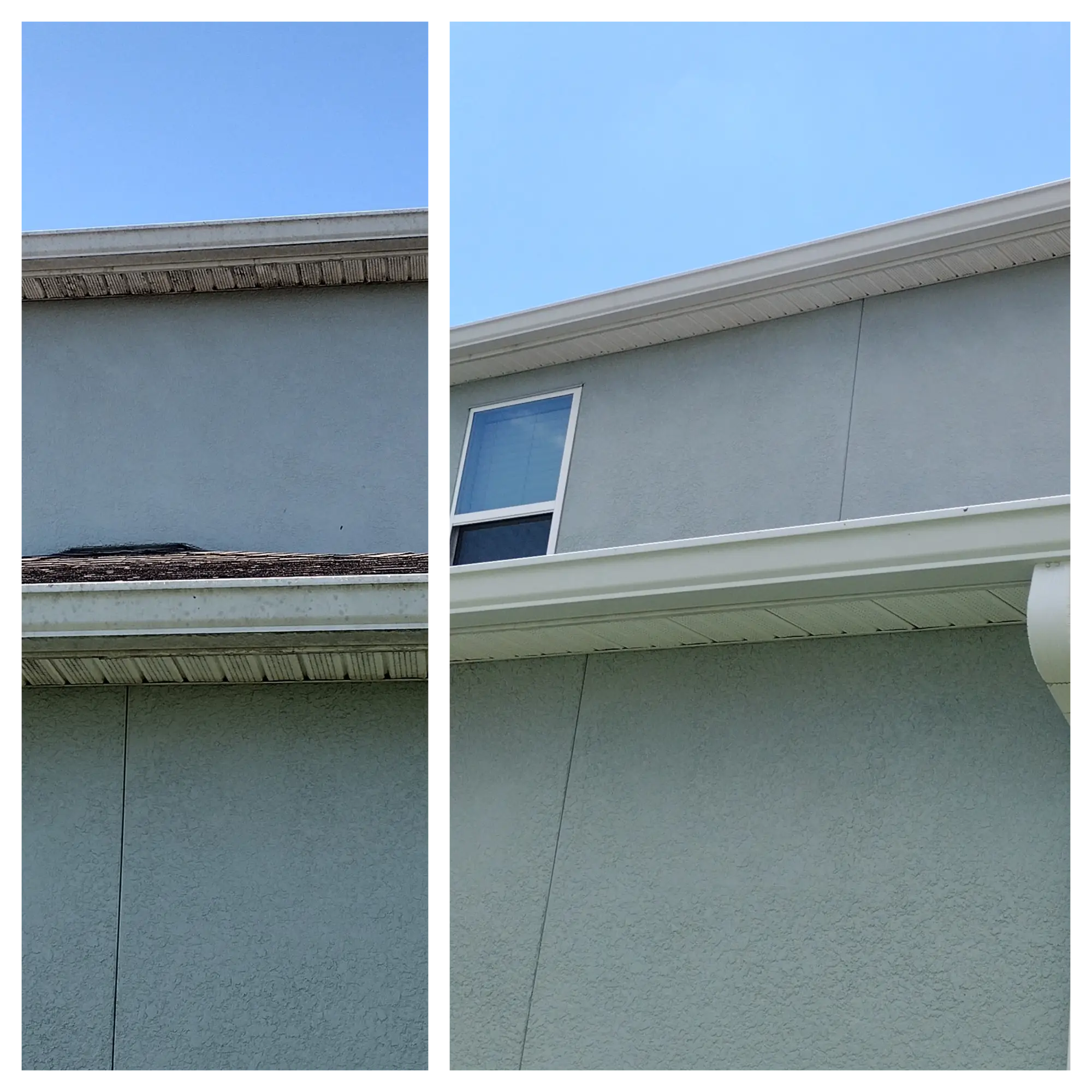
The building exterior accumulates construction contamination from adjacent trades -- paint overspray from exterior painting, concrete splatter from flatwork, caulk and sealant residue from installation, and general construction dust film from the extended build period. Stucco, painted siding, brick veneer, and EIFS all require treatment chemistry calibrated to the specific exterior finish material.
Builder note: New stucco and EIFS (synthetic stucco) are more vulnerable to pressure damage than cured older stucco because the surface has not fully hardened. All new stucco and EIFS treatment uses soft wash approach. See Stucco Cleaning service page for full detail on traditional versus EIFS treatment differences.
4
Roof Surfaces
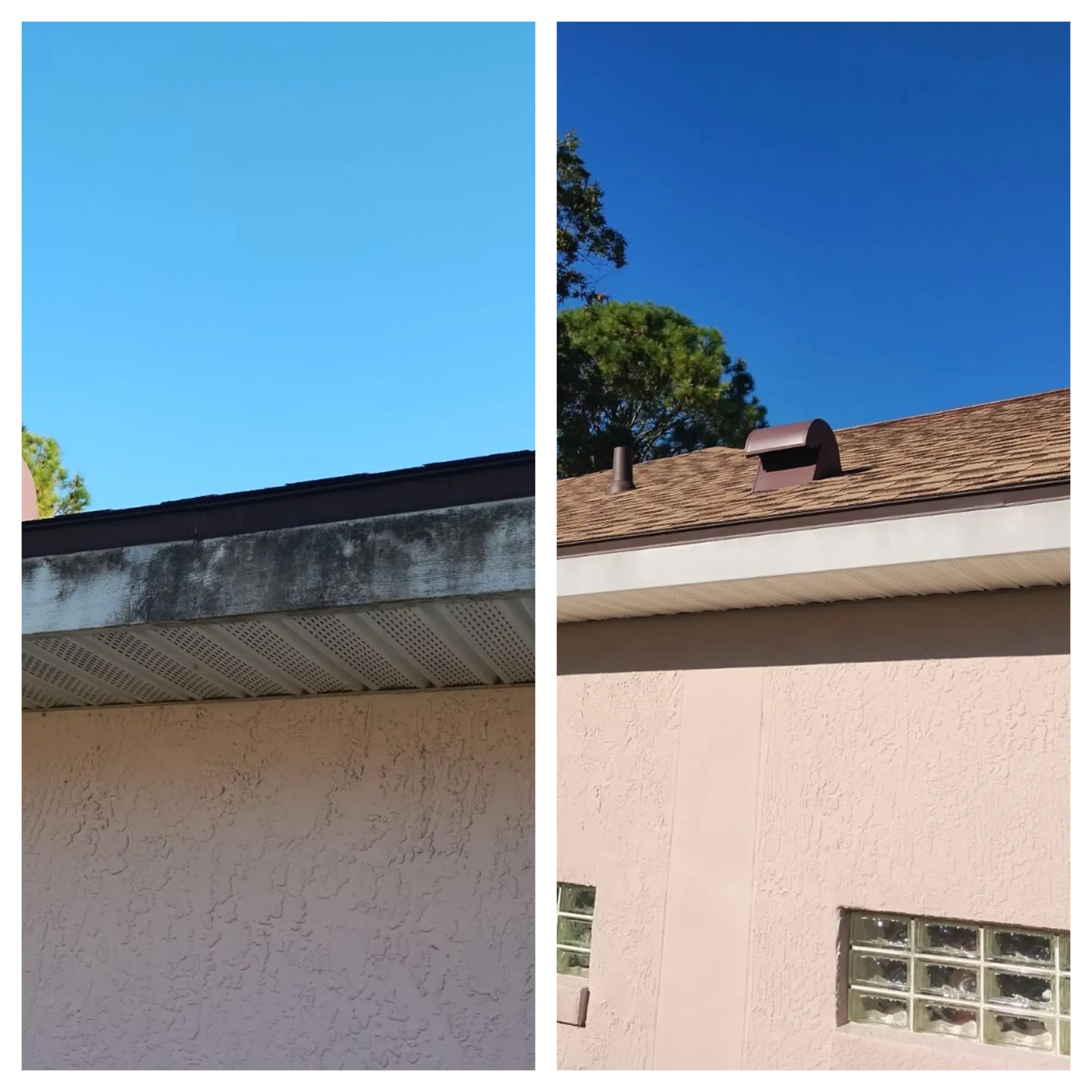
New roofing accumulates construction debris, overspray from adjacent trades, and first-cycle biological growth from the build period. Roofing manufacturer warranties on new construction shingles specify low-pressure cleaning only -- high-pressure treatment on new shingles voids warranty. Post-construction roof cleaning is soft wash only.
Builder note: Roofing manufacturer warranty documentation typically specifies approved cleaning methods. New construction roof cleaning always uses soft wash approach consistent with manufacturer warranty requirements. If the roofing warranty document is available, review it before scheduling roof cleaning.
5
Garage Floors and Interior Concrete
Garage floor concrete accumulates construction debris, paint and adhesive overspray, tire marks from construction vehicles, and first-cycle contamination during the build. Garage floor cleaning is typically included in post-construction scope when the floor is fully exposed -- after all appliances and interior finishes are installed and the space is cleared of construction materials.
Builder note:
Garage floor cleaning uses the same surface cleaner approach as exterior concrete. Drainage from the garage floor during cleaning should flow to the driveway for containment rather than into any interior drain connected to finished plumbing.
6
Patios, Pool Decks, and Outdoor Living Areas
New construction patios, pool decks, and outdoor living areas accumulate construction contamination from all adjacent trades during the build. Pool deck concrete is especially prone to first-cycle biological growth from the wet conditions during and after pool installation. Paver patios may have mortar residue from installation that requires acid treatment before sealing.
Builder note: Paver sealing after post-construction cleaning is a natural next step for new paver installations -- cleaning removes construction contamination and prepares the surface for sealer application. If paver sealing is planned, coordinate cleaning and sealing scheduling to complete both on the same visit or immediately consecutive visits. See Paver Sealing service detail for full scope.
7
Entrance Features, Columns, and Architectural Masonry
New construction entrance features -- columns, archways, decorative masonry, retaining walls, mailbox structures -- accumulate mortar residue from installation, concrete overspray from adjacent flatwork, and paint overspray from exterior painting. These are high-visibility features at the curb approach and at the buyer walkthrough entry sequence.
Builder note: Decorative masonry and architectural stone features should be identified on the estimate visit so treatment chemistry appropriate for the specific stone or masonry type can be confirmed. Travertine, limestone, and some specialty stones require acid-free or very low-acid treatment to avoid surface etching.
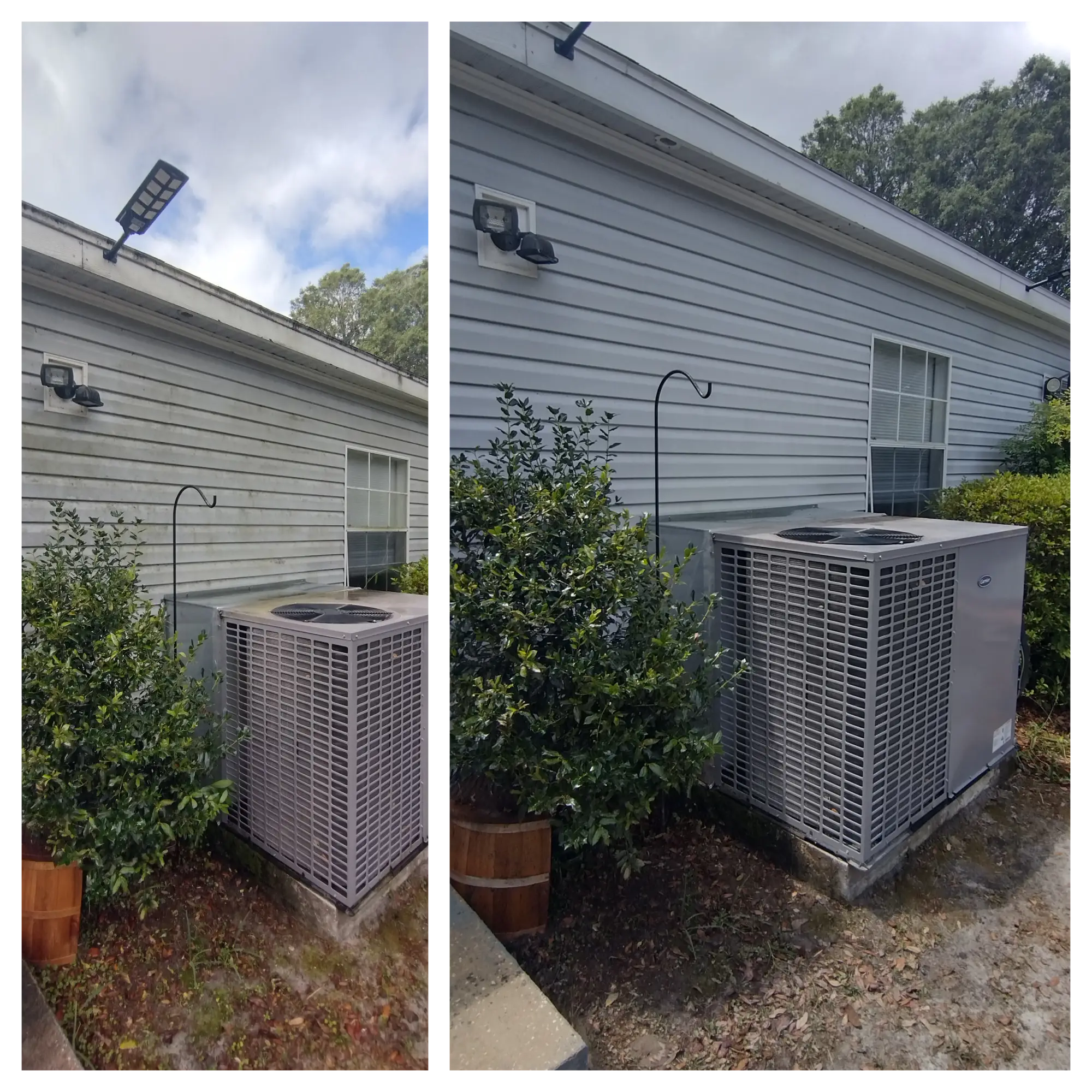
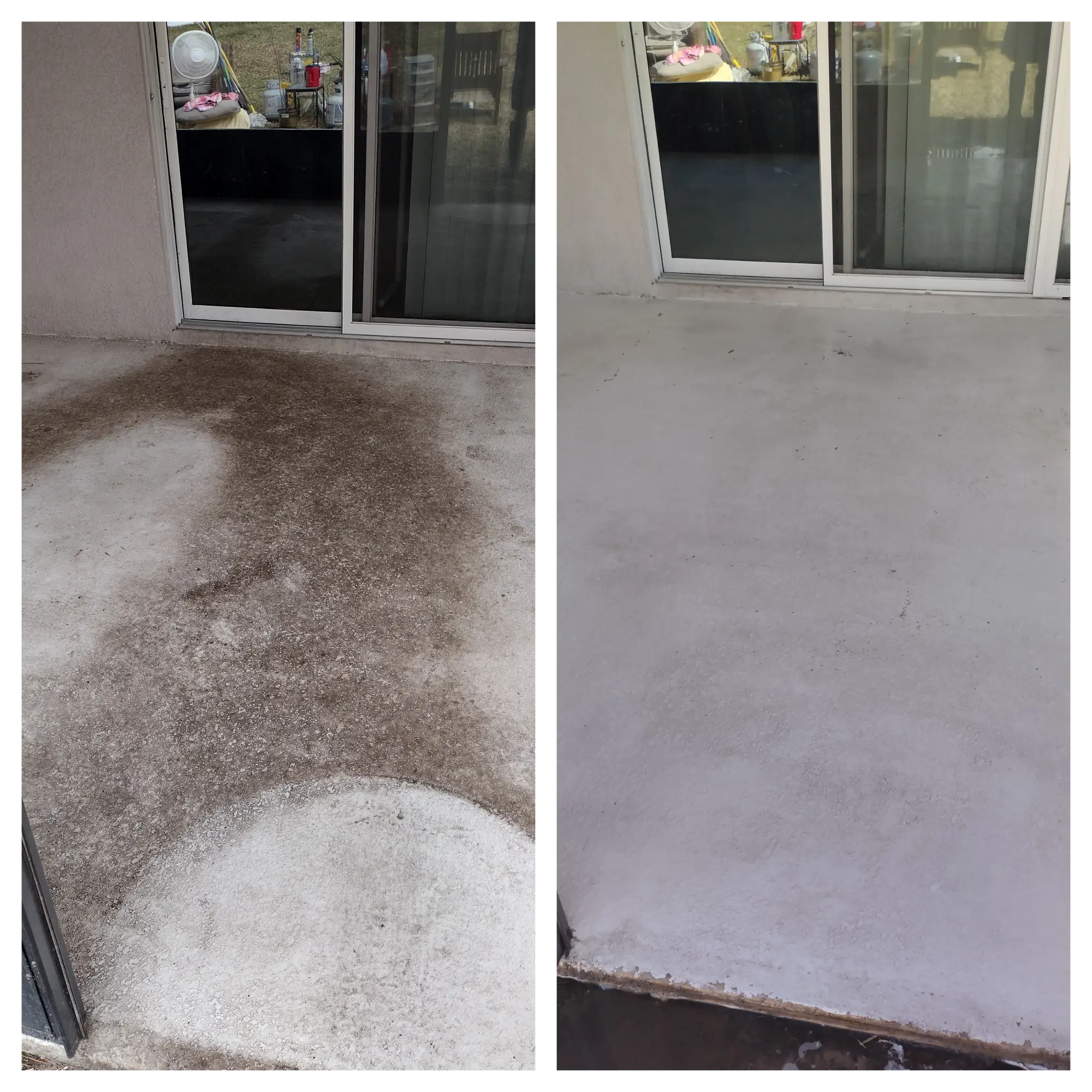
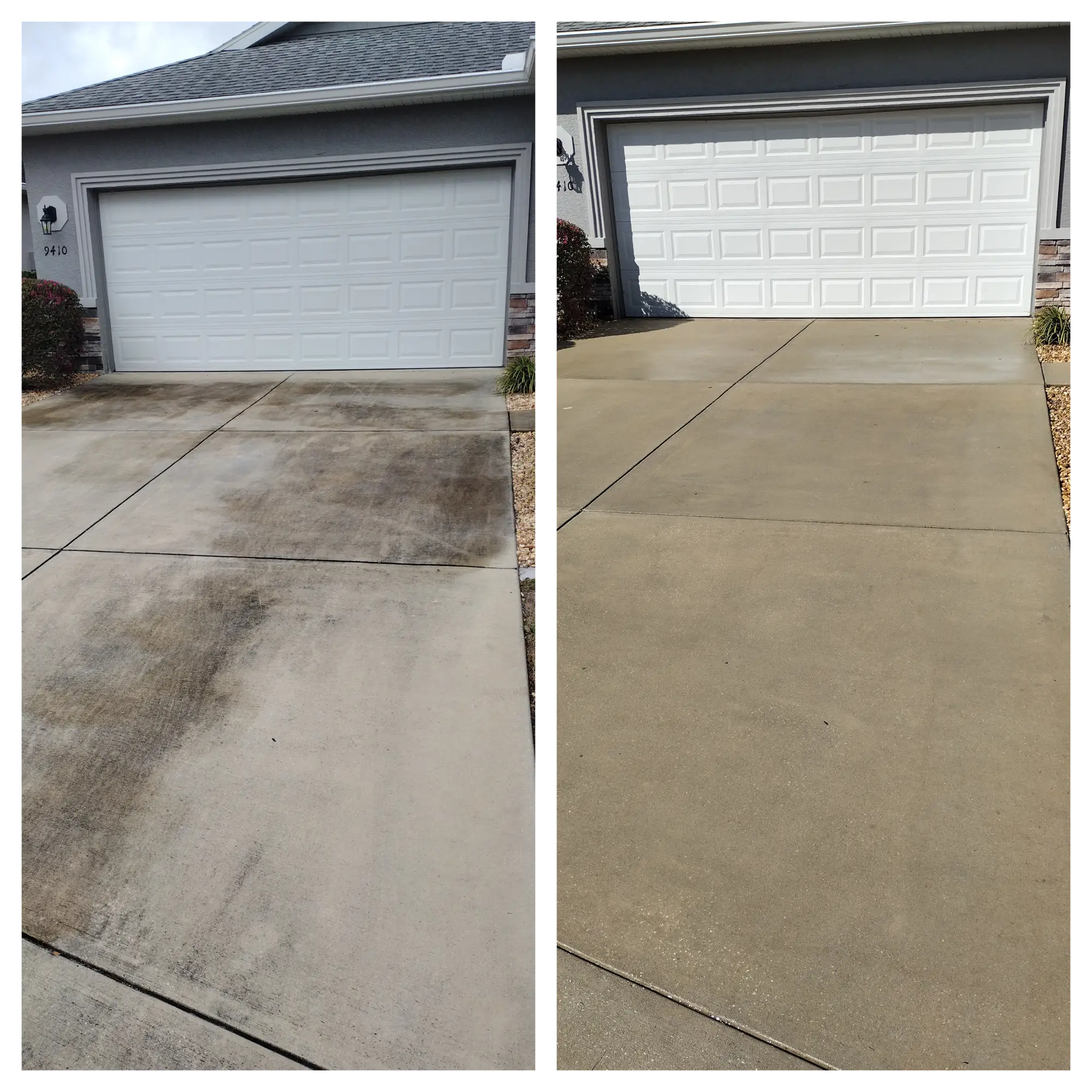
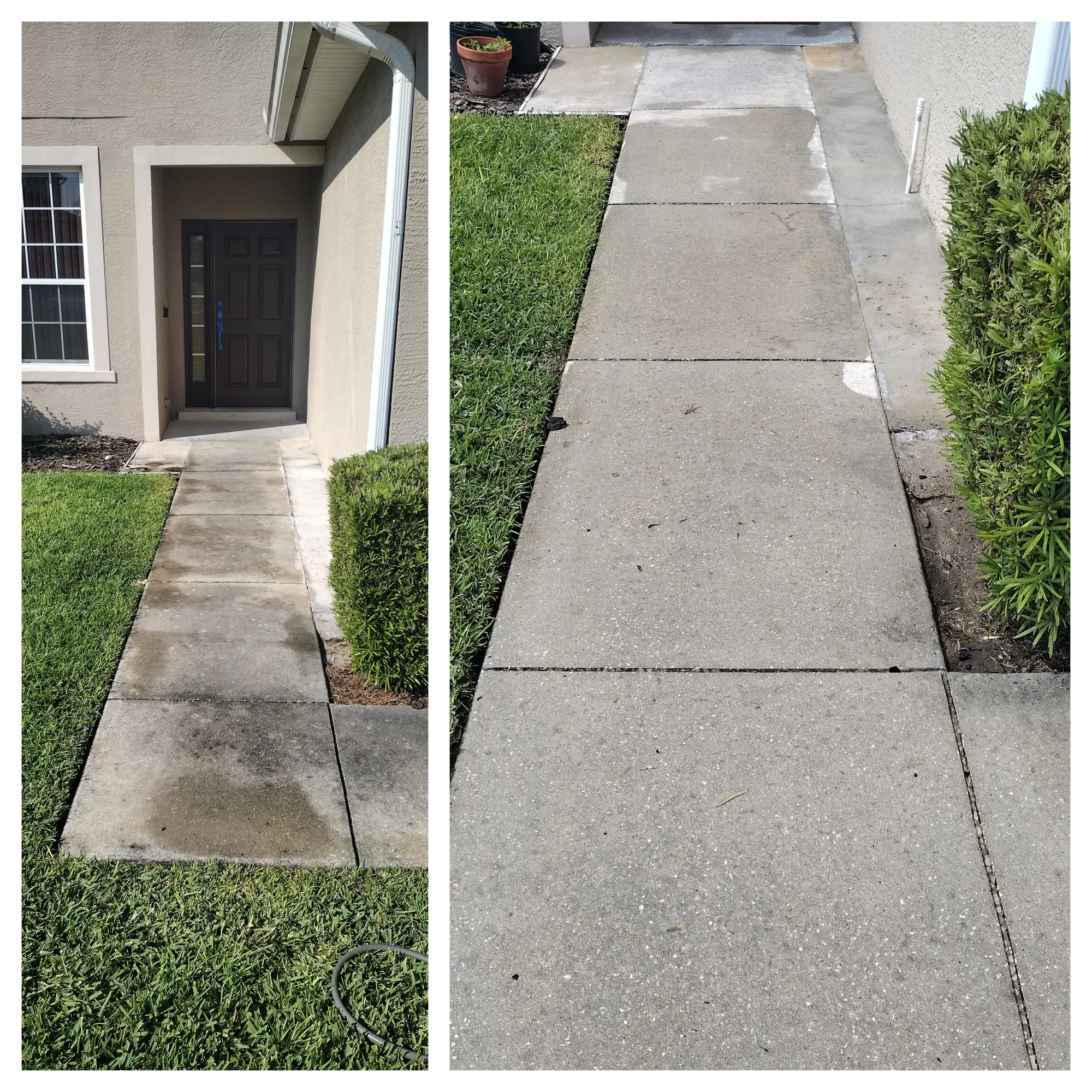
5-Star Rated on Google & Yelp
Trusted by Homeowners Across Marion,
Citrus, Levy & Sumter Counties
Posted on Google
 Brandon Fairley
Trustindex verifies that the original source of the review is Google.
Randy and his team are true pros when it comes to power washing. They take the time to do the job right and treat your property with care. Highly recommend!Posted on Google Chad FilleyDoes and great job, extremely thorough job on a drive way and house.Posted on Google
 Gary StrikerStars and Stripes Power Washing does incredible work. Randy and his crew did an outstanding job on my horse trailer. It looks brand new. He is professional, shows up on time, paid attention to the details, and left everything clean when he finished. I’m a realtor, and I recommend Randy and Stars and Stripes Power Washing to all of my clients who need power washing. Reliable, high quality work every time..Posted on Google
 Gus BlancoWe own Complete Dryer Vent Services LLC and were really impressed with the work these guys performed. I can't believe how dirty my vinyl fence was. A week later and it's still glowing white! Got a good education on how lichen can cause staining and damage protective coating on vinyl fence. These guys know their stuff. They even washed our work trailer! Highly recommend Starr's and Stripes.Posted on Google
 Michael FetchRandy and Mathew from Starr's and Stripes Power Wash did an excellent job on our full house wash. Communication was clear and easy from start to finish, and they took the time to protect the plants and landscaping around the house. Our roof shingles had streaks all over them and now they are completely gone — the roof and house both look amazing. Honestly looks like a brand new home again. I would absolutely recommend them to anyone looking for pressure washing done right.Posted on Google
 Crystal LyonsReally great people! Prompt, courteous and professional while still being personable. Highly recommend!!! Edited to add that we are now repeat customers and our rating hasn't changed a bit! Same promptness, courtesy and professionalism!Posted on Google
 Kevin MckenzieRandy was very professional, friendly and thorough. I would highly recommend Starr's & Stripes Powerwash to anyone needing their home, roof or driveway cleaned.Posted on Google
 Angela NortonStarr's & Stripes PowerWash exceeded my expectations! Randy's team transformed my property, leaving everything spotless and looking brand new. Their attention to detail and dedication to quality are impressive. If you need reliable and thorough exterior cleaning, look no further—these guys are the best in the business!Posted on Google
 Mary RossiAbsolutely the nicest people to deal with and a great job.Posted on Google
 Jeannine PlummerI am a local Realtor, and I love that I can trust Starrs & Stripes to do a great job and with such professionalism that my clients reach out singing their praises after they leave. I highly recommend using this company for all of your power washing needs!
FAQs
Questions About Post-Construction Cleaning in Ocala
How fast can you mobilize for a post-construction cleanup?
For most post-construction cleaning requests in the Ocala four-county area, we can schedule an on-site estimate within one to two business days and begin cleaning within the same week. We understand that post-construction cleanup scheduling is driven by inspection dates, buyer walkthrough dates, and listing photography schedules — not by maintenance convenience. If you have a specific deadline driving the timeline, provide that date when you call and we will work backward from it to confirm whether we can meet it. Call or text (352) 230-9299 for fast scheduling response.
Is post-construction cleaning different from regular pressure washing?
Yes, significantly. Post-construction contaminants — concrete overspray, paint overspray, stucco haze on new windows, mortar residue on masonry, construction adhesive — require specific treatment chemistry that standard biological growth surfactant does not remove. Using standard pressure washing approach on post-construction contaminants produces a wet surface with the same contamination still on it, or worse, drives contaminants deeper into new porous surfaces. Each contaminant type requires its own chemistry: acid treatment for concrete and mortar carbonate deposits, paint remover chemistry for overspray, solvent treatment for adhesive residue. Applying wrong chemistry or wrong pressure to new construction surfaces also creates warranty claim risk on brand-new windows, stucco, and masonry.
Can you remove stucco haze from new construction windows?
Yes, in most cases. Stucco haze is a thin calcium carbonate film that transfers from freshly applied stucco onto adjacent window glass. It is treated with a diluted acid solution applied with controlled dwell time to dissolve the carbonate deposit without affecting the glass coating. Low-e glass, coated glass, and impact-rated glass (common in Florida construction) require concentration calibration before treatment to confirm coating compatibility. We test treatment on a small inconspicuous section of glass before full application. Very heavy stucco haze that has cured for an extended period on specialty glass coatings may require multiple treatment cycles. The honest answer is that most new construction stucco haze is fully resolvable with appropriate chemistry, and we will tell you before starting if a specific situation presents a limitation.
Do you clean new construction commercial properties as well as residential?
Yes. We clean post-construction commercial properties including office buildings, retail spaces, restaurant buildouts, warehouse and industrial facilities, and multi-unit residential developments. Commercial post-construction scope is typically larger and may involve multiple buildings or phases. For multi-unit residential and commercial projects, we can provide rolling cleanup service timed to construction phase completion so finished units are cleaned as they complete rather than in a single end-of-project visit. Discuss the project scope and phase schedule when requesting an estimate.
Will the cleaning void any new construction warranties?
Not when done correctly with appropriate chemistry and pressure calibration for new construction surfaces. We identify the surface materials and specifications before applying any chemical treatment or pressure to new construction surfaces. New stucco and EIFS are cleaned with soft wash approach. New shingles are cleaned at soft wash pressure consistent with manufacturer warranty requirements. New windows receive hand-applied chemical treatment rather than direct pressure washing. If you have specific warranty documentation for any surface — roofing, windows, exterior finishes — share it when scheduling and we will confirm our approach is compliant before beginning work.
Can you remove concrete overspray from new windows without scratching the glass?
Yes, when the correct chemistry is used. The risk of scratching new glass during concrete overspray removal comes from dragging cured concrete particles across the glass surface under abrasive pressure — which is what happens when high-pressure water or a scrub pad is applied to cured concrete on glass without dissolving it first. Our approach dissolves the carbonate bond of the concrete deposit with controlled diluted acid application before any physical contact with the glass surface. Once the bond is dissolved, the residue rinses off without requiring abrasive contact. The result is clean glass with no scratching.
How much does post-construction cleaning cost in Ocala?
Post-construction exterior cleaning is priced by scope — the number and type of surfaces covered, the contamination types present, and the chemical treatment requirements for each contaminant. A standard new construction residential home with driveway, walkway, building exterior, and window cleaning typically ranges from 00 to 00 depending on home size and contamination level. Properties with significant concrete overspray on windows, heavy mortar residue on masonry, or paint overspray requiring extended chemical treatment are priced higher. Commercial properties and multi-unit developments are priced by project scope after an on-site assessment. Starr’s and Stripes provides a free on-site written estimate for all post-construction cleaning projects. Call or text (352) 230-9299 to schedule an assessment.