
RUST STAIN REMOVAL IN OCALA AND ALL FOUR COUNTIES FOR IRRIGATION IRON STAINS, WELL WATER ORANGE STAINS, CONCRETE, POOL CAGE, SIDING, DRIVEWAYS WITH OXALIC TREATMENT
Those Orange Rust Stains Are Not Permanent. The Right Chemistry Erases Them.
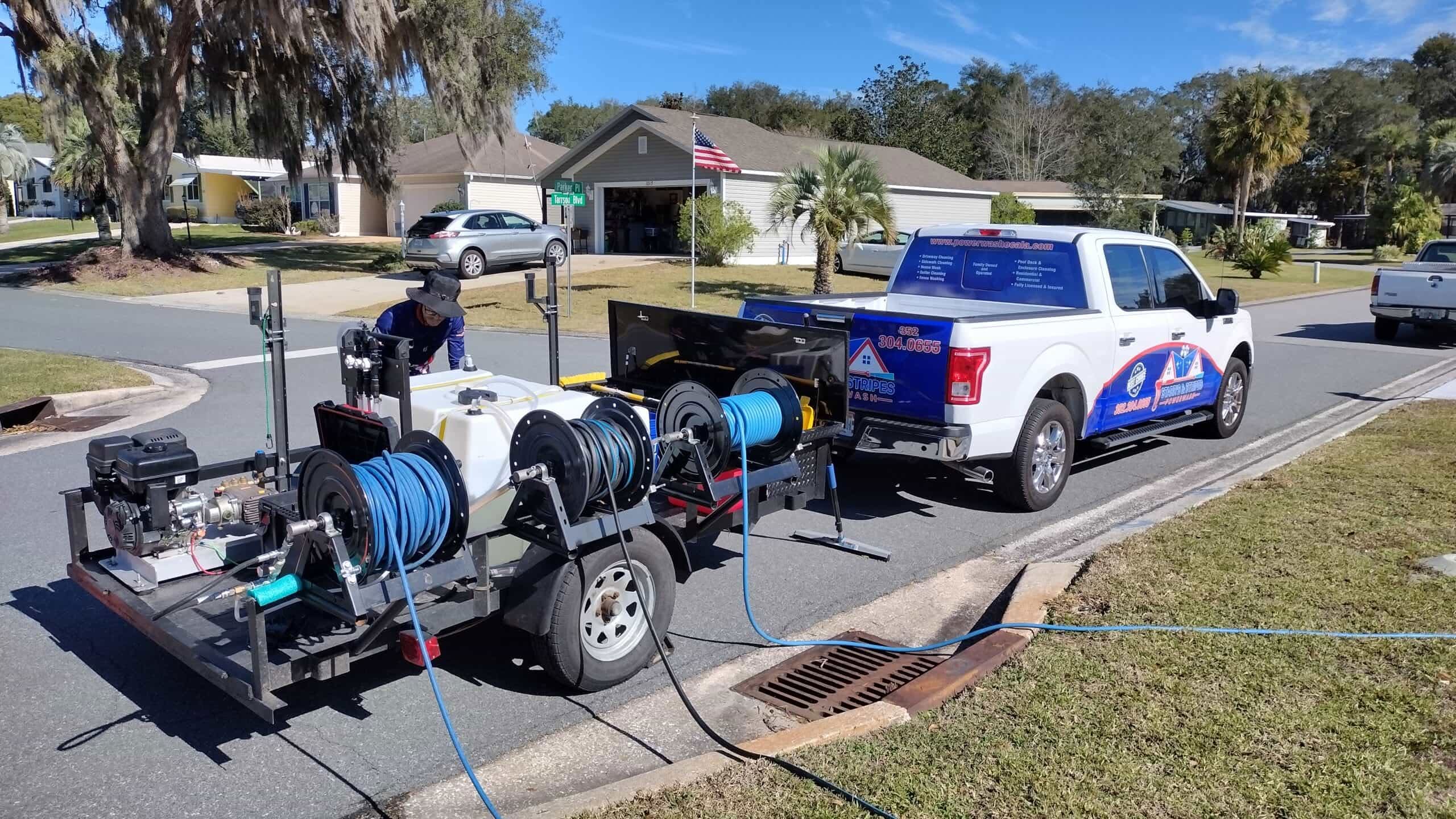
Looking for professional rust stain removal in Ocala, Florida? Starr's & Stripes Power Wash provides specialized oxalic acid chemical rust treatment for driveways, pool cages, siding, and pavers across Marion, Sumter, Citrus, and Levy Counties. Owners Randy and Matt Starr deliver targeted chelation solutions—converting deep-set well water irrigation stains, iron oxide deposits, and metal rust transfer into water-soluble compounds that rinse away without etching concrete or damaging stucco.
Remove Stubborn Rust Stains
Florida well water drawn from the Floridan Aquifer carries dissolved iron at concentrations up to fifteen times the EPA aesthetic threshold. Every irrigation cycle sprays that iron-laden water onto your driveway, pool cage, siding, and walkways. When the water evaporates, the iron oxidizes into iron oxide — rust — and bonds chemically to the surface. Pressure washing removes the surface dirt around it. Bleach reacts with the iron and makes the orange color more intense. Store-bought products applied without the correct pre-cleaning sequence and dwell time produce partial results.
Starr’s & Stripes uses professional oxalic acid treatment — the chemistry specifically designed to dissolve iron oxide staining by converting it into water-soluble iron oxalate that rinses completely away. No scrubbing. No etching the surface. No guessing at concentration. The orange stains that have been building on your property through every irrigation cycle come out. Completely.
Why Ocala Rust Stains Keep Coming Back.The Aquifer Explanation.
Most cleaning problems in Florida come from the outside: rain, humidity, pollen, biological growth. Rust stains from irrigation are different. They come from beneath the surface — literally. The Floridan Aquifer, which supplies well water to Marion County and most of Central Florida, is naturally high in dissolved iron. The same geological formations that make this region one of the most productive aquifer systems in the world also make the groundwater iron-rich at concentrations that discolor any surface the water touches. Understanding this is the first step to treating it correctly.
Well Water Irrigation -- The Primary Source
How it works: Dissolved ferrous iron in well water is colorless and invisible in solution. When irrigation water is applied to outdoor surfaces and the water evaporates, the ferrous iron (Fe2+) oxidizes in contact with air to form ferric iron (Fe3+) — iron oxide, commonly known as rust. This iron oxide is insoluble and bonds to the concrete, masonry, aluminum, or vinyl surface it was deposited on.
Why it is worse in Ocala: Marion County well water routinely tests at 1 to 5+ milligrams per liter of dissolved iron — up to fifteen times the EPA Secondary Maximum Contaminant Level of 0.3 mg/L for aesthetic water quality. Every irrigation cycle deposits measurable iron on every surface the water contacts. A standard residential irrigation system running three days per week deposits iron on the same surfaces approximately 150 times per year.
What you see: Progressive orange-brown staining that begins light and builds in color and depth with each irrigation season. The stain pattern matches the sprinkler spray pattern exactly — heaviest at the direct impact zone and fading at the spray perimeter. Staining is most visible on light-colored concrete, white vinyl siding, and aluminum pool cage framing.
Irrigation Pipe and Fitting Oxidation -- The Secondary Source
How it works: Iron and galvanized steel irrigation system components — older pipes, fittings, and valve bodies — corrode from the inside as iron-rich well water flows through them. The corrosion products (iron oxide particles and dissolved iron from the pipe walls) are carried by the water flow to the sprinkler heads and deposited on all surfaces the sprinkler reaches. This source compounds with the aquifer iron content.
Why it is worse in Ocala: Older irrigation systems in established Ocala neighborhoods have decades of internal corrosion in their steel and galvanized components. Systems installed in the 1980s and 1990s with steel pipes are significant internal iron sources regardless of the aquifer iron level in the source water. Properties with both high-iron well water and aging steel irrigation components have the most severe staining.
What you see: Rust staining that worsens year over year even with consistent irrigation frequency. Orange coloration that appears around sprinkler head impact zones and on surfaces downhill from irrigation spray. In severe cases, visible orange-red particles in the spray stream when the irrigation system first activates after a period of non-use.
Hardscape and Metal Feature Rust Transfer -- The Contact Source
How it works: Rust from metal features on the property — gate hardware, fence fasteners, decorative iron features, mailbox posts, aluminum pool cage weep scrub accumulation — transfers to adjacent concrete, paver, or masonry surfaces through direct contact and rainwater runoff. This source is distinct from irrigation: the staining is localized around the metal contact point rather than distributed in a spray pattern.
Why it is worse in Ocala: Florida humidity and rainfall create accelerated oxidation conditions for exposed ferrous metal on outdoor surfaces. Metal features that would corrode slowly in a dry climate oxidize rapidly in Ocala’s humid subtropical environment. The resulting iron oxide transfers to adjacent masonry surfaces through contact and rain runoff.
What you see: Localized rust staining concentrated around metal contact points: posts, hinges, lag bolts through concrete, anchor points, and fence rail contact with pavers. Typically a darker, more concentrated orange-red than irrigation staining, with clear geometric relationship to the metal source.
ONE THING THAT MAKES RUST STAINS WORSE: BLEACH
If you have cleaned your rust-stained surfaces with bleach or any bleach-containing product and the orange color got darker afterward, you experienced a real chemical reaction. Chlorine bleach oxidizes dissolved iron — it does not remove it. Applying bleach to iron-stained concrete accelerates the oxidation of any residual dissolved iron in the surface, intensifying the orange color and bonding additional iron oxide to the surface. Many homeowners have made their rust stains significantly worse with bleach before calling a professional. If this happened to your property, the stains are still treatable with oxalic acid — the bleach-intensified rust responds to the same chemistry as the original stain, though heavier accumulation may require a longer dwell time.
You Already Tried. Here Is Why It Did Not Work.
The three most common DIY rust stain removal attempts all fail for the same underlying reason: iron oxide staining is a chemistry problem, and treating it with the wrong chemistry produces either no result or a worse result than before. The homeowner who called a professional after months of trying on their own is not the homeowner who gave up. They are the homeowner who correctly concluded that the problem required a different solution.
Pressure Washing Without Chemical Pre-Treatment
What happens: High-pressure water removes surface dirt, grime, and biological growth from the concrete around the rust stain. The rust stain itself is unchanged or slightly redistributed as the iron oxide particles are pushed around by the water stream without being dissolved. After pressure washing, the concrete is clean and the rust stain is now more visible against the clean surface around it.
Why professional treatment works where this does not: Professional rust stain treatment begins with surface cleaning to remove the dirt and biological growth that would compete with the rust chemistry for treatment contact. After the surface is clean and pre-wetted, the oxalic acid treatment is applied specifically to the iron oxide staining. The oxalic acid dissolves the chemical bond between the iron oxide and the surface — not by force but by chemistry. The dissolved iron oxalate rinses away. Pressure is used to rinse after the chemistry has done its work, not to substitute for it.
Bleach or Bleach-Based Cleaning Products
What happens: Chlorine bleach applied to iron-stained concrete oxidizes the dissolved iron ions in the surface, converting ferrous iron (Fe2+) to ferric iron (Fe3+) — which is a more intensely orange iron oxide compound. The visual result is a darker, more saturated orange stain after bleach treatment than before. The homeowner cleans, rinses, and returns to find the stain is worse. This reaction is consistent and predictable — bleach is chemically contraindicated for iron stain removal.
Why professional treatment works where this does not: Oxalic acid works through the opposite chemistry: instead of oxidizing iron further, it chelates (binds to) the iron and converts it to iron oxalate — a water-soluble compound that has no color and no bond to the surface. The iron oxide that was bonded to the concrete is converted to a form that rinses away completely. No intensification, no darkening, no residue.
Store-Bought Rust Remover Products Without Correct Application Protocol
What happens: Many consumer rust remover products are oxalic acid-based — the same chemistry that professional treatment uses. They fail in DIY application for three reasons: (1) they are applied to dirty or wet surfaces without pre-cleaning, so the chemistry works on surface contamination rather than the iron stain; (2) the dwell time is too short because the homeowner rinses after a few minutes rather than allowing full chelation to occur; (3) the concentration is diluted further by application to wet surfaces. The result is partial stain lightening that does not fully remove the stain and leaves the homeowner thinking the product did not work.
Why professional treatment works where this does not: Professional application of oxalic acid treatment follows a specific sequence: surface pre-cleaning to remove competing contamination, surface pre-wet with clean water, application of professional-concentration oxalic solution (F9 BARC or equivalent) at the stain with complete coverage, dwell time calibrated to the stain depth and age (typically 10 to 30 minutes for Florida irrigation staining), agitation of the treatment zone if needed for heavy accumulation, and complete neutralization rinse after full chelation. Each step matters. Skipping pre-cleaning and cutting dwell time are the two most common reasons DIY oxalic treatments underperform.
We Will Be Honest About Recurrence. And We Have a Plan for It.
Professional oxalic acid treatment completely removes existing iron oxide staining. The iron that has been deposited on your driveway, pool cage, and siding over months or years comes out. What we cannot control is what happens to those surfaces the next time your irrigation system runs on well water with 3 mg/L of dissolved iron.
If your irrigation source is the same iron-rich well water after treatment, the deposition process begins again with the next irrigation cycle. Staining rebuilds slowly — it will not look like it did before treatment for many months. But without addressing the source, the stains will return over the following irrigation season.
1
Option 1
Annual Maintenance Cleaning: Schedule a professional rust treatment visit once per year, timed to the end of the primary irrigation season (October or November in Central Florida when irrigation frequency drops). This keeps the property at a consistent clean appearance level, prevents accumulation depth from building to the years-long severity, and keeps treatment cost lower than addressing deep, long-standing staining. Most Florida homeowners on well water irrigation who understand the recurrence reality choose annual maintenance cleaning as the most practical long-term approach.
2
Option 2
Irrigation Source Treatment: Rid-O-Rust and similar polyphosphate injection systems add a sequestering agent to the irrigation water before it exits the sprinkler heads. The polyphosphate binds to dissolved iron in the water and prevents it from depositing on surfaces as iron oxide. These systems reduce (but do not eliminate) surface staining from irrigation. They require ongoing chemical cost and maintenance. This is a landscape irrigation treatment system that is outside Starr's and Stripes' scope of work -- we can refer you to an irrigation specialist.
3
Option 3
Irrigation Redirection: Adjusting sprinkler head angles to minimize spray contact with high-visibility hardscape surfaces reduces iron deposition on those surfaces. For driveways and front entry areas specifically, small sprinkler head adjustments can significantly reduce staining on the surfaces that matter most for curb appeal. An irrigation technician can evaluate spray patterns for adjustment opportunities.
Iron Staining Hits Every Surface Your Irrigation Reaches. We Treat All of Them.
Well water irrigation sprays do not discriminate by surface material. Driveways, pool cages, siding, and pavers all accumulate iron oxide staining from the same water source. Each surface type requires treatment chemistry calibrated for that material — the oxalic acid concentration and dwell time that work perfectly on concrete require adjustment for aluminum pool cage framing and vinyl siding. Surface-by-surface expertise is what separates a complete result from a partial one.
Concrete Driveways, Walkways, and Parking Areas
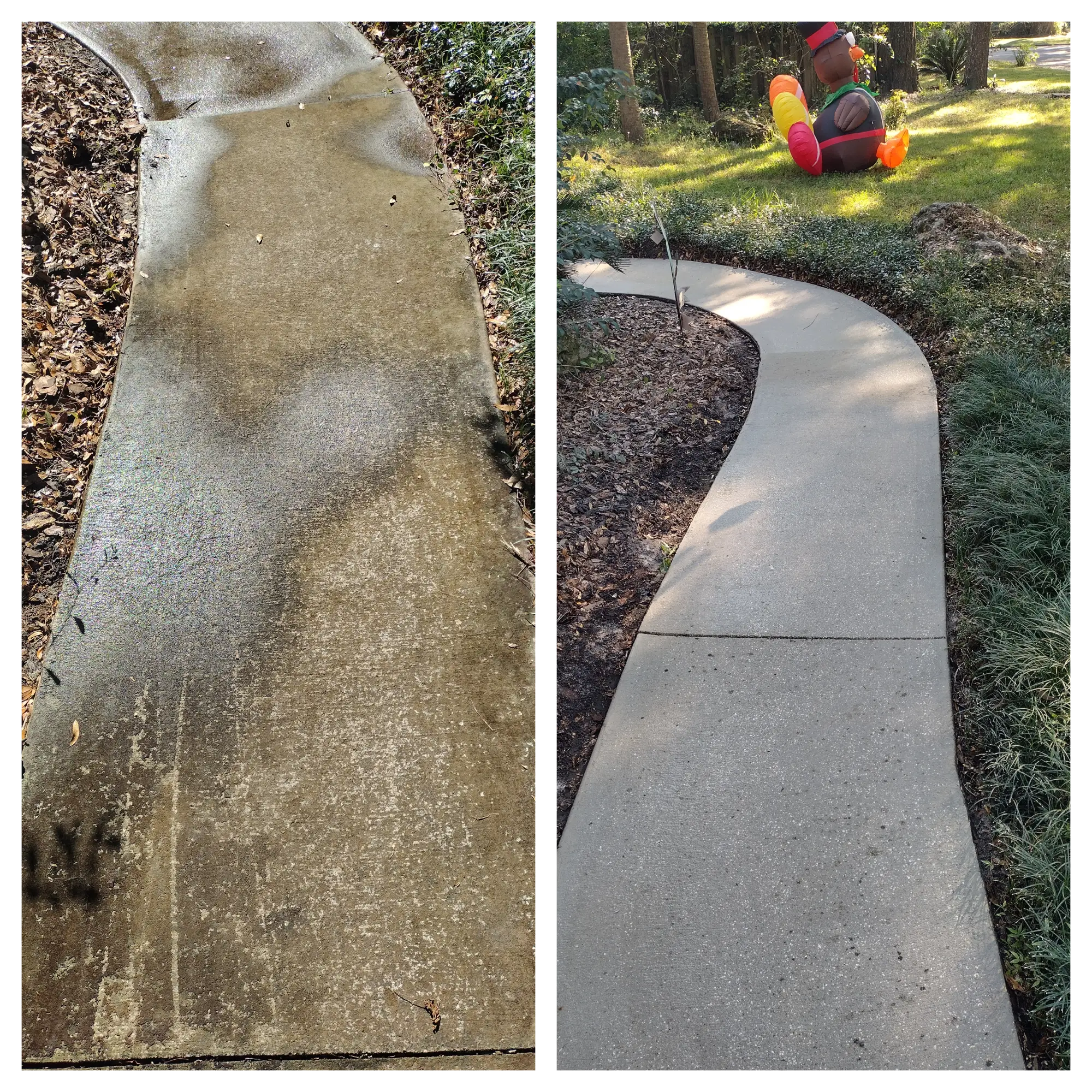
Why rust stains here: Concrete is the most common rust-staining surface in Florida because it is the largest horizontal surface area exposed to irrigation overspray. The porous microstructure of concrete allows dissolved iron to penetrate slightly below the surface during repeated irrigation cycles, which is why rust staining on concrete gets harder to remove the longer it is left untreated.
Professional treatment: Surface pre-clean with standard concrete surfactant to remove biological growth and surface dirt. Pre-wet with clean water. Professional oxalic acid solution applied to stain areas with surface cleaner attachment or hand application for concentrated spots. Dwell time 15 to 30 minutes depending on stain depth. Agitation for heavy or deep accumulation. Complete neutralization rinse. Post-treatment inspection to confirm full removal and identify any areas needing second application.
Professional caution: Old, deeply set concrete rust staining that has accumulated over multiple irrigation seasons without treatment may require a second application for complete removal. Concrete that has been sealed before rust treatment may require evaluation of the sealer condition — oxalic acid can affect some concrete sealers.
Pool Cages and Screen Enclosures
Why rust stains here: Pool cage aluminum framing is one of the most visually impacted surfaces for rust staining in Florida. The aluminum framing itself does not rust, but the iron deposited by irrigation water on the white or bronze-painted aluminum surface forms highly visible orange streaks and deposits against the light-colored metal. Pool cage rust staining is also sourced from the pool cage fastener hardware — stainless or galvanized screws and bolts in the frame transfer rust to the surrounding painted aluminum surface over time.
Professional treatment: Pool cage treatment requires chemistry calibrated for painted aluminum — oxalic acid concentration and dwell time that removes the iron oxide deposit without affecting the aluminum surface or the paint finish. Treatment applied by hand applicator to frame members and screen frame channels. Screen mesh panels are treated with diluted solution applied gently to remove iron deposits from the mesh without damaging the screen material. All treatment followed by thorough rinse.
Professional caution: Pool cage screens that have accumulated heavy iron staining over many seasons may show discoloration in the screen mesh that is partially structural (iron bonded within the mesh fiber) rather than purely surface. In these cases, significant improvement is achievable but full erasure of screen mesh coloration may not be possible. Pool cage painting after rust removal treatment is the permanent solution for severely stained frame surfaces.
Vinyl Siding and Fiber Cement Board
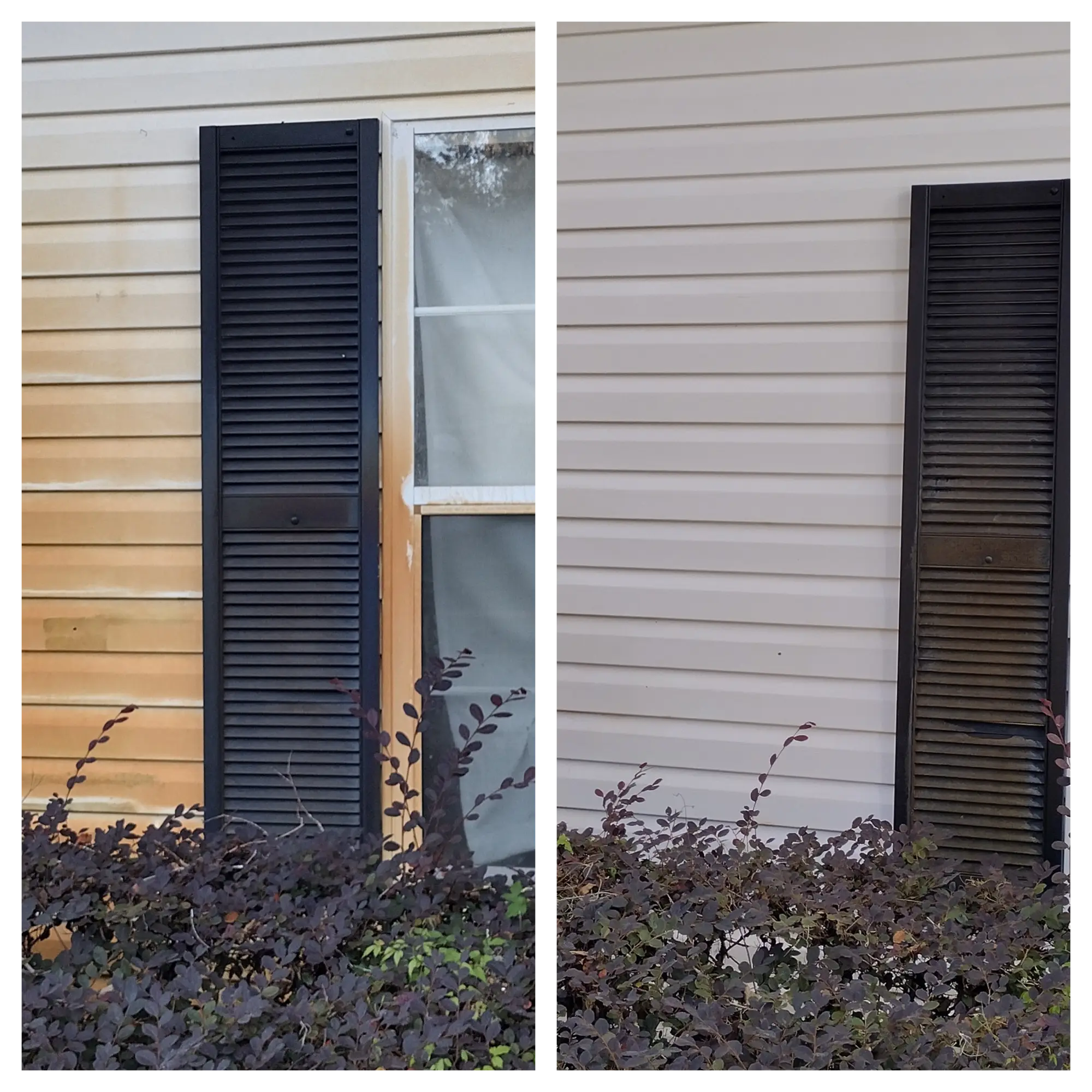
Why rust stains here: Vinyl siding and Hardie board accumulate irrigation rust staining as orange vertical streaks from sprinkler heads positioned to hit the foundation zone and lower siding sections. The staining pattern on siding is typically striped — concentrated at the direct spray impact zone and drip-tracking downward. Because siding is vertical, the iron deposits are less deeply penetrating than on horizontal concrete, but the visual impact is high because the staining is at eye level and visible from the street.
Professional treatment: Siding rust treatment with oxalic acid solution applied at appropriate concentration for the siding material. Vinyl siding is non-porous and responds quickly — standard dwell time with gentle agitation for stubborn deposits. Fiber cement board requires slightly longer dwell time due to the more absorbent surface. All siding treatment is followed by thorough rinse from the top down to prevent redeposition of dissolved iron on treated lower sections.
Professional caution: Siding treatment is done with low-pressure application to avoid forcing treatment solution behind siding panels or into window seals. Sprinkler heads positioned to spray against the house foundation should be redirected after treatment to prevent rapid redeposition on treated surfaces.
Pavers, Brick, and Natural Stone
Why rust stains here: Pavers and brick surfaces accumulate rust staining from irrigation in the same pattern as concrete but with the additional complication that the grout or sand joint between pavers absorbs and holds iron oxide. The paver surface itself may clean well while the joint material retains an orange cast. Natural stone — travertine, limestone, and slate are common in Ocala outdoor living areas — requires the most careful treatment calibration because acid chemistry that is appropriate for concrete can etch or discolor some stone types.
Professional treatment: Paver and brick treatment follows concrete protocol with additional attention to joint material. Oxalic solution is applied at standard concentration to the paver field and worked into the joint material. Natural stone receives a test patch on an inconspicuous section before full treatment to confirm the specific stone type tolerates the treatment concentration. Travertine and limestone are calcium carbonate-based and react differently to acid treatment than silicate-based stone.
Professional caution: Do not apply standard concrete-concentration oxalic treatment to travertine or most limestone without surface type confirmation and test patch. These stones may require modified treatment approach or lower acid concentration to avoid etching. Identify paver and stone type before scheduling so treatment calibration can be prepared.
Stucco and Painted Masonry
Why rust stains here: Stucco is one of the most common exterior finish materials in Central Florida and one of the most visually affected by rust staining from irrigation. The rough texture of traditional stucco creates additional surface area for iron oxide to bond to compared to smooth concrete. Paint over stucco is even more susceptible — iron oxide staining on painted stucco penetrates the paint film slightly and is more resistant to surface treatment than staining on unpainted surfaces.
Professional treatment: Stucco rust treatment with oxalic solution applied at concentration appropriate for the stucco finish type. Traditional rough stucco requires longer dwell time and mechanical agitation with a soft brush to work the treatment chemistry into the texture. Painted stucco is treated with lower concentration to avoid affecting the paint film. All treatment followed by thorough low-pressure rinse.
Professional caution: Painted stucco that has had rust staining for multiple seasons may have iron oxide penetration at the paint-to-stucco interface that treatment does not fully reach. In these cases, painting after treatment is the complete solution. Identify whether the stucco surface is painted or unpainted and approximate age of staining when scheduling
Driveways, Pool Decks, and Entry Pavers at Homes Preparing for Sale
Why rust stains here: Pre-sale rust stain removal is one of the highest-return exterior cleaning investments a Florida homeowner can make. Orange rust staining on the driveway or pool area is one of the first things prospective buyers notice on a property showing and one of the most common reasons buyers mentally discount their offer before entering the home. Many experienced Florida real estate agents proactively recommend professional rust treatment for listed properties with irrigation-stained concrete.
Professional treatment: Pre-sale treatment follows standard surface protocol with prioritization of the highest-visibility surfaces: driveway, front walkway, entry pavers, and pool deck in that order. Treatment is timed 1 to 2 weeks before listing photos to allow any neutralization rinse residue to dissipate and the surface to return to its full post-treatment clarity.
Professional caution: For pre-sale treatment: adjust or turn off irrigation in the treated zones after cleaning and before listing photos. Even one irrigation cycle on a freshly treated surface will begin new iron deposition. Pre-sale clients should be aware that treatment removes existing staining and listing photos should be taken promptly after treatment.
Fences, Gates, and Metal Features with Rust Transfer
Why rust stains here: Iron and steel fence components — posts, rails, fasteners, hinges, and decorative elements — transfer rust to adjacent concrete, paver, and masonry surfaces through direct contact and rain runoff. Gate post anchors set in concrete are a particularly common source: the oxidizing steel anchor transfers rust into the surrounding concrete through capillary action, creating a spreading orange halo around the post base.
Professional treatment: Contact-source rust staining treatment focuses on the stained surface area surrounding the metal feature. Oxalic treatment is applied to the concrete or masonry staining after the metal feature itself is isolated or protected. Post-base halos typically require higher-concentration treatment and longer dwell time than spray-pattern irrigation staining because the iron has been deposited at higher concentration through direct contact.
Professional caution: Rust transfer from metal features will recur as long as the metal source continues to oxidize. After rust stain removal, applying rust-inhibiting primer and paint to the metal source (posts, hinges, anchor hardware) reduces the rate of redeposition. Complete solution requires treating both the stain and the source.
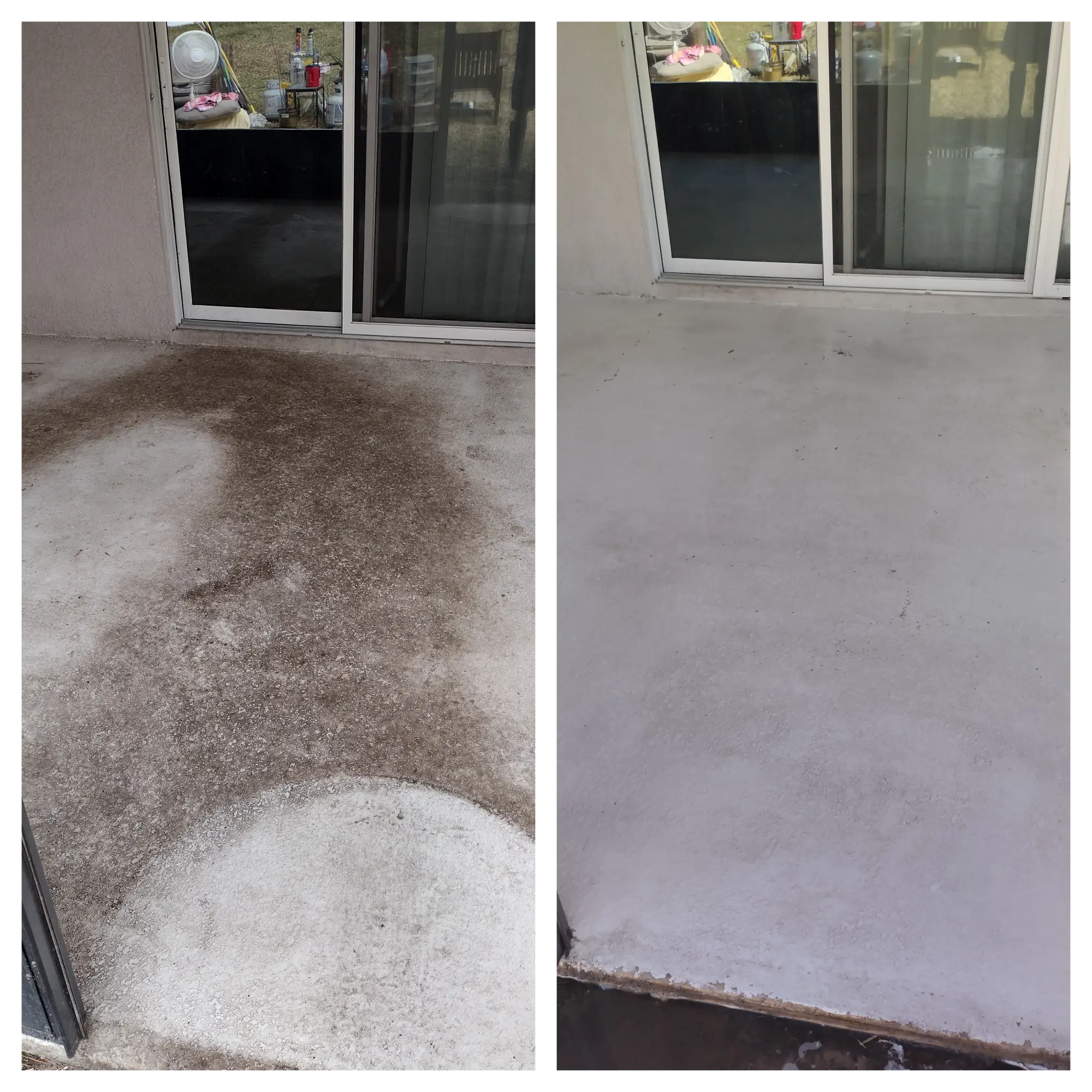
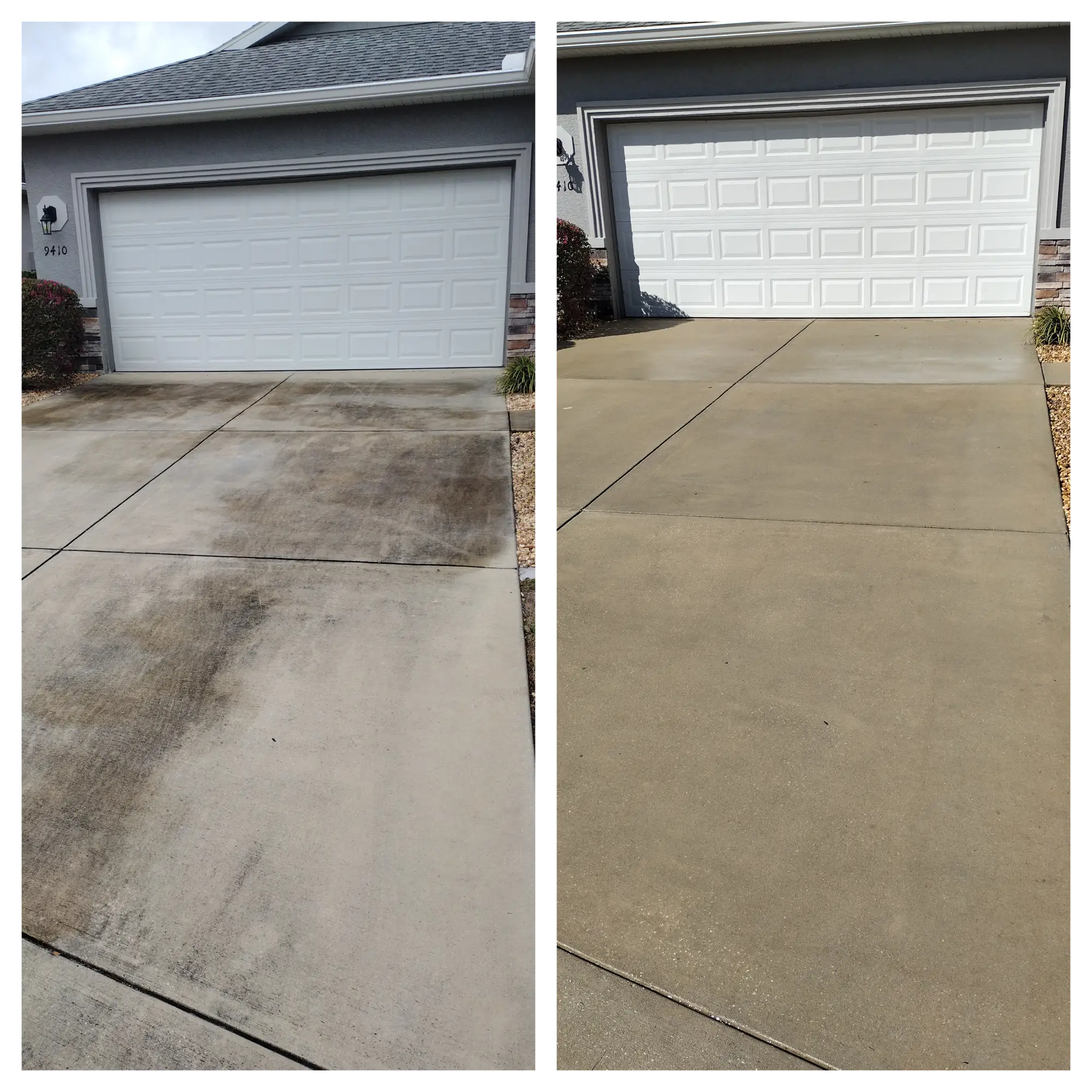
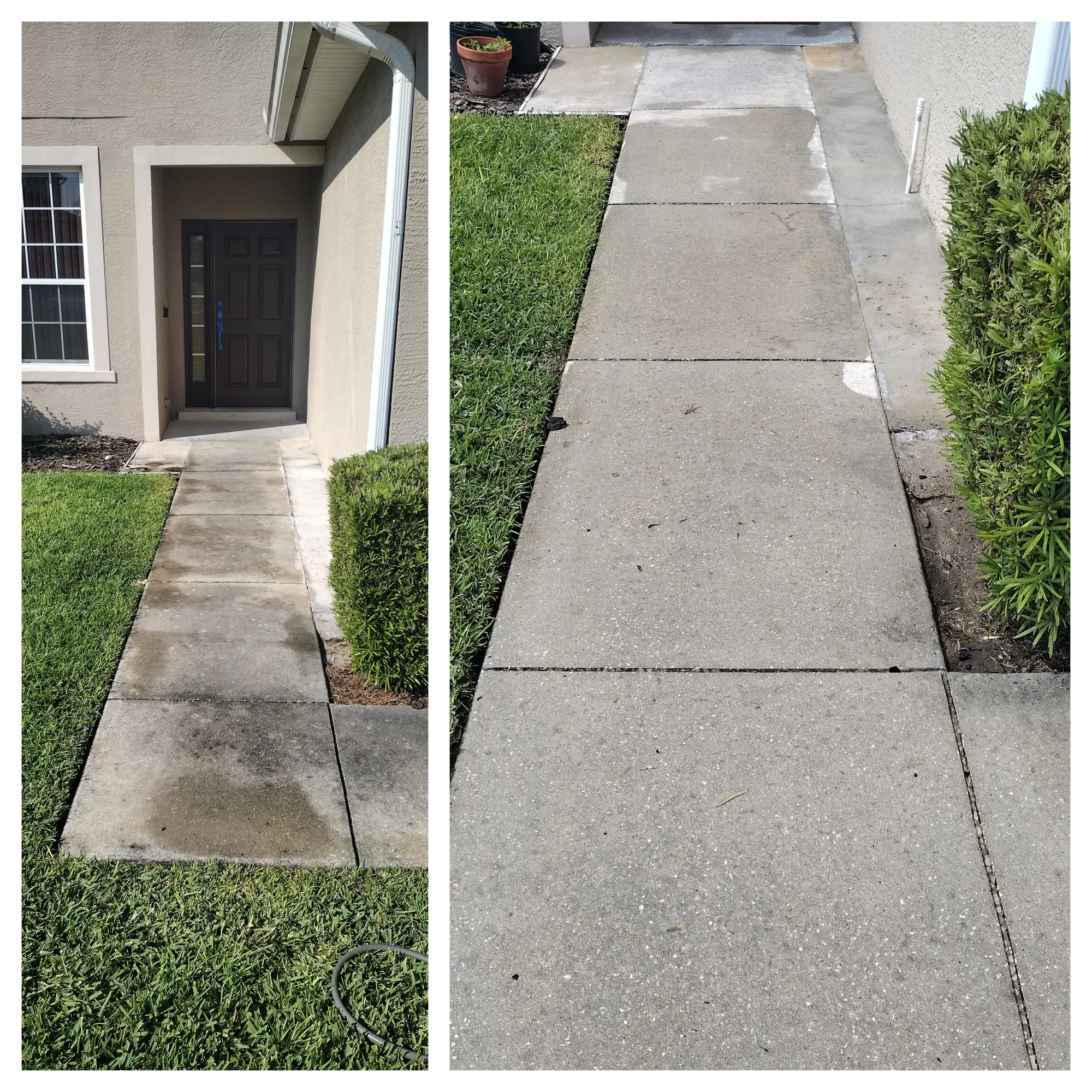
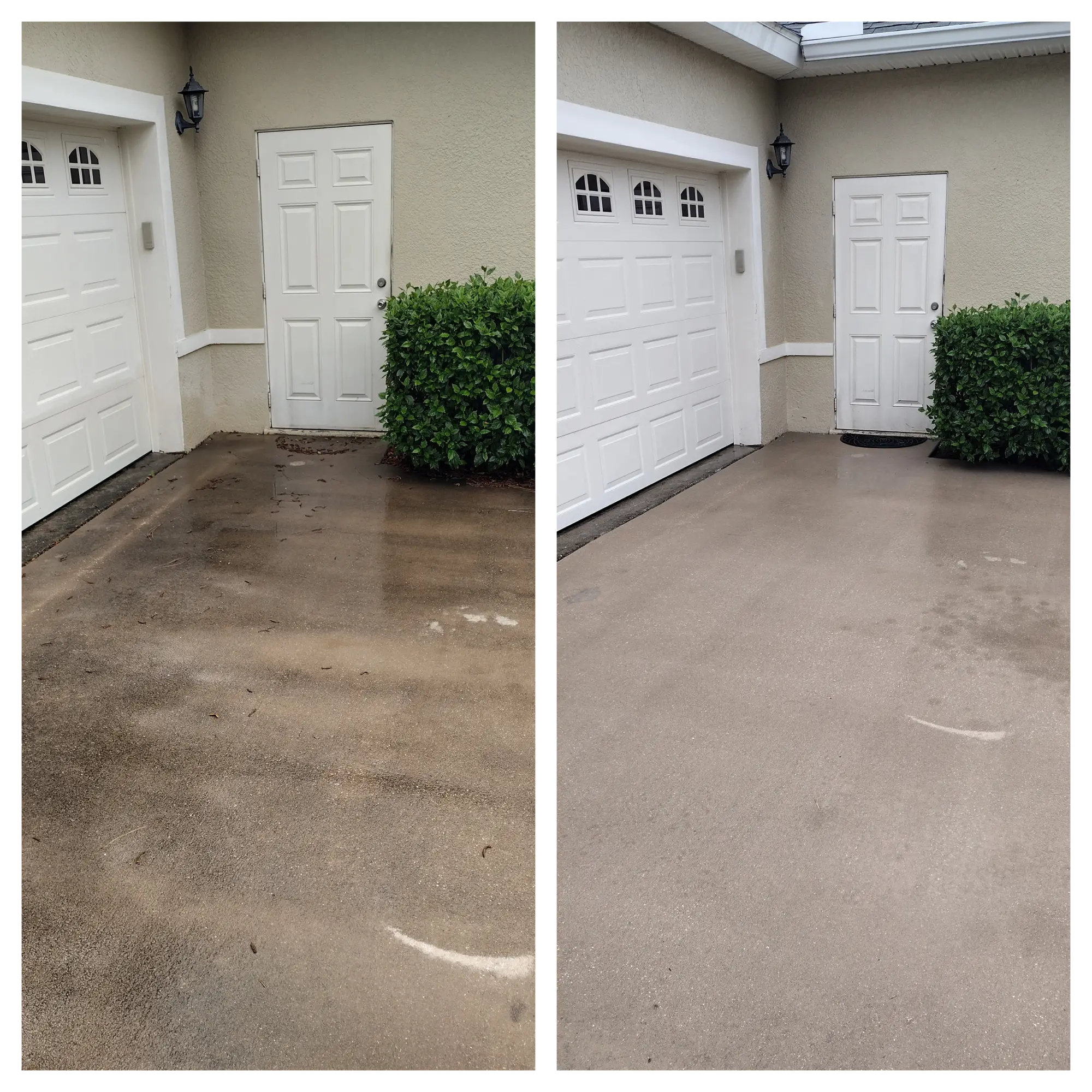
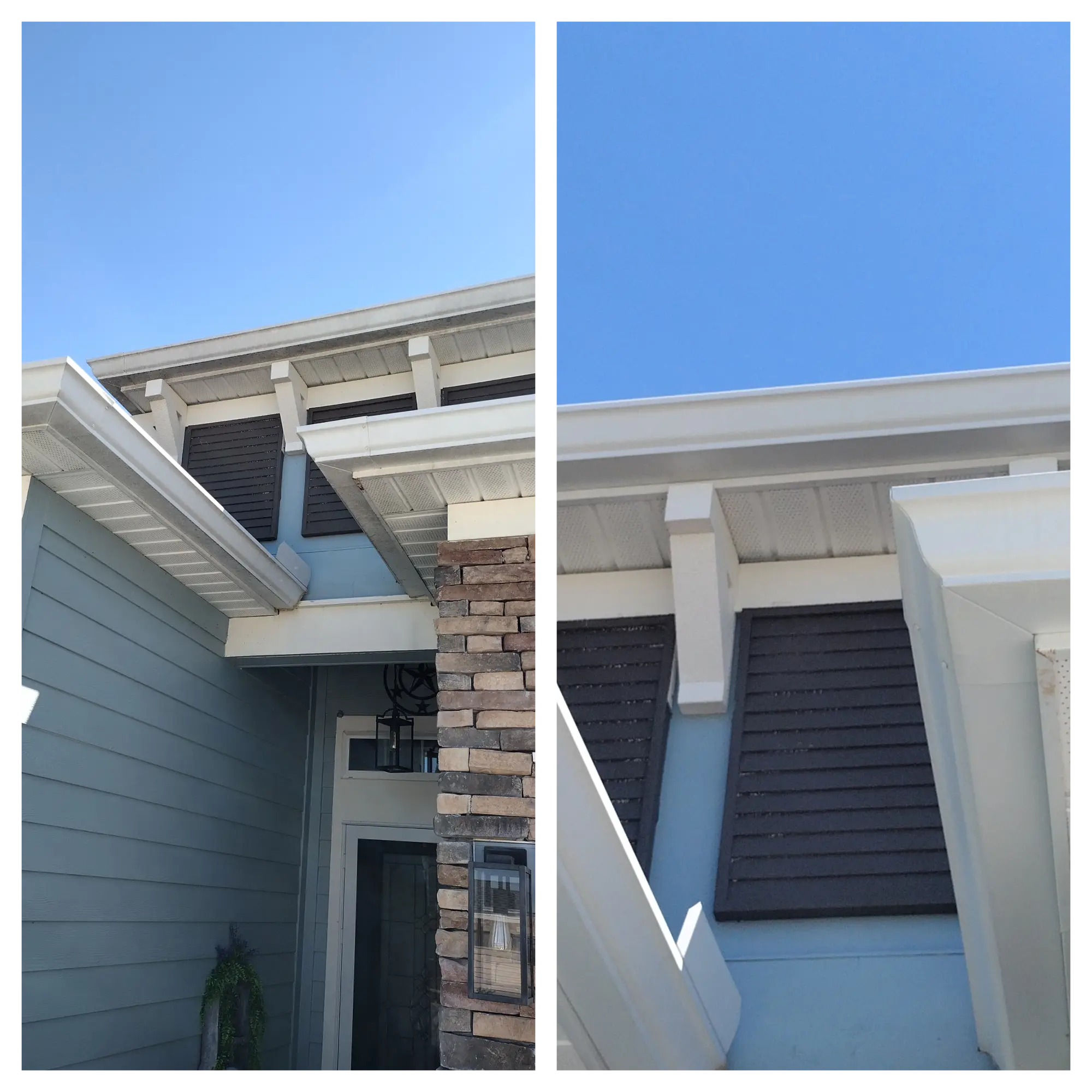
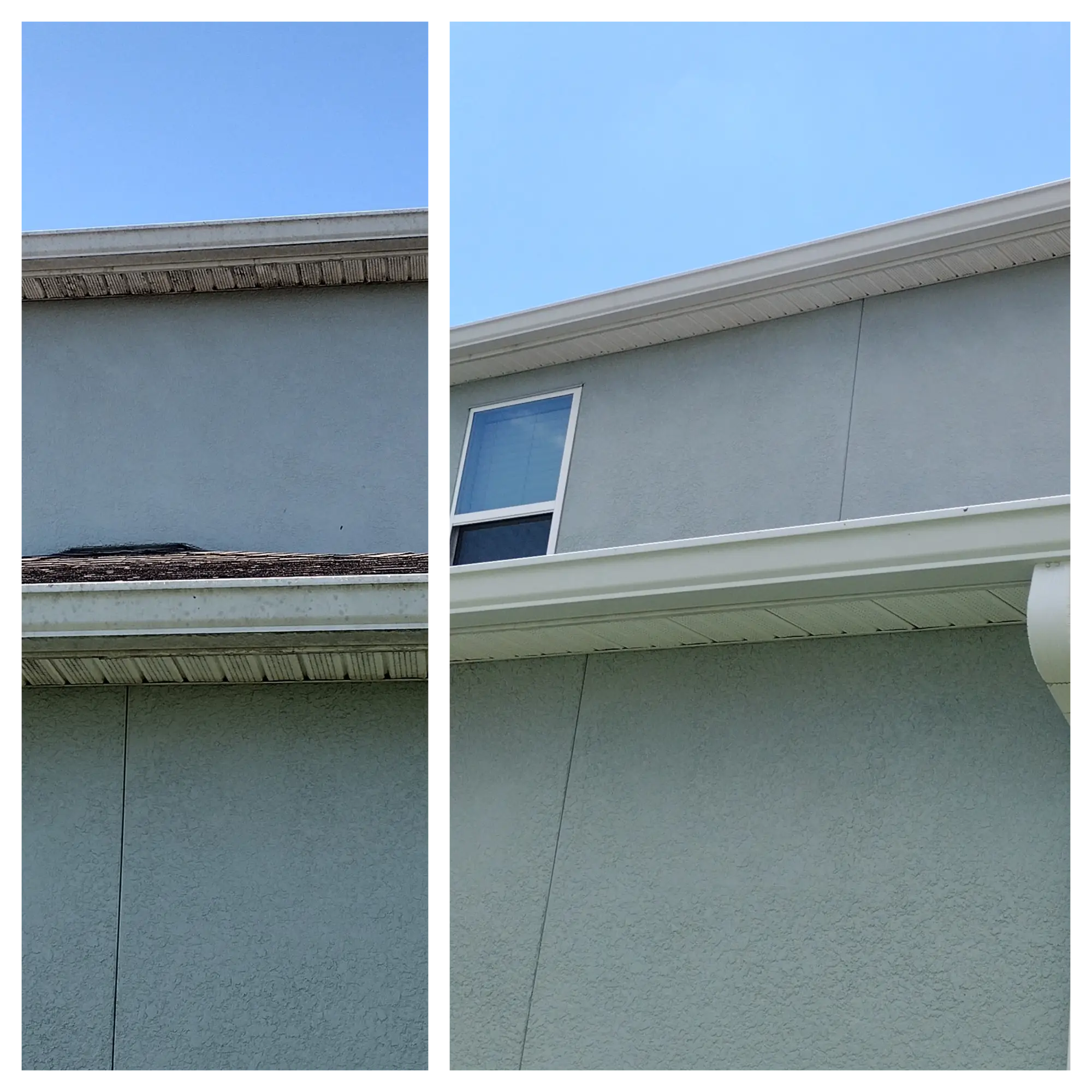
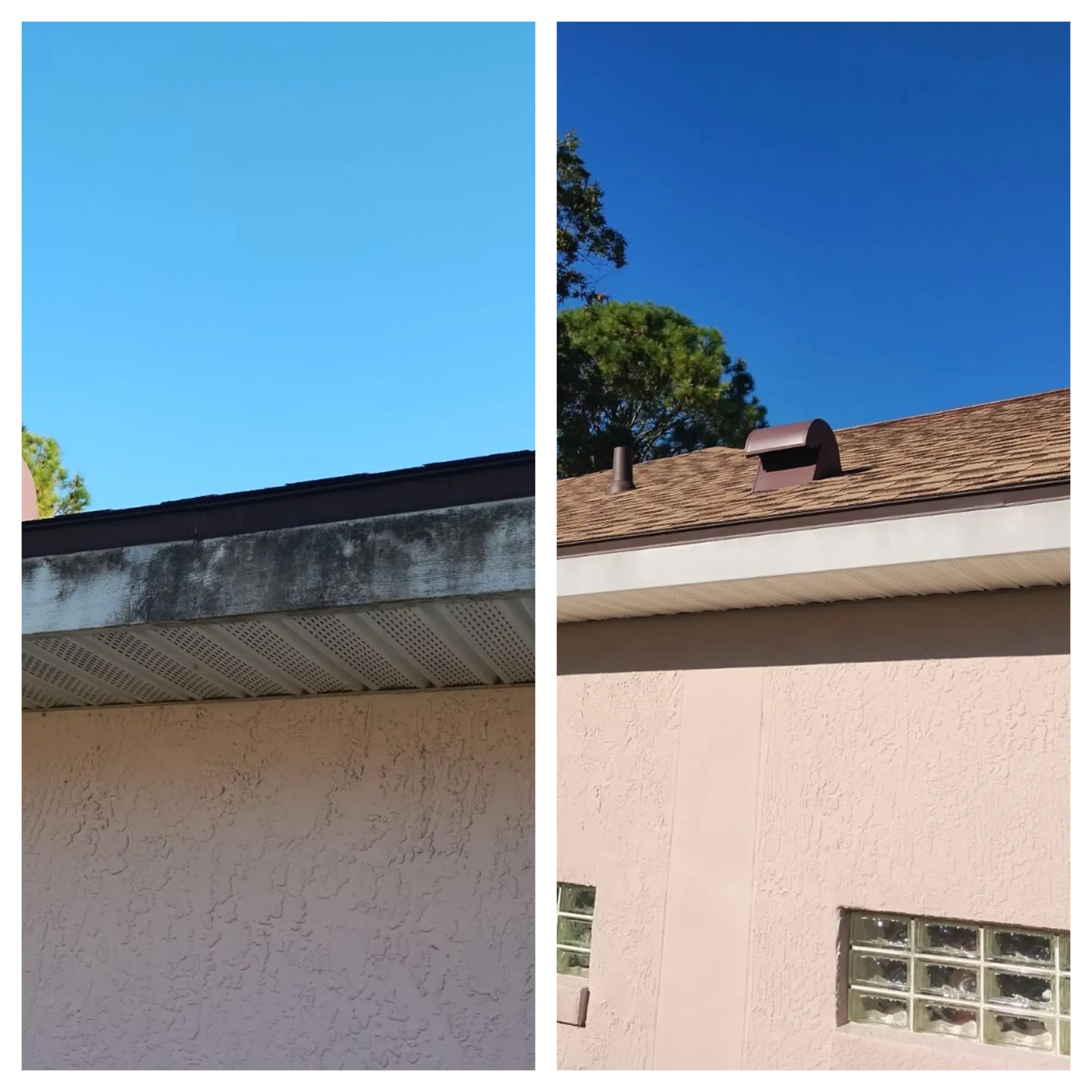
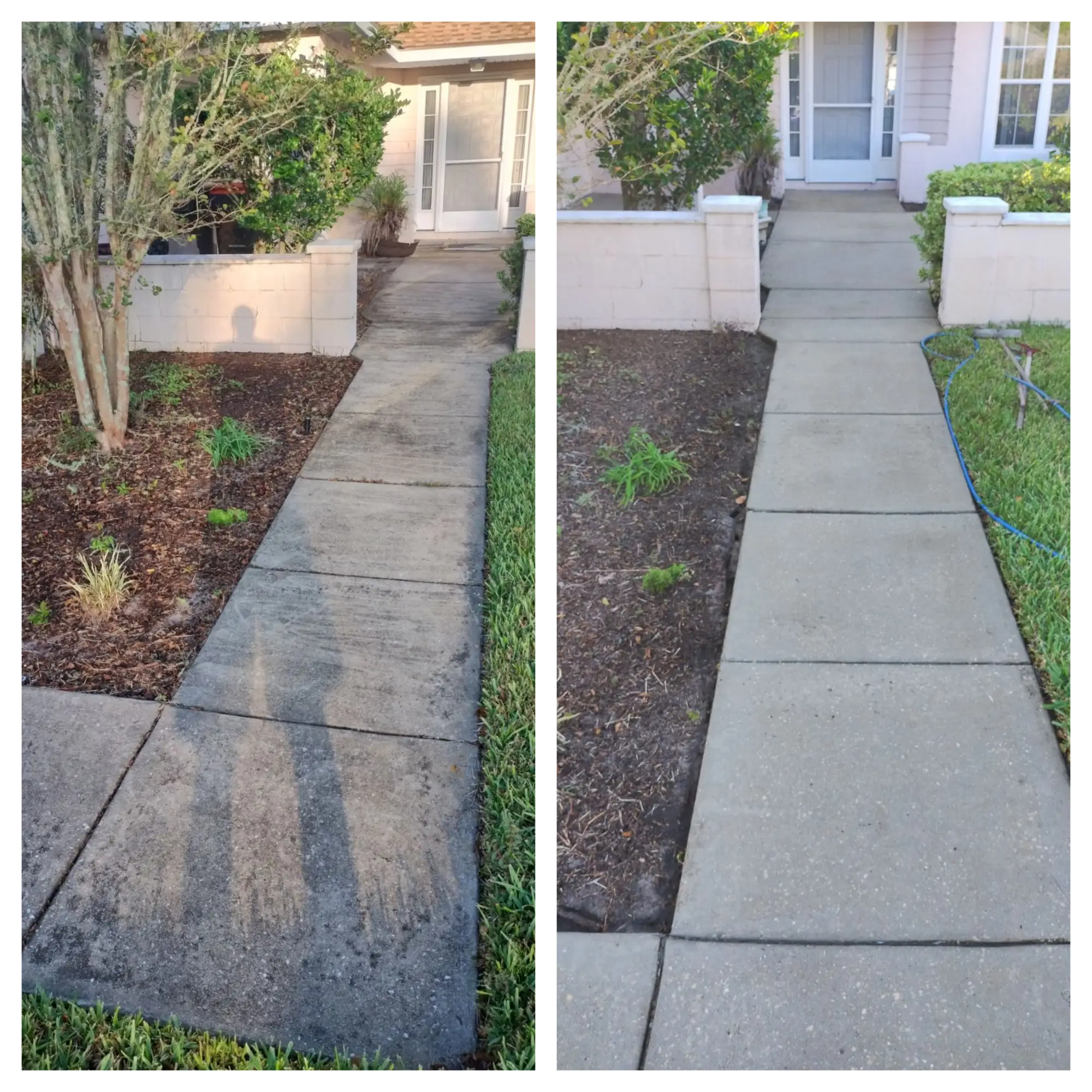
5-Star Rated on Google & Yelp
Trusted by Homeowners Across Marion, Citrus, Levy & Sumter Counties
Posted on Google
 Brandon Fairley
Trustindex verifies that the original source of the review is Google.
Randy and his team are true pros when it comes to power washing. They take the time to do the job right and treat your property with care. Highly recommend!Posted on Google Chad FilleyDoes and great job, extremely thorough job on a drive way and house.Posted on Google
 Gary StrikerStars and Stripes Power Washing does incredible work. Randy and his crew did an outstanding job on my horse trailer. It looks brand new. He is professional, shows up on time, paid attention to the details, and left everything clean when he finished. I’m a realtor, and I recommend Randy and Stars and Stripes Power Washing to all of my clients who need power washing. Reliable, high quality work every time..Posted on Google
 Gus BlancoWe own Complete Dryer Vent Services LLC and were really impressed with the work these guys performed. I can't believe how dirty my vinyl fence was. A week later and it's still glowing white! Got a good education on how lichen can cause staining and damage protective coating on vinyl fence. These guys know their stuff. They even washed our work trailer! Highly recommend Starr's and Stripes.Posted on Google
 Michael FetchRandy and Mathew from Starr's and Stripes Power Wash did an excellent job on our full house wash. Communication was clear and easy from start to finish, and they took the time to protect the plants and landscaping around the house. Our roof shingles had streaks all over them and now they are completely gone — the roof and house both look amazing. Honestly looks like a brand new home again. I would absolutely recommend them to anyone looking for pressure washing done right.Posted on Google
 Crystal LyonsReally great people! Prompt, courteous and professional while still being personable. Highly recommend!!! Edited to add that we are now repeat customers and our rating hasn't changed a bit! Same promptness, courtesy and professionalism!Posted on Google
 Kevin MckenzieRandy was very professional, friendly and thorough. I would highly recommend Starr's & Stripes Powerwash to anyone needing their home, roof or driveway cleaned.Posted on Google
 Angela NortonStarr's & Stripes PowerWash exceeded my expectations! Randy's team transformed my property, leaving everything spotless and looking brand new. Their attention to detail and dedication to quality are impressive. If you need reliable and thorough exterior cleaning, look no further—these guys are the best in the business!Posted on Google
 Mary RossiAbsolutely the nicest people to deal with and a great job.Posted on Google
 Jeannine PlummerI am a local Realtor, and I love that I can trust Starrs & Stripes to do a great job and with such professionalism that my clients reach out singing their praises after they leave. I highly recommend using this company for all of your power washing needs!
FAQs
Questions About Rust Stain Removal in Ocala, Florida
Why did bleach make my rust stains worse?
This is one of the most common frustrations we hear from Florida homeowners with irrigation rust staining, and the chemistry explains it exactly. Chlorine bleach is a strong oxidizer. When it contacts iron — either dissolved iron in water on the surface or iron oxide in the stain — it oxidizes the iron to a higher oxidation state (Fe3+, ferric iron) which produces a more intensely orange-colored iron oxide compound than the original staining. Bleach effectively fast-tracks the oxidation process on any residual dissolved iron present, deepening and intensifying the orange color. Bleach is correct chemistry for biological growth removal (algae, mold, mildew) and is used in standard soft washing for those applications. It is chemically contraindicated for any surface that has iron contamination. If your surfaces have both biological growth and rust staining, they need to be treated in sequence: rust treatment first with oxalic acid, biological growth treatment second with appropriate surfactant.
What is oxalic acid and how does it remove rust stains?
Oxalic acid is a naturally occurring organic acid that acts as a chelating agent for iron — it chemically binds to iron ions and converts iron oxide (rust, which is insoluble and stain-forming) into iron oxalate (which is water-soluble and rinses away). The chemistry is specific to iron: oxalic acid does not bleach the surrounding surface or affect concrete or masonry chemistry. The iron oxide that was bonded to your driveway or pool cage is converted by the oxalic acid into a compound that has no color and no adhesion to the surface, then rinses away completely with water. This is why the stain erases rather than fades — it is a chemical transformation rather than a bleaching effect.
Why does my Ocala property have worse rust staining than homes in other states?
Marion County sits on the Floridan Aquifer, one of the most productive and iron-rich groundwater systems in the United States. The geological formations that filter this aquifer — ancient limestone and dolomite with iron-bearing minerals — naturally dissolve iron into the water at concentrations significantly above the EPA aesthetic standard of 0.3 mg/L. Well water in the Ocala area routinely tests at 1 to 5+ mg/L dissolved iron. Every property on well water irrigation in Marion County is depositing iron on its exterior surfaces with every irrigation cycle. This is a regional geology issue, not a property-specific problem, and it affects virtually every home in the area that uses well water for irrigation.
Can you remove rust stains from my pool cage?
Yes. Pool cage aluminum framing is one of the most common rust staining surfaces we treat in the Ocala area. The aluminum itself does not rust, but the iron deposited by irrigation water on the white or bronze-painted aluminum produces visible orange staining. We treat pool cage frames with oxalic acid calibrated for painted aluminum — concentration and dwell time adjusted for the surface to remove the iron deposit without affecting the paint finish or the aluminum. Screen panels are treated gently with diluted solution to address iron in the mesh. Very heavily stained pool cage screens that have multiple seasons of iron accumulation may show improvement rather than complete erasure in the mesh itself — we will assess and give an honest result expectation before beginning work.
Will the rust stains come back after treatment?
Existing rust staining is completely removed by professional oxalic acid treatment. Whether new staining accumulates depends on whether the iron source continues to contact the treated surfaces. If your irrigation system continues to spray iron-rich well water on the same surfaces, new iron deposition begins with the next irrigation cycle. Staining will rebuild gradually over the following months — it will not return immediately to the pre-treatment appearance, but it will return over the next irrigation season without source intervention. We are honest about this with every rust stain customer because the alternative — a customer who expects no recurrence and is disappointed when staining reappears — serves no one. The practical options are annual maintenance cleaning, irrigation water treatment with a polyphosphate system, or irrigation head redirection away from high-visibility hardscape. We discuss the right approach for your specific situation when providing the estimate.
What surfaces can you treat for rust and iron staining?
We treat rust and iron staining on concrete driveways, walkways, and parking areas; pool cages and screen enclosures; vinyl siding and fiber cement board; pavers, brick, and most natural stone; stucco and painted masonry; pool decks; and hardscape surfaces around metal features such as post bases and gate hardware. Each surface type receives treatment chemistry calibrated for that material. Natural stone — travertine, limestone, slate — requires surface type confirmation and a test patch before full treatment because acid chemistry that is correct for concrete can etch some stone types. Identify the surface materials when scheduling so the correct treatment approach can be prepared.
I tried a store-bought rust remover and it did not work. Can professional treatment actually remove it?
In most cases, yes. Store-bought rust removers that contain oxalic acid are the same fundamental chemistry as professional treatment — the difference is in the application protocol. Consumer products typically fail because they are applied to dirty or wet surfaces without pre-cleaning (the chemistry works on surface contamination rather than the iron stain), the dwell time is too short, and the product is diluted by application to wet surfaces. Professional treatment follows a specific sequence: complete surface pre-cleaning, pre-wet, professional-concentration oxalic solution with adequate dwell time, agitation for heavy accumulation, and thorough neutralization rinse. Very old or very deep rust staining that has been setting for multiple seasons may require a second application. We give an honest assessment at the estimate visit of what the realistic result will be for the specific staining on your property.
How much does rust stain removal cost in Ocala?
Rust stain removal is priced by the scope of affected surfaces and the severity of the staining. Light to moderate irrigation staining on a standard residential driveway and walkway typically ranges from 50 to 00. Pool cage treatment ranges from 00 to 00 depending on cage size and staining level. Full property treatment covering driveway, pool cage, siding, and patio areas ranges from 50 to 50 for a standard residential property. Properties with severe, multi-year accumulation or extensive staining on multiple surface types are priced after an on-site assessment. Starr’s and Stripes provides a free estimate for all rust stain removal requests. Call or text (352) 230-9299 to schedule.