Beyond the Shine: The Ultimate Guide to How Professional Paver Sealing Prevents Weed Growth & Sand Erosion
Paver sealing is often misunderstood as a purely cosmetic upgrade—a way to give your driveway that “wet look” or make the colors of your patio pop. While the visual transformation is stunning, the real magic happens beneath the surface. In the harsh, humid environment of Ocala, Florida, an unsealed paver system is a ticking time bomb of structural instability and invasive biological growth.
If you are a homeowner looking to protect your investment, understanding the technical “why” behind paver sealing is essential. This guide explores how professional sealing acts as a shield against the elements, why it is the only proven way to stop weeds and erosion, and why DIY attempts often lead to costly disasters.
The Core Mechanics of Paver Sealing
To understand paver sealing, you must first understand the anatomy of a paver installation. Unlike a solid slab of poured concrete, pavers are an interlocking system held together by friction and gravity. The “glue” that keeps this system from shifting is the joint sand.
Porosity and Protection
Concrete pavers are inherently porous. They contain thousands of microscopic pores that, when left untreated, suck up water, motor oil, and organic tannins from fallen leaves.
- The Sealant Barrier: A high-quality paver sealing agent penetrates these pores.
- Hydrophobic Properties: It creates a surface tension that causes water to bead up and roll off rather than soaking in.
- Structural Bond: More importantly, the sealer binds the sand particles together, turning a loose filler into a solid, flexible “grout” that maintains the interlock.
The War on Weeds: Why Sealing is Your Best Weapon
One of the biggest frustrations for Ocala homeowners is the constant battle against weeds. You pull them on Saturday, and they are back by Tuesday.
Where Do Weeds Actually Come From?
A common misconception is that weeds grow from the soil underneath the pavers. In reality, 95% of weeds in a driveway start from “top-down” contamination. Wind carries seeds, birds drop them, and rain washes them into the open joints of your pavers.
How Paver Sealing Interrupts the Cycle
When you invest in professional paver sealing, you are effectively “locking the door.”
- Eliminating the Seed Bed: The sealant hardens the joint sand, making it an impenetrable surface. Seeds cannot find a foothold to germinate.
- Moisture Starvation: Weeds need consistent moisture to thrive. By sealing the sand, you keep it dry, even after a heavy Florida downpour.
- Antifungal Additives: Professional-grade sealants used by Power Wash Ocala often contain zinc or other inhibitors that prevent the growth of mold and algae.
By removing the environment that weeds need to survive, paver sealing reduces your maintenance time by up to 90%.
Sand Erosion: The Silent Killer of Hardscapes
If weeds are the visible enemy, sand erosion is the invisible one. Every time it rains, or every time you use a leaf blower, a tiny amount of joint sand is displaced.
The Domino Effect of Erosion
Once the sand level drops below the “chamfer” (the beveled edge of the paver), the structural integrity of the entire system is compromised.
- Paver Shifting: Without the lateral pressure of the sand, pavers begin to slide.
- Tripping Hazards: Shifting pavers create uneven heights, which can lead to injury and liability.
- Edge Failure: The borders of your driveway are the most vulnerable. Without paver sealing to lock that sand in place, the edges will eventually “blow out” and collapse into the surrounding soil.
The Florida Factor: UV Rays and Humidity
In Ocala, our pavers face unique challenges that homeowners in the North don’t deal with. The intense UV index acts like a bleaching agent, stripping the color out of your stones in just a few years.
UV Degradation
Paver sealing acts as a sunscreen for your hardscape. High-quality sealers contain UV inhibitors that reflect harmful rays, preserving the rich earth tones of your pavers and preventing the “faded gray” look that devalues your home.
The Humidity Trap
Florida’s humidity is the primary cause of the “milky white” haze seen on many DIY projects. This occurs when moisture is trapped under the sealer. Professional experts understand the “dew point” and “moisture content” variables required for a successful application, technical details that DIY kits from big-box stores completely ignore.
Why Professional Expertise Beats DIY Every Time
Why we emphasize professional service over DIY.
The Professional Advantage
When you hire Power Wash Ocala, you aren’t just paying for the liquid in the bucket; you are paying for:
- Commercial-Grade Equipment: We use high-PSI, hot-water pressure washers that lift deep oils that a standard garden hose can’t touch.
- Surface Preparation: Sealing over a dirty paver is a permanent mistake. Our multi-step cleaning process ensures the stone is chemically pure before the first drop of sealer is applied.
- Specialized Formulations: We select sealers based on the specific porosity of your stone (Travertine vs. Concrete vs. Brick).
The Risks of DIY (Do-It-Yourself)
We strongly discourage homeowners from attempting DIY paver sealing. The most common calls we receive are for “sealer stripping”. If you apply an inferior product or apply it incorrectly, it can peel, turn white, or become as slippery as ice. Removing a failed DIY seal job is a grueling, chemical-heavy process that often costs twice as much as the original sealing would have.
Trust the experts. A professional application is a one-time success; a DIY attempt is often a recurring headache.
The Step-by-Step Professional Sealing Process
To ensure we meet the highest standards of quality, our team follows a rigorous protocol:
- Pre-Treatment: We apply an eco-friendly surfactant to kill organic growth at the root.
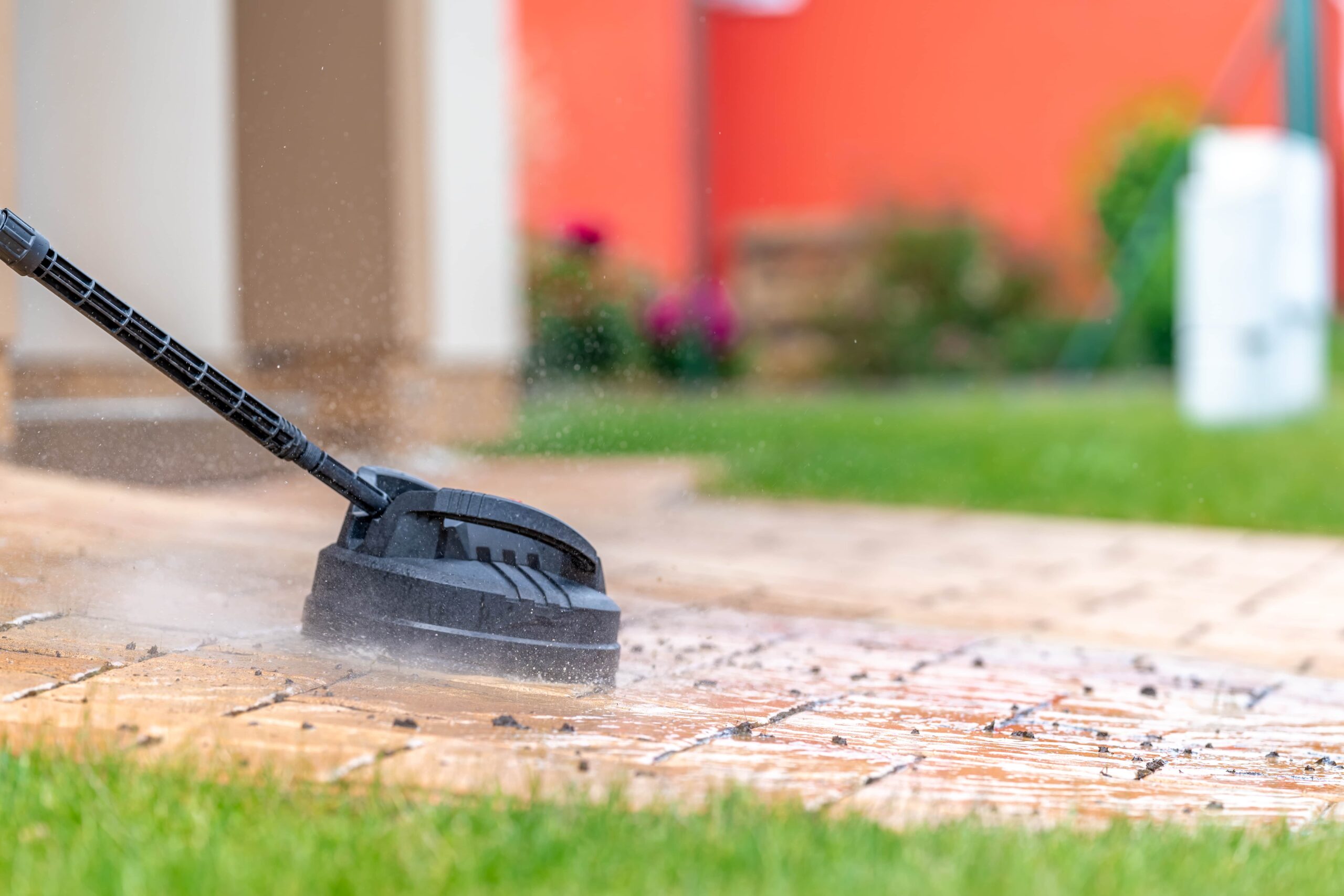
- Pressure Cleaning: Using a flat-surface cleaner to ensure an even, streak-free wash.
- Stall/Dry Time: Ensuring the pavers reach the optimal moisture level.
- Re-Sanding: Sweeping in new, clean joint sand to the proper depth.
- Application: Applying two coats of premium sealer using a high-volume, low-pressure (HVLP) system for even coverage.
Common Myths About Paver Care
- Myth 1: “I only need to seal once.”
- Truth: In Florida, paver sealing should be refreshed every 3 to 5 years depending on traffic and sun exposure.
- Myth 2: “Sealing makes pavers slippery.”
- Truth: Only if done incorrectly. Professionals use “shark grip” or anti-slip additives in pool areas to ensure safety.
- Myth 3: “Bleach is a good cleaner for pavers.”
- Truth: Bleach can degrade the sealer and harm your landscaping. We use specialized, pH-balanced cleaners.
Conclusion: Long-Term Value and ROI
Investing in paver sealing is one of the most cost-effective ways to boost your home’s curb appeal and structural longevity. By preventing weeds and stopping erosion, you are ensuring that your outdoor living spaces remain beautiful and functional for decades.
At Power Wash Ocala, we pride ourselves on being the local authority for hardscape care. We combine years of field experience with the best products on the market to deliver results that go “beyond the shine.”