- Serving 4 Counties
- 75+ Communities
- Licensed & Insured
- Certified Power Wash & Soft Wash Pros
- Free Estimates
Deep Cleaning for Fences and Decks
- Wood, Vinyl, Composite, and Metal
- Soft Wash for Vinyl
- Eco-Friendly Solutions Safe for Landscaping
- Licensed and Insured
- Oxygen-Based Wood Cleaners
- Stain Prep Cleaning Available
The Backyard You Stopped Using Can Be the One You Are Proud Of Again.
A gutter system has one job: intercept the water that hits your roof during a rainstorm and carry it away from your home’s structure. When the system is clogged, that water has nowhere controlled to go. It backs up, overflows, and finds the path of least resistance into the components your home was built to protect. The damage is not immediate. It accumulates silently over months and seasons until a contractor gets into the wall or under the slab and finds what the clogged gutter started.
What Gray Really Means on a Wood Deck.
A wood deck that has turned uniformly gray has not simply aged. The gray color is a combination of UV bleaching of the surface lignin and biological colonization by mold, mildew, and algae embedded in the wood fiber. The biological component is what gives the gray its greenish or black-streaked cast. The UV component removes the warm brown tones that new wood has. Together they create the look of a deck that is too far gone to recover.
It is almost never too far gone. Professional cleaning using oxygen-based wood cleaners lifts the biological growth and the surface oxidation simultaneously, revealing the natural wood color that has been present the entire time, protected inside the fiber below the surface contamination. The transformation is typically dramatic enough to be visible from across the yard when the wood is wet during rinsing.
What Green Really Means on a Vinyl Fence.
White vinyl PVC fence that has turned green or gray-green is experiencing biological colonization on its surface and in the micro-scratches that accumulate on any plastic surface over time. The green is algae. The gray is a combination of algae, mildew, and embedded airborne particulates. Unlike wood, vinyl does not have grain that biological organisms penetrate deeply. The contamination is primarily surface-level, which means the cleaning result is typically fast and dramatic.
The critical constraint with vinyl is pressure. A pressure setting that adequately cleans concrete will visibly damage a vinyl fence surface, creating permanent white stress marks across the panels. Soft wash chemical treatment dissolves the biological film on the vinyl surface without mechanical abrasion. The result looks like a new fence because the vinyl itself was always that clean underneath.
BEFORE
- Gray, green-streaked deck you have been avoiding. You stopped eating outside. Guests notice.
- Vinyl fence that used to be white. Now it reads as gray-green from the street. HOA has noticed.
- Wood fence with black streaks and green patches on the shaded sections. Looks neglected.
AFTER
- Warm wood tones restored. Natural grain visible. Surface is clean underfoot. You call someone to come over.
- Bright white fence from post to post. Looks like installation week. Neighbors ask who did the work.
- Natural wood color restored. Black and green staining gone. Ready for stain or seal if desired.
Deck Cleaning in Ocala: Every Surface, One Visit.
Wood Decks: Restore the Color and Open the Grain.
Pressure-treated pine, cedar, and hardwood decks in Central Florida are exposed to conditions that accelerate biological colonization and UV degradation simultaneously. Heat and humidity drive mold and mildew into the wood fiber. UV exposure bleaches the surface. The combination creates the gray, rough-textured, slightly greenish surface that characterizes a deck after two or three Florida summers without professional cleaning.
Wood deck cleaning uses oxygen-based cleaners that work with the wood’s chemistry rather than against it. Oxygen-based cleaners break down the biological growth and organic surface oxidation without damaging the wood’s natural lignin, the structural compound that holds the wood fibers together. High-pressure washing alone or chlorine-based products can strip lignin, causing wood fibers to stand up and creating a fuzzy, rough surface texture. The oxygen-based approach cleans without degrading the wood. After cleaning, wood grain is open and receptive. This is the ideal state for staining or sealing.
Composite Decks: Clean Without Voiding Your Warranty.
Composite decking products including Trex, TimberTech, and Fiberon are engineered for low maintenance but are not maintenance-free. Algae, mold, and mildew colonize composite decking in Central Florida on the same timeline as wood decks. Most composite manufacturers specify a maximum cleaning pressure in their warranty terms and prohibit high-temperature steam cleaning. Exceeding specified pressure can void the manufacturer warranty and damage the surface texture permanently.
Starr’s & Stripes cleans composite decks within manufacturer-specified pressure parameters, using surfactant pre-treatment to handle biological growth without relying on pressure alone. The result is a clean composite surface with the original color and texture restored and the manufacturer warranty intact.
Deck Cleaning as Stain and Seal Preparation.
A deck scheduled for staining must be clean at a level that standard hosing cannot achieve. Stain and sealant products penetrate the wood pore structure. If biological contamination, surface oxidation, or old stain residue occupy those pores, the new stain cannot penetrate or adhere properly. The result is uneven finish, early peeling, and color that does not last. Proper cleaning before staining is not optional. It is the step that determines whether the stain job lasts two years or ten.
When a cleaning is specifically booked as stain preparation, the process emphasizes complete biological removal, surface profile restoration, and thorough rinsing to remove all surfactant residue before the stain contractor arrives. The wood is left in optimal receptive condition for penetrating stain application.
Wood, Vinyl, Composite, or Metal. Cleaned Right for Each Material.
Fences in Central Florida act as long-form organic traps. The shaded sections on the north and east sides stay moist longer after rain and dew, creating conditions where mold and algae colonize in continuous patches. The full-sun sections bleach and oxidize. A fence running the property perimeter can show dramatically different contamination levels from one section to the next, and each section requires pressure calibration appropriate to its specific condition.

Wood Fences: Pine, Cedar, Hardwood
Florida problem: Ocala's humidity drives mold and mildew deep into wood grain within a single wet season. The biological growth discolors wood from warm brown to gray-green and, in severe cases, creates conditions for surface rot at post bases and ground-contact points. Wood fencing in shaded areas is most vulnerable.
Cleaning method: Oxygen-based cleaner application with appropriate dwell time to break down biological growth and surface oxidation without stripping the natural lignin. Low-to-medium pressure rinse calibrated to wood species and condition. Heavy contamination treated with a second pass.
After cleaning: Surface is clean, grain is open, natural color is restored. Ready for stain or sealant after 24 to 48 hours drying time.

Vinyl and PVC Fences: White, Tan, Gray
Florida problem: Vinyl fencing is the most visually dramatic cleaning result in the project. A fence that has turned from bright white to gray-green returns to near-installation appearance after proper soft wash treatment. The risk is pressure: direct high-pressure washing on vinyl causes stress marks, surface scarring, and panel deformation that cannot be reversed.
Cleaning method: Soft wash chemical application using a biodegradable surfactant that emulsifies the biological film at the molecular level. No high-pressure contact with fence surface. Solution applied, allowed to dwell until biological contamination is broken down, then gently rinsed clear.
After cleaning: Bright, clean vinyl from post to post. Surface is undamaged because no mechanical abrasion was applied. HOA compliance achieved. Color back to original specification.
Composite Fences
Florida problem: Composite fencing products accumulate biological growth on the same timeline as composite decking. The engineered surface texture that gives composite fencing its appearance also traps organic material and holds moisture. Algae and mildew build up in the texture channels and progressively darken the surface.
Cleaning method: Low-to-medium pressure with surfactant pre-treatment targeting biological contamination in texture grooves. Pressure calibrated below manufacturer specifications to protect the engineered surface texture.
After cleaning: Original composite surface color and texture restored. Clean without surface damage. Ready for use immediately after rinsing and drying.
Metal Fences: Aluminum and Wrought Iron
Florida problem: Aluminum fencing accumulates oxidation chalking and biological staining on the painted or powder-coated surface. Wrought iron that has not been properly maintained shows rust streaking and biological growth in addition to general grime.
Cleaning method: Medium-pressure wash with targeted surfactant for biological contamination and rust staining. Oxidation on aluminum addressed with appropriate chemical treatment. Overhead and detail areas cleaned with extension wand.
After cleaning: Clean metal surface with biological growth removed. For aluminum, original painted or powder-coat appearance restored. For wrought iron, clean base surface suitable for rust inhibitor application or repainting if needed.
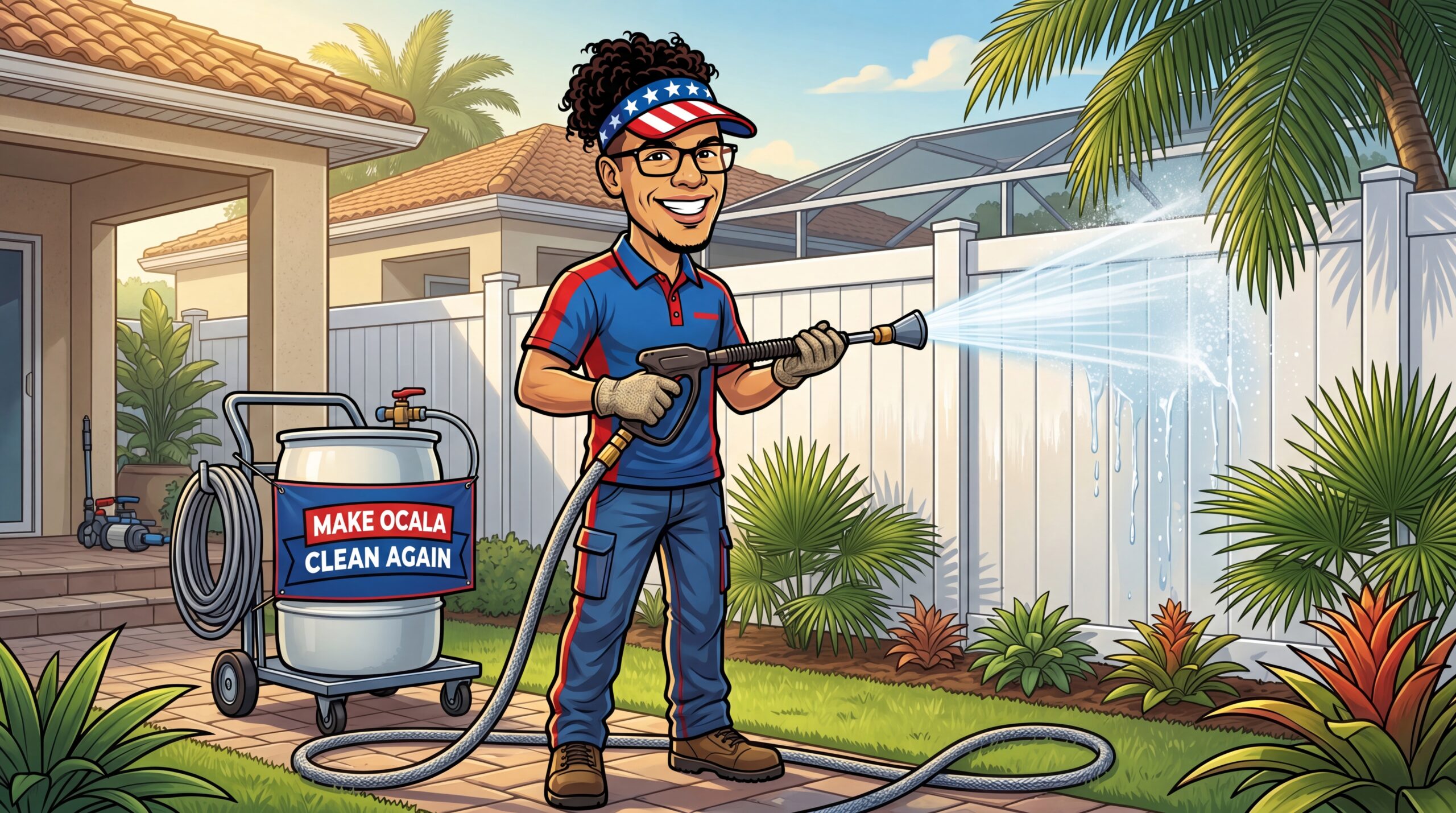
Real Work on Real Properties.
The distinction between pressure washing and soft washing is not academic for vinyl fences. The action shot shows controlled, professional technique that produces results without damage. Many homeowners who have tried to clean vinyl fences themselves with a pressure washer have created stress marks and surface scarring that require panel replacement. Soft wash chemical approach cleans the surface without touching the material integrity.
5-Star Rated on Google & Yelp
Trusted by Homeowners Across Marion, Citrus, Levy & Sumter Counties
Posted on Google
 Brandon Fairley
Trustindex verifies that the original source of the review is Google.
Randy and his team are true pros when it comes to power washing. They take the time to do the job right and treat your property with care. Highly recommend!Posted on Google Chad FilleyDoes and great job, extremely thorough job on a drive way and house.Posted on Google
 Gary StrikerStars and Stripes Power Washing does incredible work. Randy and his crew did an outstanding job on my horse trailer. It looks brand new. He is professional, shows up on time, paid attention to the details, and left everything clean when he finished. I’m a realtor, and I recommend Randy and Stars and Stripes Power Washing to all of my clients who need power washing. Reliable, high quality work every time..Posted on Google
 Gus BlancoWe own Complete Dryer Vent Services LLC and were really impressed with the work these guys performed. I can't believe how dirty my vinyl fence was. A week later and it's still glowing white! Got a good education on how lichen can cause staining and damage protective coating on vinyl fence. These guys know their stuff. They even washed our work trailer! Highly recommend Starr's and Stripes.Posted on Google
 Michael FetchRandy and Mathew from Starr's and Stripes Power Wash did an excellent job on our full house wash. Communication was clear and easy from start to finish, and they took the time to protect the plants and landscaping around the house. Our roof shingles had streaks all over them and now they are completely gone — the roof and house both look amazing. Honestly looks like a brand new home again. I would absolutely recommend them to anyone looking for pressure washing done right.Posted on Google
 Crystal LyonsReally great people! Prompt, courteous and professional while still being personable. Highly recommend!!! Edited to add that we are now repeat customers and our rating hasn't changed a bit! Same promptness, courtesy and professionalism!Posted on Google
 Kevin MckenzieRandy was very professional, friendly and thorough. I would highly recommend Starr's & Stripes Powerwash to anyone needing their home, roof or driveway cleaned.Posted on Google
 Angela NortonStarr's & Stripes PowerWash exceeded my expectations! Randy's team transformed my property, leaving everything spotless and looking brand new. Their attention to detail and dedication to quality are impressive. If you need reliable and thorough exterior cleaning, look no further—these guys are the best in the business!Posted on Google
 Mary RossiAbsolutely the nicest people to deal with and a great job.Posted on Google
 Jeannine PlummerI am a local Realtor, and I love that I can trust Starrs & Stripes to do a great job and with such professionalism that my clients reach out singing their praises after they leave. I highly recommend using this company for all of your power washing needs!
FAQs
Questions About Fence and Deck Cleaning in Ocala
Can I damage my vinyl fence by pressure washing it myself?
Yes, and it is more common than most homeowners expect. The most frequent DIY damage to vinyl fencing is stress marks and surface scarring from direct high-pressure contact with the panels, panel deformation from pressure at the wrong angle, and discoloration from household chemicals not formulated for vinyl. Once vinyl surface scarring occurs it cannot be reversed without panel replacement. Professional soft wash cleaning uses a chemical surfactant approach that dissolves the biological film without mechanical contact, eliminating the risk of surface damage entirely.
What cleaning method do you use for wood decks and fences?
Wood surfaces require oxygen-based cleaners rather than chlorine-based products or pressure alone. Oxygen-based cleaners break down the mold, mildew, algae, and surface oxidation responsible for gray discoloration without stripping the wood’s natural lignin. Lignin is the structural compound that binds wood fibers together. High chlorine concentrations or excessive pressure can strip lignin, causing wood fibers to stand up and creating a rough, splintered surface texture. The oxygen-based approach cleans the surface thoroughly and leaves the wood in good structural condition with the grain open and receptive for staining or sealing if desired.
What fence materials do you clean?
We clean all major residential and commercial fencing materials in the Ocala area: wood fences including pressure-treated pine, cedar, and hardwood; vinyl and PVC fences; composite fencing; and metal fences including aluminum and wrought iron. Each material requires a different cleaning approach, pressure setting, and chemistry. We assess the material and its condition before applying any cleaning process.
Can you remove green algae and black mold from my fence and deck?
Yes. The green and black discoloration on outdoor wood and vinyl surfaces in Central Florida is almost always biological: algae, mold, and mildew that thrive in warm, humid conditions. Professional-grade cleaning solutions are formulated specifically to kill these organisms at the root, not just rinse them from the surface. Killing the root structure rather than just removing visible growth extends the time before regrowth begins. A surface rinsed with water alone typically shows biological growth returning within weeks.
Is deck cleaning necessary before staining or sealing?
Yes. Deck stains and sealants are penetrating products that work by entering the wood’s pore structure and bonding with the wood fiber. If biological contamination, surface oxidation, or residue from previous stain applications occupy those pores, the new product cannot penetrate or adhere properly. The result is a stain job that peels prematurely, colors unevenly, or fails to protect the wood. Cleaning before staining removes the contamination, opens the wood grain, and creates the receptive surface condition that determines how well and how long the stain performs. Skipping the cleaning step is the most common reason deck stain jobs fail early.
Are your cleaning solutions safe for my lawn, garden, and pets?
Yes. All cleaning solutions used for fence and deck cleaning are eco-friendly and biodegradable at professional dilution rates. Before applying any solution near landscaping, the crew pre-wets surrounding plants, grass, and ground cover to dilute any solution that contacts them. After cleaning, the area is rinsed thoroughly. Pets and family members can use the cleaned surfaces after they have dried.
How often should I have my fence and deck professionally cleaned in Florida?
Every 12 to 18 months is the standard recommendation for most homes in the Ocala area. The specific interval depends on sun exposure and shade. Fully shaded surfaces on north-facing or tree-covered areas colonize significantly faster than sun-exposed surfaces because shade retains moisture and creates ideal biological growing conditions. A fence section under heavy oak canopy may need cleaning every 12 months, while a south-facing sun-exposed section of the same fence might last 18 months between cleanings.
How much does fence and deck cleaning cost in Ocala, FL?
Fence cleaning is priced by linear footage and material type. Most residential fence cleaning jobs in the Ocala area range from 50 to 50 depending on fence length and material. Deck cleaning is priced by square footage, material, and degree of biological colonization. Most residential decks range from 50 to 00 for a standard cleaning. Stain preparation cleaning is priced comparably to standard cleaning. Starr’s & Stripes provides a free written estimate before any work begins. Call or text (352) 230-9299 for a same-day quote.