Prevent Cell Damage (2026)
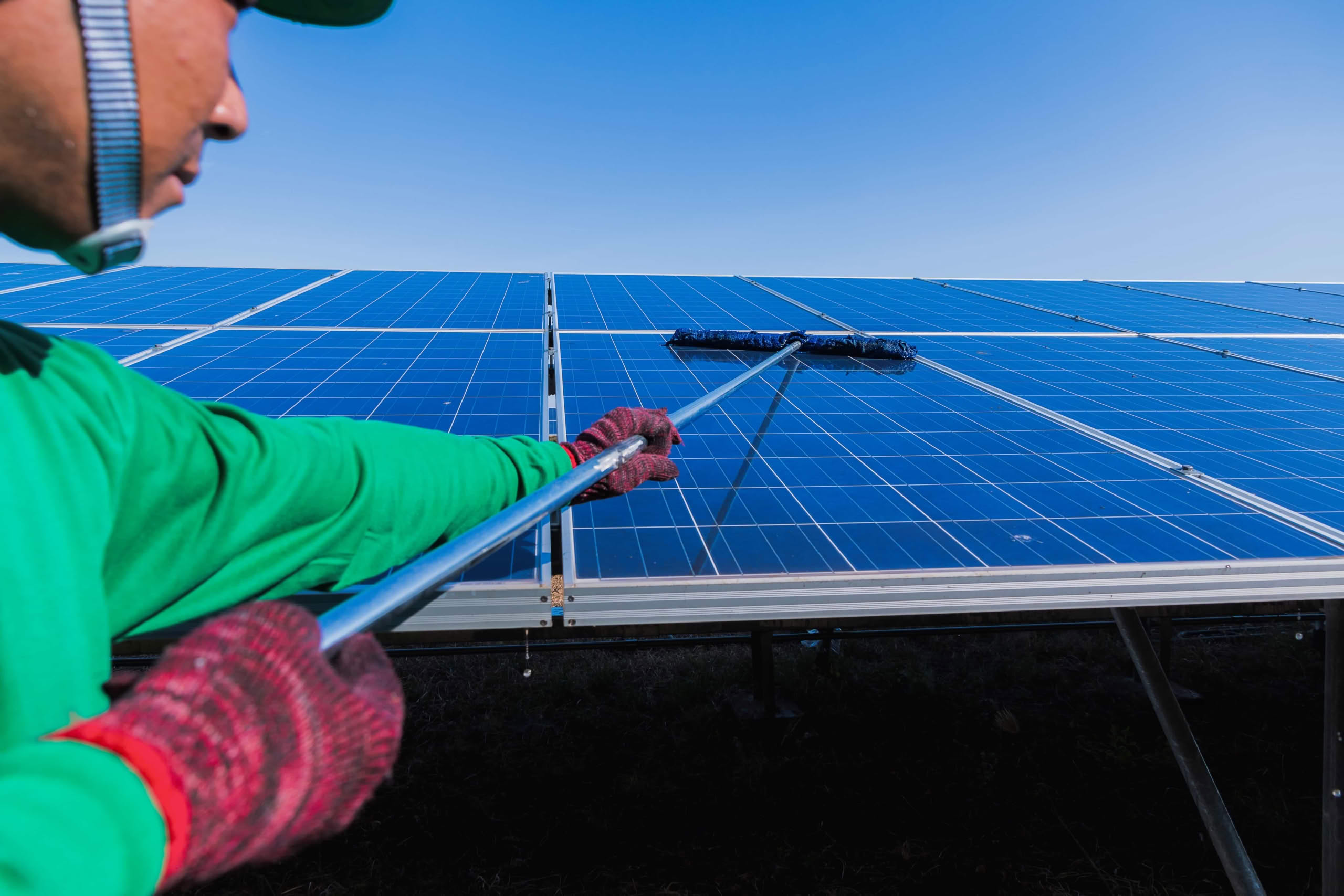
Regular solar panel cleaning is essential to prevent permanent cell damage and maintain peak energy efficiency. Dirt, pollen, and bird droppings physically block sunlight from reaching the photovoltaic cells. Without routine maintenance, your system can lose up to 25% of its output.
Installing solar panels is a brilliant investment for Florida property owners. Our state averages over 230 sunny days annually. Your system should slash electric bills and reduce your carbon footprint.
However, many installers omit a critical truth. Your panels will lose efficiency dramatically if you neglect exterior maintenance. After years of servicing arrays across Central Florida, we have seen the exact financial cost of this neglect.
📌 Key Takeaways
Immediate ROI: Cleaning restores lost efficiency, instantly lowering your monthly electric bill.
Damage Prevention: Removing baked-on debris prevents localized hot spots that permanently crack solar cells.
Warranty Protection: Most manufacturers require documented, professional cleaning to maintain warranty validity.
Water Quality Matters: Central Florida tap water leaves mineral scale; only deionized water should touch your panels.
Avoid DIY Disasters: Standard pressure washing and household soaps will destroy the panel’s anti-reflective coating.
Table of Contents
Understand How Dirty Panels Lose Money
Identify What Builds Up on Your System
Avoid DIY Panel Washing Mistakes
Explore the Professional Cleaning Process
Determine Your Ideal Maintenance Schedule
Frequently Asked Questions
Understand How Dirty Panels Lose Money
⚡ Quick Answer: Dirty panels reduce energy output by physically shading the photovoltaic cells. This forces your system to draw more grid power, increasing your monthly utility bill and extending your investment payback period.
Solar arrays generate electricity using photovoltaic cells (components that convert light directly into electricity). When debris blocks that sunlight, the cells produce less power. It is a simple equation.
Unfortunately, this buildup happens very gradually. Most property owners do not notice the decline immediately. They only realize there is a problem when their utility bill spikes unexpectedly.
📊 Data Point: Independent research from the National Renewable Energy Laboratory (NREL) reveals that soiled panels lose between 5% and 25% of their efficiency based on regional buildup.
The Real Financial Cost
Let’s analyze the real numbers. Assume your system offsets $200 per month in energy costs. If heavy soiling reduces your output by 20%, you lose $40 monthly.
That equals nearly $480 in lost savings every single year. Over a standard 25-year lifespan, neglected solar module care costs you $12,000.
Permanent Structural Damage
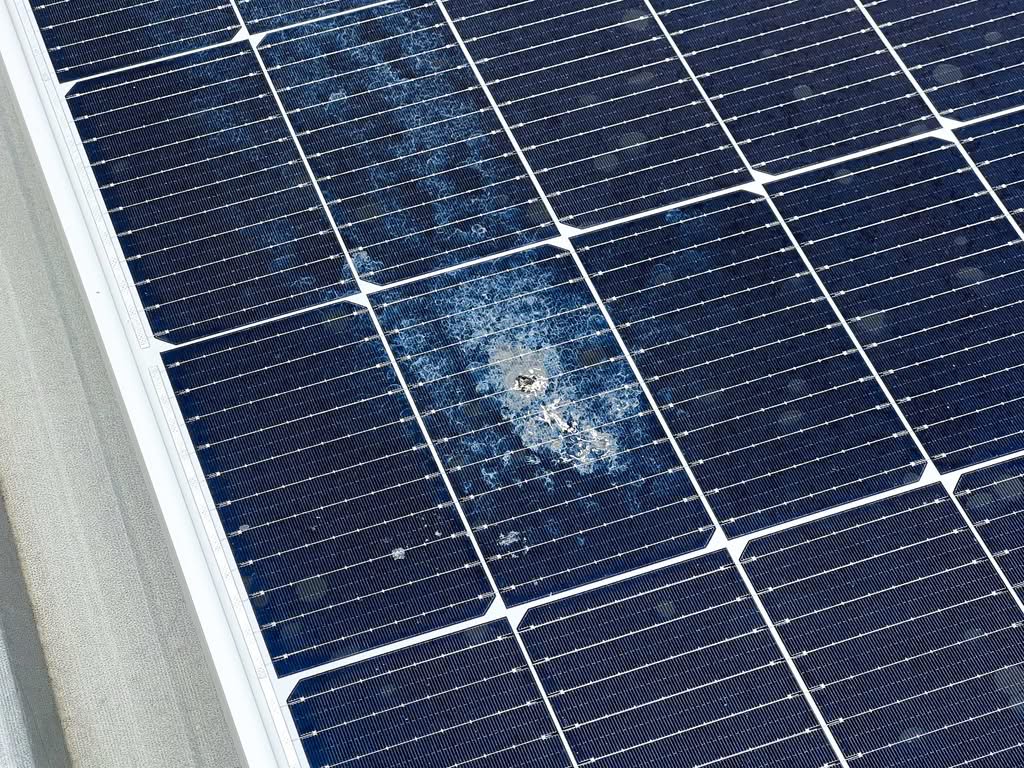
The cost of neglect goes beyond lost electricity. Thick bird droppings create concentrated “hot spots” on the glass.
These localized heat zones can permanently crack the underlying silicon cells. Once a cell cracks, you must replace the entire panel.
Identify What Builds Up on Your System
⚡ Quick Answer: Florida panels collect sticky pine pollen, acidic bird droppings, mineral-heavy rain scale, and coastal salt residue. Rain alone cannot wash these stubborn contaminants away.
Based on our field experience cleaning solar arrays throughout Marion County, local environmental factors are harsh. Florida’s climate accelerates panel soiling faster than drier regions.
The Most Common Contaminants
Yellow Pine Pollen: Blankets panels in a sticky, sunlight-blocking film every spring.
Bird Droppings: Highly acidic waste that blocks cells and etches protective glass coatings.
Mineral Scale: Left behind by hard tap water or sprinkler overspray.
Algae and Mold: Thrives on panel frames due to Florida’s 75%+ average humidity.
Salt Residue: Corrodes metal connectors on coastal and inland properties alike.
⚠️ Common Mistake: Believing that heavy Florida rain will clean your panels. Rain actually mixes with airborne dust to create a muddy slurry. This dries into stubborn streaks along the bottom edge of the glass.
Avoid DIY Panel Washing Mistakes
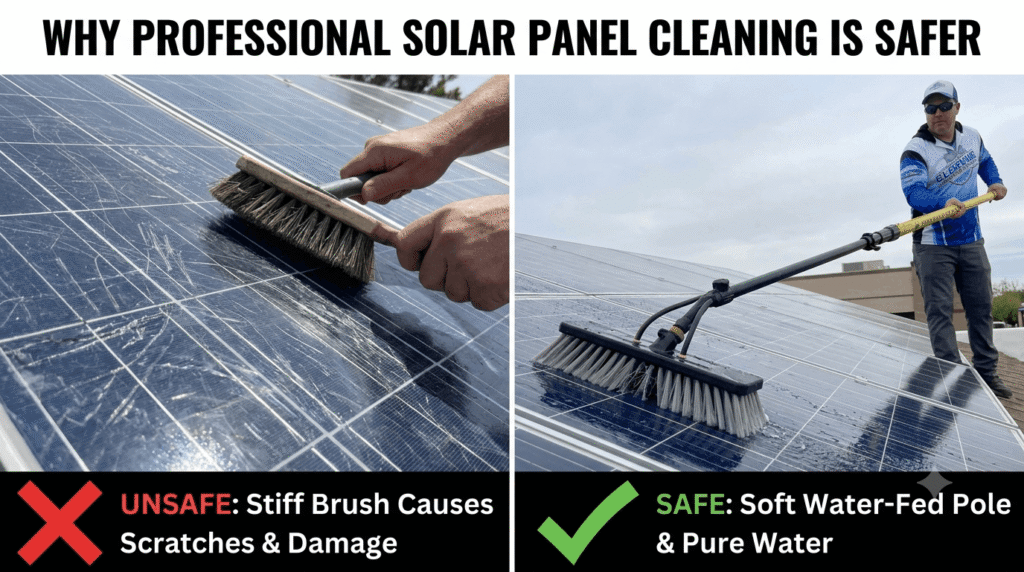
⚡ Quick Answer: DIY solar cleaning often permanently ruins panels. Hard tap water leaves thick mineral scale, dish soap attracts more dirt, and stiff brushes destroy the glass’s anti-reflective coating.
Many homeowners attempt to wash their own panels to save money. We strongly advise against this. We frequently receive service calls to repair systems damaged by well-meaning property owners.
The Problem with Tap Water and Soap
Central Florida tap water contains high levels of calcium and magnesium. When you spray this on hot solar glass, it instantly bakes on.
This creates a white mineral scale that blocks sunlight completely. Furthermore, household dish soaps leave a sticky chemical residue. This residue actually attracts more dust, causing panels to re-soil twice as fast.
💡 Expert Insight: Solar panels feature a microscopic anti-reflective coating designed to maximize light absorption. Scrubbing with stiff brushes or high-PSI wands will permanently scratch this layer.
Professional vs. DIY Comparison
| Feature | DIY Method | Professional Method |
| Water Quality | Hard tap water (leaves scale) | Pure deionized water (spot-free) |
| Cleaning Agents | Dish soap (leaves sticky film) | Biodegradable, panel-safe solutions |
| Equipment | Stiff brushes, high pressure | Soft-bristle water-fed poles |
| Safety Risk | High fall risk on wet roofs | Fully insured, trained technicians |
Explore the Professional Cleaning Process
⚡ Quick Answer: Professional technicians perform a pre-cleaning inspection, apply panel-safe biodegradable solutions, agitate grime with soft-bristle brushes, and rinse with pure deionized water for a spot-free finish.
Quality photovoltaic system maintenance is a structured, technical process. It requires specialized equipment to maximize energy recovery while protecting the hardware.
Step 1: Pre-Cleaning Inspection
Technicians safely access the roof to inspect each panel. We look for cracked glass, loose hardware, or frayed wiring. Catching these issues early prevents dangerous electrical failures.
Step 2: Safe Chemical Application
We apply a biodegradable, manufacturer-approved cleaning agent. This breaks down baked-on pollen and acidic bird droppings safely. We allow it to dwell, doing the heavy lifting without aggressive scrubbing.
Step 3: Deionized Water Rinse
Using soft-bristle, water-fed poles, we gently lift the loosened grime. The entire array is then rinsed with pure deionized water.
Deionized water is mechanically stripped of all minerals. It acts like a sponge to absorb dirt and dries flawlessly clear.
✅ Quick Tip: Always check your solar inverter app 48 hours after a professional wash. You should see a measurable spike in daily kWh production immediately.
Determine Your Ideal Maintenance Schedule
⚡ Quick Answer: Most residential homes in Florida need their solar panels cleaned twice a year. Homes near dense trees, coastal waters, or agricultural zones require quarterly maintenance.
Cleaning frequency depends entirely on your micro-environment. A system in an open field stays cleaner than one beneath a heavy oak canopy.
Recommended Cleaning Frequencies
Standard Residential: Twice per year (Spring and Fall).
Heavily Wooded Lots: Three to four times per year.
Coastal Properties: Every three months to prevent salt corrosion.
Commercial Arrays: Scheduled quarterly maintenance based on output data.
Do not wait for a calendar date if you notice warning signs. If your inverter app shows a drop in production, or if you can see visible bird droppings from the driveway, book a service immediately.
Frequently Asked Questions
Will professional solar panel cleaning void my warranty?
No. Most major manufacturers explicitly require routine cleaning to maintain warranty validity. We strictly utilize low-pressure, manufacturer-approved methods that protect your coverage.
How much does it cost to clean solar panels in Florida?
Residential solar array washing typically ranges from $150 to $400. Pricing depends on system size, roof pitch, and the severity of the soiling. The recovered energy savings often pay for the service within months.
Can solar panels be cleaned in the middle of the day?
No. Spraying cool water onto solar glass that has been baking in the midday sun causes thermal shock. This sudden temperature change can shatter the panels. We schedule cleanings for early mornings or late afternoons.
How can I verify the cleaning improved my system’s performance?
Monitor your solar inverter app immediately before and after the service. Most clients observe a 10% to 25% increase in daily kilowatt-hour (kWh) production within the first week of cleaning.
Are the cleaning solutions safe for my pets and plants?
Yes. Professional technicians use eco-friendly, biodegradable solutions. These agents neutralize quickly and will not harm your landscaping, pets, or local groundwater.
Protect Your Solar Investment Starting Today
Your photovoltaic system is a massive investment in renewable energy and property value. Regular, professional solar panel cleaning is the single best way to protect that asset.
By keeping your array spotless, you ensure maximum energy production, prevent permanent cell damage, and extend the lifespan of the equipment.
Ready to restore your system’s peak performance?
Check your recent utility bills for unexpected increases.
Review our verifiable customer reviews to see our proven results.
Contact our local team to secure your maintenance slot.
Don’t let dirt drain your energy savings. Visit Power Wash Ocala to book your professional solar panel cleaning today. If you want to protect your entire home envelope, we also offer expert roof cleaning services and driveway sanitation.