Paver sealing in Liberty Triangle is the single best way to stop Florida’s sun, rain, and sandy soil from wrecking your driveway or lanai. Without it, pavers fade, sprout weeds between the joints, and turn slick with algae within a couple of humid summers. A properly cleaned and sealed surface locks in color, blocks moisture intrusion, and keeps polymeric sand from washing away in the next downpour. If you’ve ever wondered why your neighbor’s driveway looks showroom-fresh while yours looks chalky, sealing is almost always the answer. This guide breaks down what the process involves, how often it’s needed in our climate, and when it’s worth calling a pro instead of renting a sprayer.
📌 Key Takeaways
- Unsealed pavers in Marion County typically show fading and weed growth within 12-18 months.
- Professional sealing includes cleaning, stain treatment, joint sand replacement, and a UV-stable sealant coat.
- Most Liberty Triangle driveways need resealing every 2-3 years depending on sun exposure.
- Sealed pavers resist oil stains, mold, and efflorescence far better than bare concrete or brick.
- DIY sealant kits often trap moisture and cause a hazy or blotchy finish if applied incorrectly.
Jump to a section:
- What Paver Sealing Actually Does
- Signs Your Pavers Need Sealing Now
- Our Paver Sealing Process Step-by-Step
- Sealed vs Unsealed: Real Cost Comparison
- How Often to Reseal in Our Climate
- DIY vs Hiring a Pro
- FAQ
What Paver Sealing Actually Does
Quick Answer: Paver sealing applies a protective topcoat that locks joint sand in place, blocks water and UV damage, and keeps color from fading. It’s less about shine and more about long-term structural protection for your hardscape.
Pavers are individual concrete or clay units set on a sand base, held together by polymeric or regular jointing sand between each piece. That sand is doing real structural work — without it, pavers shift, settle unevenly, and create tripping hazards. Sealer bonds that sand and creates a barrier against rain intrusion.
Why Marion County Sun Makes This Urgent
According to NOAA’s climate data, Central Florida sees over 50 inches of rain annually plus intense UV exposure most of the year. That combination breaks down unsealed paver surfaces faster than almost anywhere else in the country. Liberty Triangle’s tree-lined lots trap extra moisture and organic debris, which accelerates mold and algae growth on bare pavers.
💡 Expert Insight: The Interlocking Concrete Pavement Institute recommends sealing within the first year of installation to lock in joint sand before it erodes — waiting too long means redoing sand work you didn’t need to pay for twice.
Signs Your Pavers Need Sealing Now
Quick Answer: Fading color, weeds poking through joints, and a chalky white residue (efflorescence) are the three clearest signs your pavers are overdue for sealing.
If water beads on the surface, sealer is still doing its job. If water soaks in and darkens the paver immediately, it’s time to reseal. That simple test takes thirty seconds and saves you from guessing.
The Efflorescence Problem
Efflorescence is that white, powdery film that shows up on concrete pavers as mineral salts leach to the surface. It’s harmless structurally but makes a driveway look aged and dirty. A cleaning and sealing pass typically removes it and prevents it from returning as quickly.
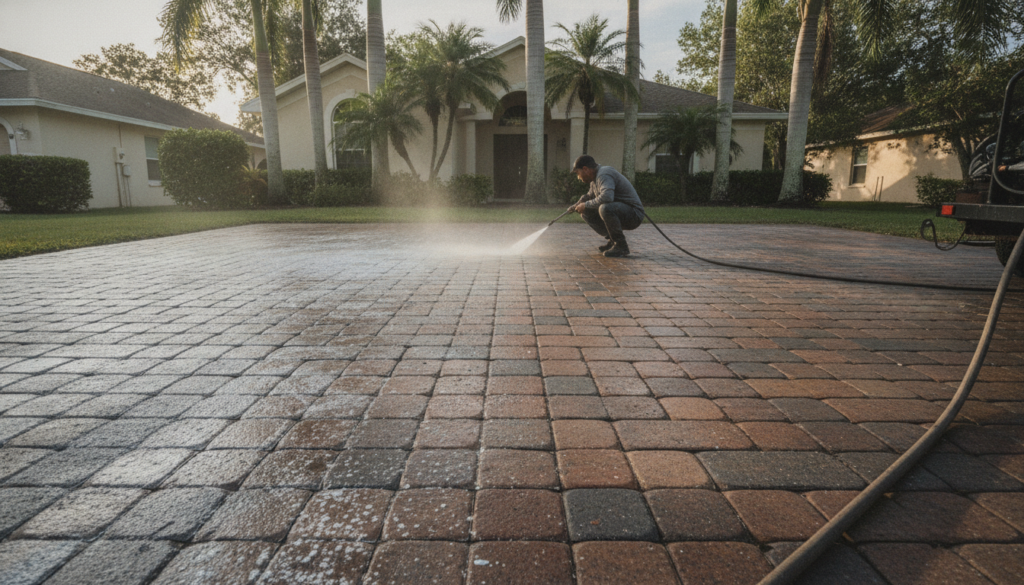
⚠️ Common Mistake: Sealing over efflorescence or algae without cleaning first just traps the problem under a glossy coat — it will bubble, peel, or discolor within months.
Our Paver Sealing Process Step-by-Step
Quick Answer: Professional paver sealing runs through cleaning, weed and stain treatment, joint sand replacement, and a final sealant application — usually completed in a single day for most Liberty Triangle driveways or patios.
We’ve walked plenty of Liberty Triangle homeowners through this, and the steps rarely change even when the paver style does.
Step 1: Deep Clean
We start with a low-pressure soft wash or controlled surface clean to lift dirt, mildew, and old sealant residue without pitting the paver surface. This matters — high-pressure blasting can actually erode softer pavers over time.
Step 2: Weed and Joint Repair
Any weeds growing between joints get removed at the root, and eroded sand gets replaced with fresh polymeric sand that hardens when activated with water.
Step 3: Stain and Rust Treatment
Oil drips, rust spots, and tannin stains from oak trees (common around Liberty Triangle’s golf course lots) get pretreated before sealing so they don’t get locked in permanently.
Step 4: Sealant Application
A UV-stable sealer goes on in thin, even coats — usually two — allowing proper cure time between passes. Rushing this step is the number one reason DIY jobs look streaky.
✅ Quick Tip: Schedule sealing during a stretch of dry weather; most sealants need 24-48 hours without rain to cure properly.
This same cleaning-first approach applies to our patio cleaning and pool deck cleaning work, since both surfaces face the same sun and moisture stress as driveway pavers.
Sealed vs Unsealed: Real Cost Comparison
Quick Answer: Sealed pavers cost more upfront but save money over time by avoiding sand replacement, weed removal, and premature stone replacement caused by cracking and erosion.
| Factor | Unsealed Pavers | Sealed Pavers |
|---|---|---|
| Color retention | Fades within 1-2 years | Holds color 3+ years |
| Weed growth | Frequent, needs manual removal | Significantly reduced |
| Stain resistance | Absorbs oil, rust, tannins | Repels most surface stains |
| Joint sand stability | Washes out in heavy rain | Locked and stabilized |
| Resealing cost | N/A | Every 2-3 years |
| Long-term replacement risk | Higher, due to shifting/settling | Lower |
📊 Data Point: Homes with consistently maintained hardscapes tend to show better curb appeal in resale comparisons, which is why many Marion Oaks and Rainbow Springs sellers invest in sealing before listing.
How Often to Reseal in Our Climate
Quick Answer: Most Liberty Triangle properties need resealing every 2-3 years, though shaded or heavily wooded lots may need it closer to every 18 months due to added moisture and organic buildup.
Sun exposure, tree cover, and irrigation spray patterns all shift that timeline. A south-facing pool deck with full sun bakes differently than a shaded front walkway under live oaks.
Climate Factors Specific to This Area
According to University of Florida IFAS Extension, Central Florida’s humidity and rainfall patterns create ideal conditions for mold and algae regrowth on porous outdoor surfaces. That’s part of why we see faster sealant breakdown here than in drier climates further north.
I’ve walked plenty of driveways in Ocklawaha and Silver Springs Shores where the difference between a sealed and unsealed section — sometimes on the same slab — was obvious just from the color contrast. It’s the fastest way to sell a homeowner on doing the whole surface at once.
DIY vs Professional Paver Sealing
Quick Answer: DIY sealing kits can work for small, simple patios, but professional application generally lasts longer and avoids blotching, because pros control cleaning, dry time, and coat thickness precisely.
Renting a sprayer and grabbing a box-store sealant sounds simple. In practice, uneven pressure, missed cleaning steps, and rushed dry times cause most DIY jobs to look patchy within a season.
When DIY Makes Sense
A small, shaded walkway with light traffic and no major staining is a reasonable DIY candidate if you’re comfortable with the prep work. Anything involving a full driveway, pool deck, or commercial walkway is where professional equipment and product-grade sealants pay off.
⚠️ Common Mistake: Applying sealant in direct midday sun causes it to flash-dry unevenly, leaving lap marks that are difficult to fix without stripping the whole surface.
For larger or more complex jobs, our paver sealing services pair directly with driveway cleaning and concrete sealing for a full-property refresh, which is common with homeowners near Dunnellon and the Liberty Triangle corridor.
Proper safety handling of pressure equipment and sealant chemicals also matters — OSHA publishes guidance on safe chemical handling that reputable contractors follow on every job.
FAQ
How much does paver sealing cost in Liberty Triangle?
Pricing depends on square footage, current paver condition, and whether stain treatment or sand replacement is needed. Most driveway and patio combinations fall into a moderate range once cleaning and two sealant coats are included.
How long does paver sealing last in Florida?
Most sealed pavers hold their protective coat for 2-3 years before resealing is recommended. Heavily shaded or high-traffic areas may need it slightly sooner.
Can you seal pavers that already have weeds and stains?
Yes, but they need to be cleaned, treated, and the joint sand refreshed before sealant goes on. Sealing over existing weeds or stains just traps the problem underneath.
Is paver sealing in Liberty Triangle worth it for resale value?
Many homeowners in Marion County find that clean, sealed hardscapes improve first impressions during showings. It’s a relatively low-cost way to boost curb appeal compared to full paver replacement.
What’s the difference between paver sealing and concrete sealing?
Paver sealing focuses on individual interlocking units and their joint sand, while concrete sealing treats a poured, continuous slab. Both use similar sealant chemistry but different application techniques.
How soon after installation should new pavers be sealed?
Most manufacturers and installers, including guidance referenced by the Interlocking Concrete Pavement Institute, suggest waiting a few weeks for efflorescence to settle before the first seal. After that, sealing sooner rather than later protects the joint sand from erosion.
Do you offer paver sealing in areas near Liberty Triangle?
Yes, our crews regularly serve Liberty Triangle along with nearby Dunnellon, Rainbow Springs, and Marion Oaks properties. We combine paver sealing with cleaning services so the whole exterior gets addressed in one visit.
Final Thoughts
Paver sealing in Liberty Triangle isn’t a cosmetic luxury — it’s maintenance that protects your investment from Florida’s punishing sun and rain cycle. Skipping it typically means faster fading, weed problems, and eventual paver replacement that costs far more than routine sealing ever would. Whether your driveway sits under full sun or shaded oak canopy, the right cleaning and sealing schedule keeps it looking sharp for years.
- Test your pavers with a water-bead check to see if they need resealing now.
- Schedule cleaning and sand repair before any new sealant goes down.
- Plan resealing every 2-3 years based on your property’s sun and shade exposure.
- Pair sealing with driveway or patio cleaning for a full hardscape refresh.
Starr’s & Stripes PowerWash Ocala proudly serves Liberty Triangle, Dunnellon, Marion Oaks, and the surrounding Marion County communities. Contact us today to schedule your paver sealing and get a straight-shooting quote with no surprises.