No pressure pressure washing sounds like a contradiction, but it’s actually the smartest way to clean fragile surfaces without cracking siding, scarring stucco, or stripping paint. Instead of blasting dirt away with brute force, this method — often called soft washing — uses low water pressure paired with specialized cleaning solutions to lift algae, mold, and grime safely. For homeowners across Marion County, that difference can mean the gap between a spotless house and an expensive repair bill.
Here in Ocala, we see the aftermath of DIY high-pressure jobs more often than we’d like: gouged wood siding, etched pavers, even shattered vinyl. No pressure pressure washing sidesteps all of that. It’s not a gimmick — it’s chemistry and technique doing the heavy lifting so the machine doesn’t have to.
📌 Key Takeaways
- No pressure pressure washing uses low PSI plus cleaning agents, not brute force, to remove grime.
- It’s the safest choice for siding, mobile homes, stucco, screens, and roofing shingles.
- Driveways, concrete, and heavily stained patios usually still need higher-pressure equipment.
- Bleach-free formulas exist and protect landscaping, pets, and septic systems near your home.
- Always ask a contractor which method they’ll use on which surface before you book.
Jump to a section:
- What Is No Pressure Pressure Washing?
- Why Soft Washing Beats High-Pressure Blasting
- Best Uses: Siding, Mobile Homes & Roofs
- Driveways, Patios & Concrete: When You Need More Force
- Choosing a Bleach-Free Pressure Washing Company
- FAQ
What Is No Pressure Pressure Washing?
Quick Answer: No pressure pressure washing is a low-PSI cleaning method that relies on specialized detergents to break down organic growth before a gentle rinse. It’s the go-to approach for surfaces that can’t handle a traditional high-powered blast.
The technique typically runs under 500 PSI, compared to the 3,000+ PSI a standard driveway machine can produce. The lower force alone won’t remove mildew stains, so technicians apply a cleaning solution first — usually a surfactant blend that clings to surfaces and breaks down biofilm.
How Soft Washing Chemistry Works
Soft washing solutions typically combine water, a surfactant (a compound that helps liquid spread and penetrate grime), and sometimes a mild algaecide. The mixture dwells on the surface for several minutes, dissolving the root structure of algae and lichen. A light rinse then carries everything away.
💡 Expert Insight: We’ve watched customers scrub siding with a garden hose for an hour trying to remove black streaks that took our low-pressure rig fifteen minutes to lift chemically. The difference is dwell time, not muscle.
According to the U.S. Environmental Protection Agency, exterior mold and algae growth thrives in humid climates and can degrade paint and siding over time if left untreated. Florida’s humidity makes this a near-constant issue, which is why soft washing has become standard practice for residential exteriors statewide.
Why Soft Washing Beats High-Pressure Blasting on Delicate Surfaces
Quick Answer: High PSI can force water behind siding, crack stucco, and strip protective coatings — soft washing avoids all three risks while still delivering a deep clean.
Traditional pressure washing excels on concrete and other hard, non-porous materials. But aim that same force at vinyl siding or an aging mobile home skirting, and you risk pushing moisture into wall cavities, which can lead to hidden mold growth.
The Risks of Traditional High-PSI Washing
We’ve inspected homes where a well-meaning DIYer used a rented pressure washer on painted wood trim and left visible striping that no amount of touch-up paint could hide. High force also erodes mortar joints on brick and can crack aging roof shingles, shortening their lifespan.
⚠️ Common Mistake: Renting a gas-powered pressure washer and using the same nozzle setting on siding, screens, and concrete. Each surface needs a different pressure range and, often, a different chemical approach entirely.
OSHA also notes that pressure washing equipment carries injury risk from kickback and high-velocity spray, which is one reason professional crews train specifically on nozzle selection and standoff distance before working near occupied homes.
Best Uses for No Pressure Pressure Washing: Siding, Mobile Homes & Roofs
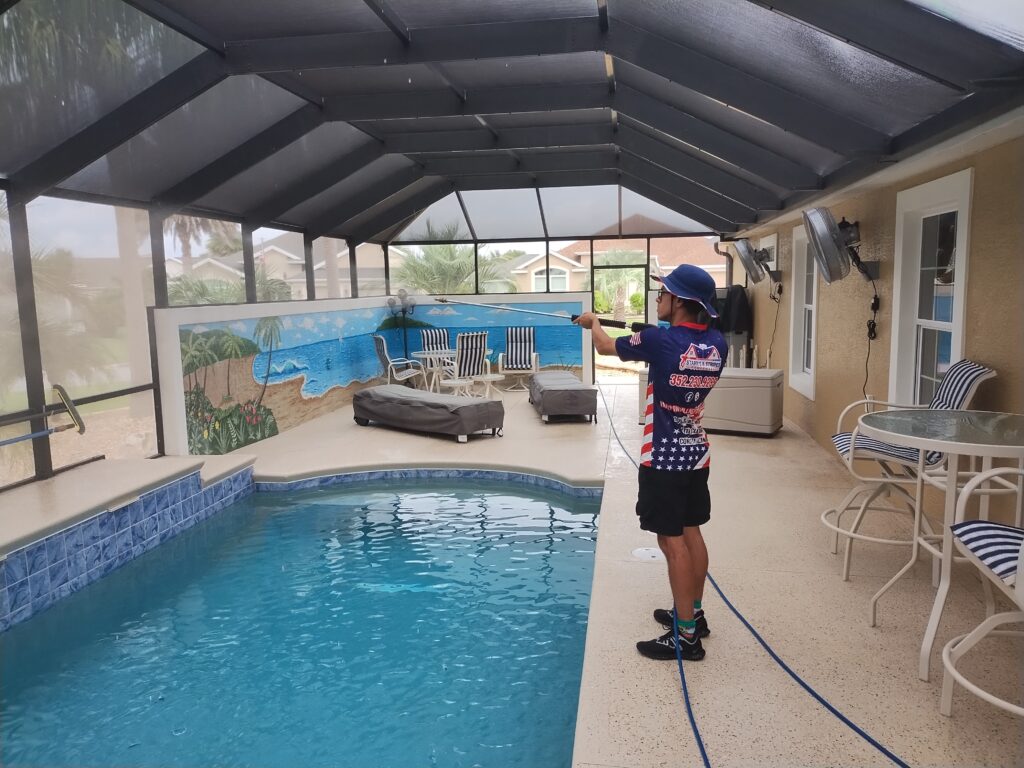
Quick Answer: Soft washing is ideal for vinyl and wood siding, stucco, screened enclosures, roof shingles, and mobile home exteriors — anywhere brute force could cause structural or cosmetic damage.
Mobile homes are a perfect example. Their thin aluminum or vinyl skirting dents easily, and older units may have weakened seams around windows. A gentle chemical wash lifts years of grime without stressing those seams.
Mobile Home Pressure Washing Near Me: A Special Case
We get this search constantly from residents in The Villages, Ocklawaha, and Belleview. Mobile homes pressure washing done wrong can force water under siding panels and into insulation, leading to mold that’s expensive to remediate. Our approach for mobile home washing always starts with the lowest effective pressure, working up only if a section genuinely needs it.
✅ Quick Tip: Ask your contractor if they’ve serviced mobile homes specifically. Standard house-washing settings are often still too aggressive for thin-gauge skirting.
Roofs deserve the same caution. Asphalt shingles lose their protective granules under high pressure, which shortens roof life. A soft, low-pressure rinse combined with a roof-safe solution handles moss and algae — commonly called soft wash roof cleaning — without voiding manufacturer warranties tied to granule loss.
📊 Data Point: Roofing manufacturers frequently warn that high-pressure washing can void shingle warranties by stripping the granule layer that protects against UV damage — a detail many homeowners only learn after the fact.
Stucco is another surface that benefits from gentler treatment. Its porous texture absorbs water readily, and forceful rinsing can drive moisture deep into the wall assembly. Our soft wash cleaning process is built around exactly this concern, prioritizing dwell time over PSI.
Driveways, Patios & Concrete: When You Need More Force
Quick Answer: Concrete, pavers, and other hard surfaces generally need higher pressure to remove embedded dirt, oil stains, and rubber marks — soft washing alone usually isn’t enough.
This is where the "no pressure" label gets misunderstood. Driveway pressure washing calls for a completely different toolkit than house washing. Dense, non-porous concrete can handle 3,000+ PSI without damage, and that force is often necessary to lift ground-in tire marks or years of oil buildup.
Driveway Pressure Washing vs. Soft Washing: Which Wins?
Neither method is universally "better" — they solve different problems. The table below breaks down when each approach makes sense for common Ocala-area surfaces.
| Surface | Recommended Method | Typical PSI Range | Why |
|---|---|---|---|
| Vinyl/wood siding | Soft washing | 100-500 PSI | Prevents water intrusion and paint damage |
| Mobile home skirting | Soft washing | 100-300 PSI | Thin material dents and warps easily |
| Asphalt roof shingles | Soft washing | 100-500 PSI | Protects granule layer and warranty |
| Concrete driveway | High-pressure | 3,000-4,000 PSI | Needed to lift oil, rust, and tire marks |
| Pool decks and pavers | Moderate to high pressure | 1,500-3,000 PSI | Removes algae without eroding joint sand |
| Patios (stamped concrete) | Moderate pressure | 1,000-2,500 PSI | Balances stain removal with surface protection |
Our driveway cleaning crews adjust pressure by material and stain type on every job — a cracked, oil-stained slab in Dunnellon gets treated very differently than a newer paver patio in Summerfield.
💡 Expert Insight: Patio pressure washing sits in a gray zone. Stamped or colored concrete can fade under aggressive treatment, so we often start soft and step up only where stains persist.
For pavers specifically, sealing after cleaning helps joint sand stay locked in place and slows algae regrowth — something our paver sealing service addresses directly after a wash.
Choosing a Bleach-Free Pressure Washing Company in Ocala
Quick Answer: Look for a contractor who explains which method they’ll use on which surface, offers bleach-free options, and can point to experience with your specific exterior material.
Bleach is common in the industry because it’s cheap and fast, but it can kill landscaping, discolor certain finishes, and isn’t ideal near septic systems. Bleach-free pressure washing in Ocala FL uses alternative surfactants that are gentler on plants and pets while still breaking down algae effectively.
Questions to Ask Before You Book
- Will you use soft washing or high pressure on my siding, roof, and driveway?
- Are your cleaning solutions bleach-free, and are they safe for my landscaping?
- Have you worked on mobile homes or older construction in this area before?
- Do you carry liability insurance, and can you provide proof on request?
- What’s your process if a stain doesn’t lift on the first pass?
⚠️ Common Mistake: Hiring based on price alone. The Federal Trade Commission advises getting written estimates and checking references before hiring any home service contractor — pressure washing included.
Florida’s environmental regulations also matter here. Runoff from cleaning chemicals can reach storm drains and waterways, and the Florida Department of Environmental Protection outlines guidance on protecting local water quality during exterior cleaning work. A responsible contractor contains and directs runoff away from storm drains as standard practice.
As of 2026, more Ocala-area homeowners are specifically requesting soft washing by name, a shift we’ve watched happen firsthand over the past several seasons of booking exterior cleaning jobs from Belleview to Dunnellon.
FAQ
What does no pressure pressure washing actually mean?
It refers to a cleaning method using very low water pressure combined with specialized detergents instead of relying on force. The chemicals do most of the work lifting algae and grime, while the low-pressure rinse simply washes it away.
Is no pressure pressure washing safe for mobile homes?
Yes, it’s typically the safest option for mobile homes because their thin siding and skirting can dent or warp under high PSI. A gentle chemical wash cleans effectively without stressing seams or panels.
Can no pressure pressure washing clean a driveway?
Generally, no — concrete driveways usually need higher pressure to remove embedded stains, oil, and tire marks. Soft washing works best on siding, roofs, and other delicate surfaces rather than dense concrete.
How often should I schedule house pressure washing near me?
Most Ocala-area homes benefit from an exterior cleaning once every 12 to 18 months, depending on tree cover and humidity exposure. Homes shaded by oaks or near water often need more frequent attention due to faster algae regrowth.
Is bleach-free pressure washing as effective as bleach-based cleaning?
Bleach-free solutions can be just as effective at removing algae and mildew when applied with proper dwell time. They’re often preferred because they’re gentler on landscaping, pets, and septic systems nearby.
What’s the difference between soft washing and regular pressure washing?
Soft washing uses low pressure plus cleaning solution and is meant for delicate surfaces like siding and roofing. Regular pressure washing uses higher force and suits hard surfaces like concrete, driveways, and pavers.
Do I need a professional for no pressure pressure washing or can I DIY it?
DIY soft washing is possible with the right equipment, but incorrect chemical ratios or dwell times can damage plants or discolor surfaces. Professionals bring calibrated equipment and tested formulas, which reduces the risk of costly mistakes.
Final Thoughts
No pressure pressure washing isn’t a lesser version of a real cleaning job — it’s the right tool for surfaces that can’t survive brute force. Siding, mobile homes, stucco, and roofing all respond better to a chemical-first, low-PSI approach, while driveways and pavers typically need real pressure to get clean. Knowing which method belongs where is what separates a lasting clean from an expensive repair.
Next steps if you’re ready to get started:
- Walk your property and note which surfaces look stained, streaked, or mossy.
- Decide which areas are delicate (siding, roof, mobile home skirting) versus hard (concrete, pavers).
- Ask any contractor you’re considering the five questions listed above.
- Request a written quote that specifies method and pressure range per surface.
- Book your service before Florida’s humid season accelerates new growth.
Starr’s & Stripes PowerWash Ocala serves homeowners across Marion, Sumter, Citrus, and Levy counties — from Ocala and The Villages to Dunnellon and Belleview. Reach out today for a free, no-obligation quote and let us match the right method to every surface on your property.