Parking lot striping Ocala, FL business owners rely on does more than look tidy — it directs traffic, protects pedestrians, and keeps you off the wrong side of an ADA complaint. Faded lines confuse drivers, invite fender-benders, and quietly chip away at your curb appeal. If your stripes have gone from bold white to ghost gray, it’s time for a refresh, and this guide walks you through exactly when, why, and how.
We’ve painted, pressure washed, and prepped lots all over Marion and Citrus counties, so we know what actually holds up under Florida sun and summer downpours. This isn’t theory — it’s what works on real lots in Ocala, Dunnellon, and beyond.
📌 Key Takeaways
- Restripe every 18-24 months in Florida’s UV-heavy climate to keep lines legible.
- Always pressure wash and degrease the surface before new paint goes down.
- ADA-compliant striping (van-accessible spaces, correct widths) isn’t optional — it’s federal law.
- Budget for both striping and a pre-clean; skipping the wash cuts paint life in half.
- Schedule striping during low-traffic hours or a weekend to avoid business disruption.
Jump to a section:
- Why Fresh Striping Matters for Your Property
- Warning Signs Your Lot Needs Attention
- ADA Compliance and Safety Standards
- What the Striping Process Actually Looks Like
- Cost and Timing: Planning It Right
- DIY vs Hiring a Pro
- Keeping Your Lot Looking Sharp Between Jobs
- FAQ
Why Fresh Striping Matters for Your Property
Quick Answer: Crisp striping reduces liability, improves traffic flow, and signals a well-run business. It’s one of the cheapest upgrades with the biggest visual payoff.
Think about the last time you pulled into a lot with faded, crooked lines. Did it make you trust the business inside? Probably not. First impressions form in the parking lot, long before a customer reaches your door.
Curb Appeal Meets Liability
A clean, clearly marked outdoor parking lot tells customers you sweat the details. It also protects you legally — confused traffic patterns and invisible handicap spaces are common triggers for slip-and-fall or fender-bender claims. Property managers in The Villages and Summerfield tell us the same thing: tenants notice striping before they notice anything else.
✅ Quick Tip: Walk your lot at dusk. If you can’t clearly see the lines from your car, neither can your customers.
Warning Signs Your Lot Needs Attention
Quick Answer: Faded lines, cracked asphalt bleeding through paint, and unreadable ADA symbols are the top three signs it’s restriping time. Don’t wait until a customer complains or an inspector flags it.
Florida sun is brutal on paint. UV exposure combined with heavy rain breaks down even quality striping paint faster than in cooler climates. Most lots in Ocala and Homosassa Springs need attention well before the two-year mark.
The Ghosting Effect
"Ghosting" happens when lines fade to a faint gray outline instead of solid white or yellow. Drivers subconsciously slow down, hesitate, or drift into adjacent spaces when this happens — it’s a subtle but real safety issue.
📊 Data Point: According to the Federal Highway Administration’s Manual on Uniform Traffic Control Devices, pavement markings must maintain adequate retroreflectivity and contrast to remain effective, especially at night.
ADA Compliance and Safety Standards
Quick Answer: Federal ADA guidelines dictate accessible space width, van-accessible signage, and access aisle markings. Non-compliant lots risk fines and lawsuits, not just bad optics.
ADA stands for the Americans with Disabilities Act, a federal law requiring accessible facilities, including parking. Compliance isn’t a suggestion — it’s enforceable, and violations can result in costly legal action.
What Compliance Actually Requires
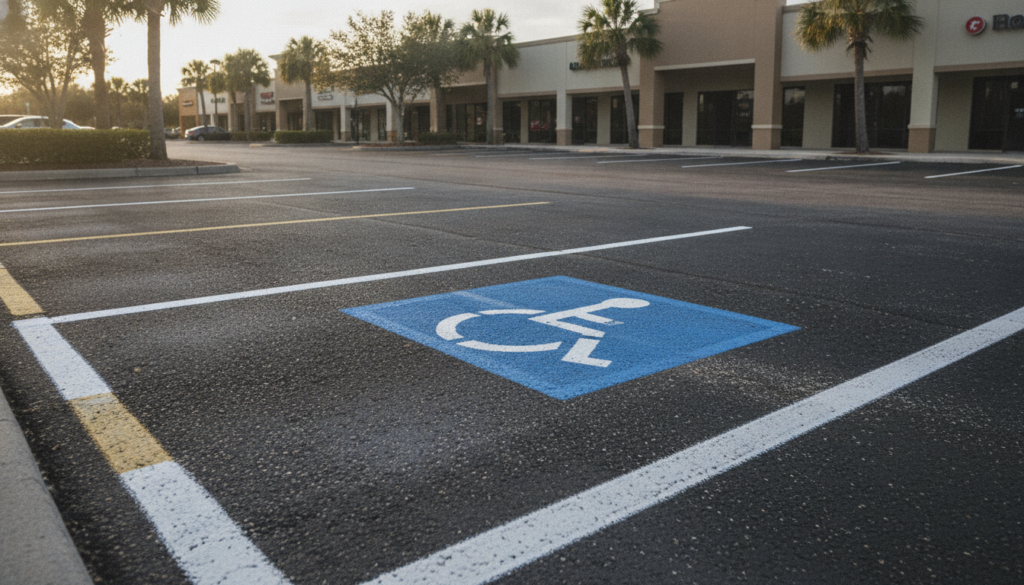
At minimum, accessible spaces need proper width (96 inches plus a 60-inch access aisle for standard spaces, wider for van-accessible), correct signage height, and a designated route to the entrance. The ADA.gov standards page outlines these specifications in detail, and it’s worth a read before your next striping job.
⚠️ Common Mistake: Business owners often repaint existing lines without checking if the original layout was ever compliant. Restriping over an outdated layout just perpetuates the problem.
We’ve walked lots in Belleview where the accessible space was technically present but too narrow to meet current code. A striping contractor worth hiring will flag this before painting, not after.
What the Striping Process Actually Looks Like
Quick Answer: Proper striping starts with cleaning, includes layout marking, and finishes with weather-resistant paint application. Skipping steps shortens the life of your lines dramatically.
This is where a lot of DIY jobs and budget contractors go wrong — they skip straight to paint without prepping the surface first.
Step-by-Step Overview
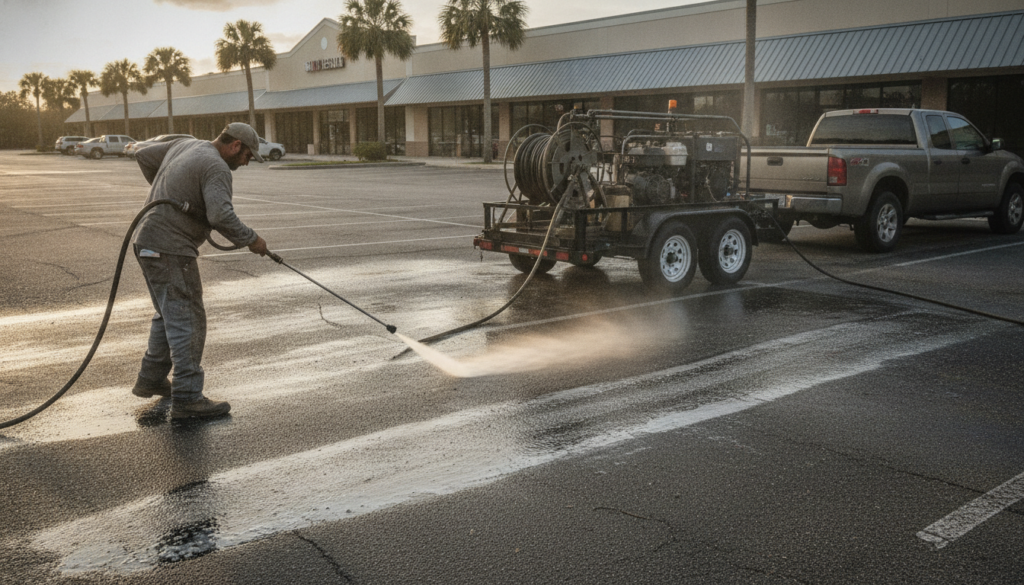
- Surface cleaning — oil stains, grease, and grime are pressure washed away so paint actually bonds to asphalt or concrete.
- Layout and measurement — old lines are mapped, ADA spaces are verified, and new chalk lines are laid out.
- Taping and masking — curbs, signage bases, and non-striped areas get protected.
- Paint application — traffic-grade paint goes down in even, measured passes.
- Cure time — lines need several hours minimum before vehicles drive over them.
Skipping step one is the most common shortcut, and it’s the one that costs you the most in the long run. Paint applied over grime peels within months instead of lasting years.
💡 Expert Insight: We always pair striping projects with a full parking lot pressure wash first. It’s not an upsell — it’s the difference between paint that lasts one season and paint that lasts two years.
Cost and Timing: Planning Your Project
Quick Answer: Costs vary by lot size, layout complexity, and whether pre-cleaning is included. Most small-to-mid-size commercial lots in our service area fall into a predictable range once measured.
Pricing for parking lot striping depends heavily on square footage, number of spaces, and how much surface prep is needed. A lot with years of oil buildup will cost more upfront to clean but save money long-term because the paint holds.
Best Times of Year to Schedule
Spring and early fall tend to offer the most stable weather in Marion and Citrus counties — not too hot for the paint to flash-dry unevenly, not so wet that rain interrupts curing. Scheduling around slow business hours, like early Sunday mornings, minimizes disruption for retail and restaurant lots alike.
| Factor | DIY Approach | Professional Service |
|---|---|---|
| Surface prep | Often skipped or rushed | Full pressure wash included |
| Paint durability | 3-6 months typical | 18-24 months typical |
| ADA compliance check | Rarely verified | Standard practice |
| Equipment cost | $150-$400 rental | Included in service price |
| Time investment | Full weekend, DIY labor | Half-day, professional crew |
📊 Data Point: The EPA’s guidance on stormwater runoff notes that wash water from commercial cleaning can carry pollutants into storm drains if not managed properly — a good reason to hire crews who follow proper containment practices.
DIY vs Hiring a Pro
Quick Answer: DIY striping can work for tiny lots with simple layouts, but most commercial properties benefit from professional equipment, compliance knowledge, and durable materials.
We get it — a box store sells striping paint and a roller kit for under $100. But a rented line striper without proper calibration often lays inconsistent widths, and that inconsistency is exactly what makes a lot look unprofessional rather than fresh.
When DIY Might Make Sense
If you’re marking a handful of spaces behind a small standalone shop with no ADA requirements, a careful DIY job might hold for a season. Anything larger, or anything involving accessible parking, safety signage, or high traffic, calls for a professional striping contractor who understands both the paint and the code.
⚠️ Common Mistake: Painting directly over cracked or oil-stained asphalt without cleaning first. The paint may look fine for a week, then peel in sheets after the first heavy rain.
Keeping Your Lot Looking Sharp Between Jobs
Quick Answer: Regular sweeping, prompt oil-stain treatment, and an annual pressure wash extend the life of your striping significantly. Maintenance between full restripes is cheap insurance.
A lot that gets swept weekly and washed annually holds its lines noticeably longer than one left to accumulate grime. Dirt and oil act like sandpaper on paint over time, wearing it down faster than sun exposure alone.
A Simple Maintenance Rhythm
We recommend a quick sweep every week, spot-treatment of oil stains as they appear, and a full parking lot cleaning services visit once or twice a year. Pair that with commercial pressure washing in Ocala for storefront areas and walkways, and the whole property reads as well-maintained.
Property managers overseeing retail centers near The Villages or Dunnellon often bundle these services seasonally, which also helps avoid costly HOA fines tied to appearance standards. If you manage a storefront directly, our storefront cleaning services page covers the entrance and facade side of the equation too.
✅ Quick Tip: Keep a simple log of your last striping date. It sounds basic, but most owners genuinely forget when the last job happened until someone points out the fading.
FAQ
How much does parking lot striping cost in Ocala, FL?
Costs depend on lot size, number of spaces, and whether surface cleaning is bundled in, so pricing varies property to property. Getting a walkthrough quote is the most accurate way to budget, since square footage and layout complexity both matter.
How often should a parking lot be restriped?
Most Florida lots need restriping every 18 to 24 months due to intense UV exposure and heavy seasonal rain. High-traffic lots or those near the coast may need it slightly sooner.
Do I need to pressure wash before striping?
Yes — paint applied over oil, dirt, or grime bonds poorly and peels within months. A proper wash roughly doubles the lifespan of fresh striping in most cases we’ve seen.
Is parking lot striping required to be ADA compliant?
Yes, federal law requires accessible spaces, correct access aisle widths, and proper signage for any commercial parking lot open to the public. Non-compliance can lead to fines and legal exposure, so it’s worth verifying with every restripe.
What’s the best time of year for parking lot striping in Ocala, FL?
Spring and early fall tend to offer the most stable, dry conditions for paint curing in Central Florida. Extreme summer heat and rain can interfere with even application and drying time.
Can I get parking lot striping done in Homosassa Springs, FL?
Yes, striping services extend to Homosassa Springs and surrounding communities within our service area. Scheduling works the same way as our Ocala jobs, with cleaning and layout verification included.
How long does a typical striping job take?
Most small-to-mid-size commercial lots are completed in a single day, including surface prep and paint cure time before reopening to traffic. Larger multi-lot properties may need a phased schedule to keep sections open during the work.
Final Word
Parking lot striping Ocala, FL property owners invest in pays for itself through fewer accidents, fewer compliance headaches, and a lot that simply looks cared for. Skipping the cleaning step, ignoring ADA specs, or waiting too long between jobs are the three mistakes we see most often. Get ahead of fading lines before a customer, tenant, or inspector points them out for you.
Next steps:
- Walk your lot and note faded, cracked, or non-compliant areas.
- Request a quote that bundles pressure washing with striping.
- Schedule the work during low-traffic hours in spring or fall.
- Set a reminder to reassess in 18-24 months.
Starr’s & Stripes PowerWash serves Ocala, Dunnellon, The Villages, Belleview, Summerfield, and Homosassa Springs — licensed and insured for commercial work. Call today to get your free striping and pressure washing quote scheduled.