Paver pool decks in Ocala FL turn green, slick, and stained faster than almost anywhere else in the state — and it isn’t your imagination. Our humidity, oak pollen, and daily pool splash create a perfect recipe for algae and mold within weeks of installation. The fix is a proper softwash-and-seal routine, not another trip to the hardware store for bleach.
If you’ve ever stepped onto your pavers barefoot and felt that slimy film underfoot, you already know the problem firsthand. This guide explains why Marion County pool decks get dirty so quickly, how pros clean them safely, and what a realistic maintenance schedule looks like for homeowners from Ocala to The Villages.
📌 Key Takeaways
- Ocala’s humidity and pool splash accelerate algae growth on pavers within 4-8 weeks of cleaning.
- Softwashing, not high-pressure blasting, is the safer method for most paver surfaces.
- Sealing pavers after cleaning can extend the clean look significantly and reduce weed growth between joints.
- DIY bleach mixes often bleach out polymeric sand and etch soft pavers — proceed with caution.
- A twice-yearly professional cleaning schedule keeps decks safe, bright, and slip-resistant year-round.
Jump to a section:
- Why Pool Decks Get Dirty So Fast in Ocala
- Signs Your Deck Needs Professional Attention
- Softwashing vs Pressure Washing for Pavers
- Why Sealing Protects Your Investment
- DIY vs Professional Cleaning: An Honest Look
- Year-Round Maintenance for Marion County Homes
- FAQ
Why Pool Decks Get Dirty So Fast in Ocala
Quick Answer: Ocala’s warm, humid climate combined with constant pool splash-out feeds algae and mold spores that thrive on porous paver surfaces. Add oak tree pollen and shade, and grime builds up faster than in drier parts of the country.
Florida’s subtropical climate keeps surfaces damp longer than most regions, which is exactly what algae and mildew need to establish colonies. According to the U.S. Environmental Protection Agency, mold and algae growth accelerates whenever moisture sits on a surface for 24-48 hours without drying — a common scenario around any pool deck.
The Humidity Factor
Marion County’s average relative humidity often sits well above 70% for much of the year. That moisture, paired with chlorinated splash water and shaded landscaping, creates chronic dampness pavers simply can’t shake off on their own.
Efflorescence and Mineral Staining
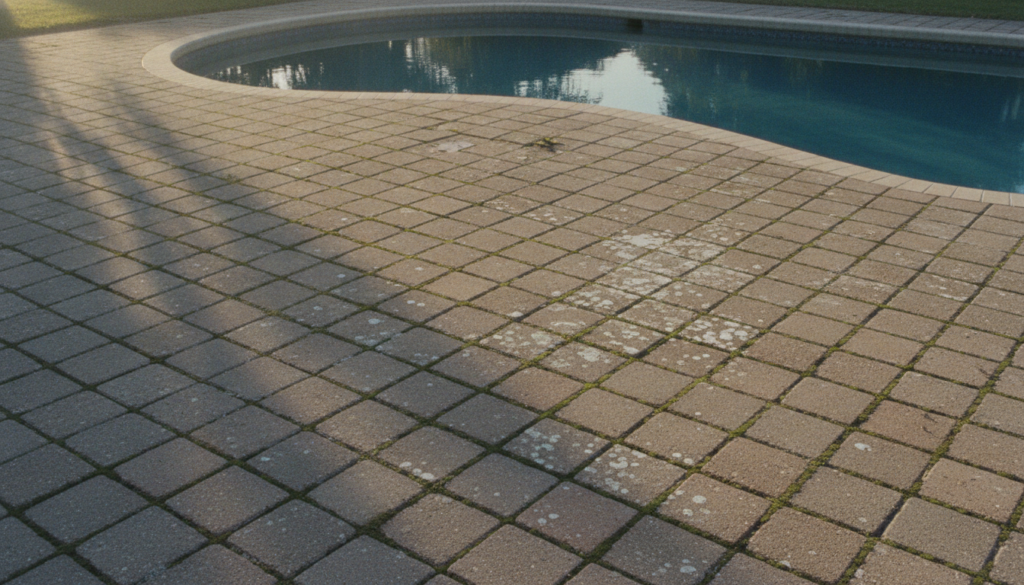
Efflorescence is the white, chalky residue that forms when minerals inside concrete or paver stone rise to the surface as water evaporates. It’s not dirt — it’s a mineral deposit — and pressure alone rarely removes it without the right cleaning agents.
💡 Expert Insight: We see the heaviest algae buildup on paver pool decks in Ocala FL that sit under oak canopies or face north, where sunlight can’t dry the surface between rains.
Signs Your Deck Needs Professional Attention
Quick Answer: Watch for slippery green film, dark mildew spots between joints, white mineral haze, and sand erosion in the paver gaps. Any of these signals it’s time to call in a crew rather than DIY it.
A slick deck surface is more than cosmetic — it’s a fall hazard, especially for kids and older adults walking around a wet pool edge. If your pavers feel greasy or slippery even when dry, algae has likely penetrated below the surface layer.
Joint Sand Loss
When polymeric sand between pavers washes out or crumbles, weeds and ants move in fast. This usually means prior cleaning was too aggressive or sealing was never applied after installation.
Color Fading and Blotching
UV exposure combined with chlorine splash can fade paver color unevenly, leaving blotchy patches that look worse the longer they sit. Cleaning first, then sealing, typically restores a much more uniform appearance.
⚠️ Common Mistake: Homeowners often reach for a rented pressure washer on the highest setting, which strips sand from joints and can chip softer paver edges. That damage is expensive to repair compared to a proper softwash.
Softwashing vs Pressure Washing for Pavers
Quick Answer: Softwashing uses low pressure and specialized cleaning solutions to kill algae at the root, while pressure washing relies on force alone. For paver pool decks in Ocala FL, a hybrid approach — controlled pressure plus surface-safe chemicals — usually delivers the best, longest-lasting result.
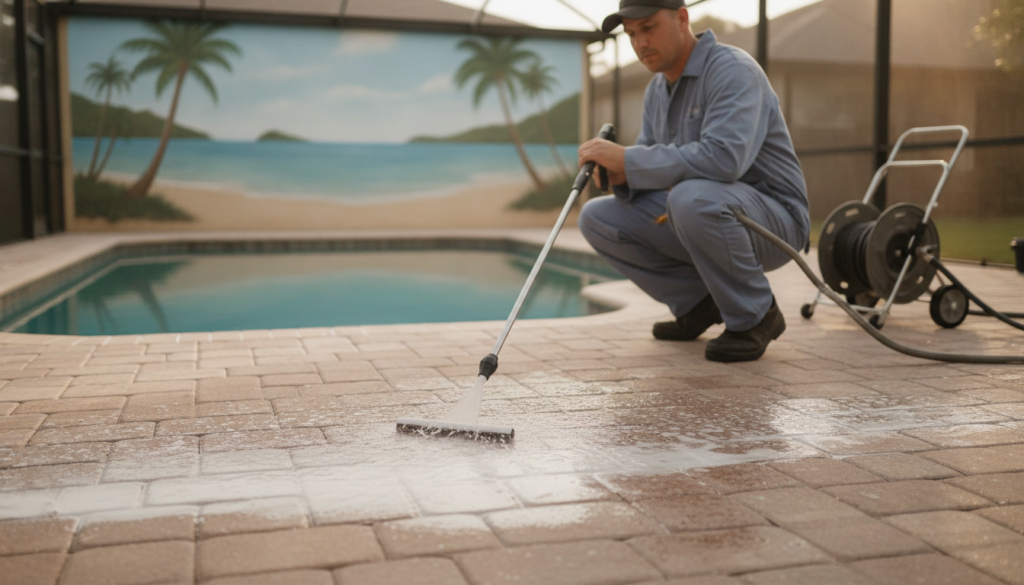
Softwashing is a cleaning method that applies biodegradable solutions at low pressure (often under 500 PSI) to break down organic growth without eroding the surface. It’s the same principle we use for soft wash cleaning on roofs and siding, adapted for hardscape.
When Higher Pressure Makes Sense
Some dense, well-sealed pavers can tolerate moderate pressure for stubborn grime, but technique and nozzle selection matter enormously. Untrained pressure washing can etch soft coquina or travertine pavers permanently.
| Method | Best For | Risk Level | Typical Result |
|---|---|---|---|
| Softwashing | Algae, mildew, most paver types | Low | Even, long-lasting clean |
| High-pressure washing | Heavy grease, oil stains | Moderate-High | Fast but can erode joints |
| DIY bleach scrub | Small spot treatments | High | Uneven, can bleach sand |
📊 Data Point: The Florida Department of Environmental Protection notes that runoff from cleaning chemicals near pools and waterways should use biodegradable, low-impact products whenever possible — a standard we follow on every job near landscaping and drains.
Why Sealing Protects Your Investment
Quick Answer: Sealing pavers after a professional cleaning locks out moisture, blocks UV fading, and makes future algae growth far easier to rinse away. It’s the single best step homeowners skip and later regret.
A quality sealant creates a protective barrier that reduces water absorption into the paver’s pores. Less absorbed moisture means less food for algae and mold spores to colonize between cleanings.
Sand-Locking Sealants
Certain sealants also bind joint sand in place, which helps prevent the weed growth and ant colonies that plague unsealed pool decks. This is especially valuable around pools where constant splashing accelerates sand washout.
Slip Resistance
A good non-slip additive in the sealer keeps the surface from becoming a hazard when wet — a real safety consideration for any pool area. Our paver sealing services include this additive on every pool deck job.
✅ Quick Tip: Plan to reseal every 2-3 years in Ocala’s climate, sooner if your deck gets heavy foot traffic or full sun exposure.
DIY vs Professional Cleaning: An Honest Look
Quick Answer: DIY cleaning can handle light dust and debris, but algae, efflorescence, and pre-sealing prep genuinely call for professional-grade equipment and solutions. Doing it yourself often costs more in the long run through paver damage or repeat treatments.
We get it — a rental pressure washer feels like the cheaper route. In practice, incorrect pressure or the wrong chemical mix is the number one cause of paver damage we’re called to fix.
What Professionals Bring to the Job
A trained crew adjusts pressure and dwell time per paver type, uses surface cleaners for even results, and follows up with sealing in the same visit. That combination is difficult to replicate with a big-box rental unit.
| Factor | DIY | Professional |
|---|---|---|
| Equipment cost | $80-150/day rental | Included in service |
| Risk of paver damage | Higher | Low, trained technique |
| Time investment | 4-8 hours | 1-3 hours |
| Sealing included | Rarely | Often bundled |
| Result longevity | 4-8 weeks | 6-12+ months |
💡 Expert Insight: In my experience walking Ocala backyards, most "failed" DIY paver cleanings actually failed because sealing was skipped entirely, not because the cleaning itself was wrong.
Year-Round Maintenance for Marion County Homes
Quick Answer: A twice-a-year professional cleaning, paired with a light rinse routine between visits, keeps most Ocala-area pool decks looking new. Homes near heavy tree cover or shaded lots may need a bit more frequent attention.
We work with homeowners across the region — from Ocala and Belleview to Dunnellon, Summerfield, The Villages, and Inverness — and the pattern is consistent. Shaded, low-airflow decks need more frequent care than open, sun-exposed ones.
A Simple Seasonal Schedule
- Spring: Deep softwash cleaning plus paver sealing before pool season ramps up.
- Summer: Light rinse monthly to knock down pollen and organic debris.
- Fall: Inspect for joint sand loss and touch up sealant if needed.
- Winter: Full professional cleaning again before spring pollen returns.
Complementary Exterior Care
While you’re maintaining the deck, it’s worth checking nearby surfaces too. Our patio cleaning and general pressure washing services often get bundled with paver pool deck visits for whole-yard results in one trip.
⚠️ Common Mistake: Skipping gutter maintenance nearby can send tannin-stained runoff straight onto a freshly cleaned deck. If that’s an issue at your property, our gutter cleaning team can handle both in the same visit.
According to the Centers for Disease Control and Prevention, regular removal of mold and algae from outdoor living surfaces reduces allergen exposure for households, particularly for those with asthma or sensitivities. That’s one more reason routine paver care matters beyond curb appeal.
FAQ
How much does cleaning paver pool decks in Ocala FL typically cost?
Most residential pool deck softwashing jobs in our service area run based on square footage and staining severity, with sealing as an optional add-on. An accurate quote requires a quick look at the specific deck and paver type.
Can pressure washing damage my pool pavers?
Yes, incorrect pressure or nozzle choice can erode joint sand, chip paver edges, and strip sealant prematurely. That’s why softwashing or carefully controlled pressure is the safer standard for most residential decks.
How often should I reseal my paver pool deck?
Most homeowners in our humid climate reseal every 2-3 years, though heavy sun or foot traffic can shorten that window. A technician can check wear during your cleaning visit and recommend timing.
Is it safe to clean pavers myself with bleach?
Bleach can lighten polymeric sand unevenly and won’t fully kill algae roots below the surface. It’s a temporary fix at best and can create blotchy discoloration over time.
Do you clean pool decks in The Villages and Summerfield too?
Yes, we serve homeowners throughout Marion, Sumter, and surrounding counties, including The Villages, Summerfield, Belleview, and Dunnellon. Service area details are listed on our Ocala service area page.
What’s the difference between softwashing and regular pressure washing?
Softwashing uses low pressure with specialized cleaning solutions to kill organic growth at the root, while pressure washing relies mainly on force. Pavers generally respond better to softwashing since it avoids eroding joint sand or etching stone.
Will sealing make my pool deck slippery when wet?
A properly applied sealant with a non-slip additive should improve traction, not reduce it. Always confirm your sealer includes anti-slip properties, especially for a pool deck application.
Final Thoughts
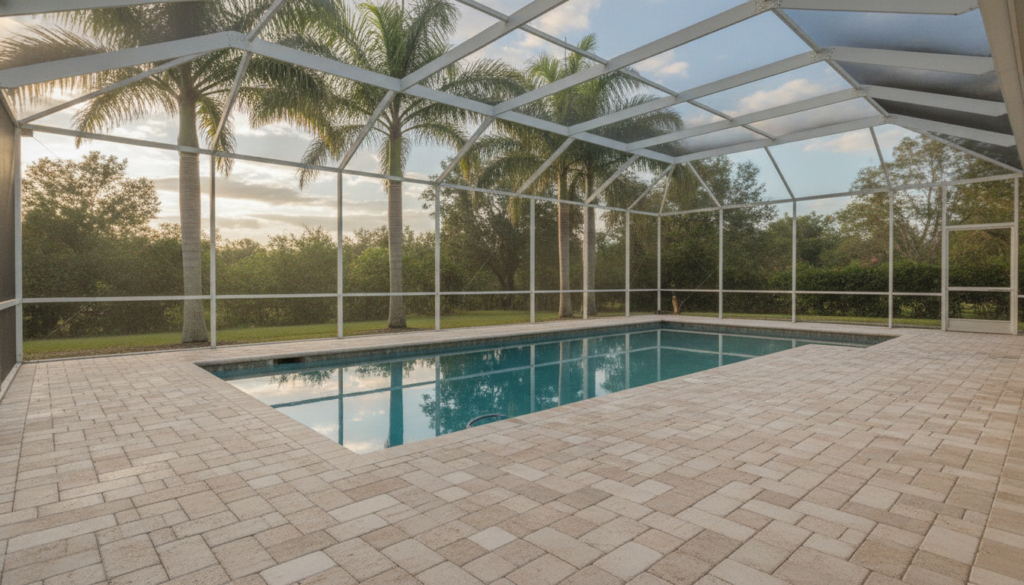
Keeping paver pool decks in Ocala FL algae-free comes down to timing, the right cleaning method, and a sealant that actually protects the surface. Skip any one of those steps, and Florida’s humidity will undo your work within weeks. The homeowners who get the best long-term results treat cleaning and sealing as a paired job, not separate errands.
- Inspect your deck for slippery film, white haze, or joint sand loss.
- Schedule a professional softwash before pollen and pool season peak.
- Add sealing in the same visit to lock in the clean look.
- Set a twice-yearly reminder to keep the cycle going.
Starr’s & Stripes PowerWash Ocala serves homeowners across Marion, Sumter, Citrus, and Levy counties with softwash-safe paver cleaning and sealing. Call today or request a free quote to get your pool deck ready for the season.