If you’re researching paver sealing Lake Panasoffkee options, here’s the direct answer: a quality sealer applied every two to four years is what keeps local pavers from fading, cracking, and growing algae in Central Florida’s humidity. Lake Panasoffkee sits right on the water, which means intense sun exposure, heavy rainfall, and constant moisture team up against your driveway, patio, or pool deck. Unsealed pavers absorb water and UV rays, and that’s when weeds sprout between joints, sand washes away, and colors fade to chalky gray. We’ve watched this cycle play out on dozens of lakeside properties, and it’s almost always avoidable.
Think of paver sealing like sunscreen for your hardscape — it doesn’t stop the sun or rain, but it stops the damage. This guide breaks down what the process involves, when your pavers need it, what it costs, and how to pick a sealer suited for Central Florida’s swampy summers.
📌 Key Takeaways
- Reseal pavers every 2-4 years depending on sun and foot traffic exposure.
- Efflorescence (white powdery residue) and sand loss are the top warning signs.
- Wet-look and matte sealers both protect equally; the difference is purely cosmetic.
- Professional sealing includes cleaning, repair, and polymeric sand — DIY kits often skip these steps.
- Lake-adjacent homes in Lake Panasoffkee need extra attention to algae and mildew due to humidity.
Jump To a Section
- Why Paver Sealing Lake Panasoffkee Homeowners Trust
- Signs Your Pavers Need Sealing Now
- How the Sealing Process Actually Works
- DIY vs Professional Sealing Compared
- Choosing a Sealer for Florida’s Climate
- Cost and Maintenance Schedule
- FAQ
Why Paver Sealing Lake Panasoffkee Homeowners Trust
Quick Answer: Paver sealing protects against sun-bleaching, water intrusion, and the algae that thrives near Lake Panasoffkee’s shoreline, while keeping the finished look homeowners paid for. It’s the maintenance step most people skip until it’s expensive to fix.
Pavers are porous by nature. Without a barrier, they soak up rainwater, pool chemicals, and organic debris. Over time that moisture breaks down the paver’s surface and the polymeric sand between the joints. In a town built around lake life, splash zones near docks and pool decks take the worst of it.
The Real Cost of Skipping It
Homeowners who wait until pavers look bad usually pay more. Deep-set algae and efflorescence require pressure washing and sometimes paver replacement before sealing can even begin. According to the EPA’s guidance on water-resistant coatings, sealed surfaces resist moisture penetration significantly better than untreated ones, which directly reduces freeze-thaw and organic damage over time.
⚠️ Common Mistake: Sealing dirty or wet pavers traps moisture and stains underneath the coating. Always clean and fully dry the surface first — this is where most DIY jobs go wrong.
Signs Your Pavers Need Sealing Now
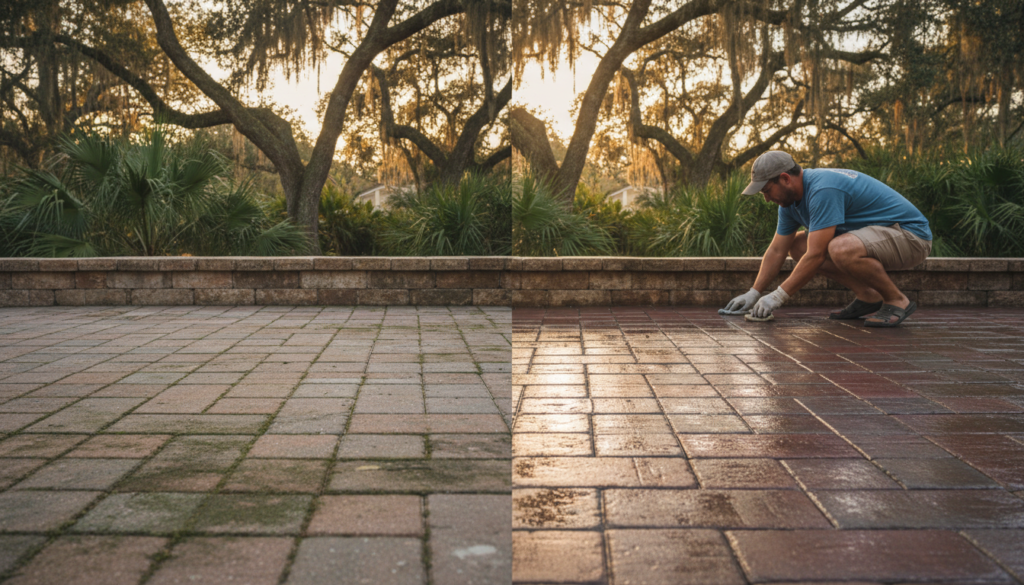
Quick Answer: Fading color, loose joint sand, weeds between pavers, and a white chalky film are the four clearest signals it’s time to reseal. Ignoring them speeds up wear on the paver surface itself.
Efflorescence — that white, powdery mineral residue — is one of the most common complaints we hear from Marion and Sumter County homeowners. It’s caused by water pulling salts up through the paver and isn’t harmful, but it does signal the surface is unprotected.
A Simple Water-Drop Test
- Pour a small cup of water onto a paver in full sun.
- Watch for 60 seconds.
- If the water beads up, your seal is still working.
- If it soaks in and darkens the paver, it’s time to reseal.
This takes two minutes and tells you more than a visual inspection alone.
✅ Quick Tip: Run the water-drop test on both a shaded and sun-exposed paver — sealer wears unevenly depending on exposure.
How the Sealing Process Actually Works
Quick Answer: Professional paver sealing follows four stages: pressure washing, weed and sand removal, repair, and sealer application. Skipping any one of these shortens the life of the finished job.
Step-by-Step Breakdown
- Deep clean — a pressure washer removes algae, dirt, and old degraded sealer without eroding the paver surface.
- Joint restoration — old, washed-out sand is removed and replaced with fresh polymeric sand, which hardens and locks pavers in place.
- Repair — cracked or sunken pavers are reset before sealing, since sealer won’t fix structural issues.
- Sealer application — a solvent- or water-based sealer is rolled or sprayed on evenly, then left to cure fully before foot traffic resumes.
Drying time matters more in Lake Panasoffkee than in drier climates. Humidity slows curing, so a job that dries in 24 hours in Arizona might need 48-72 hours near the lake.
💡 Expert Insight: We schedule paver sealing jobs around Florida’s rain radar, not just the calendar — a sealer applied right before a storm rolls in will fail within weeks.
DIY vs Professional Sealing Compared
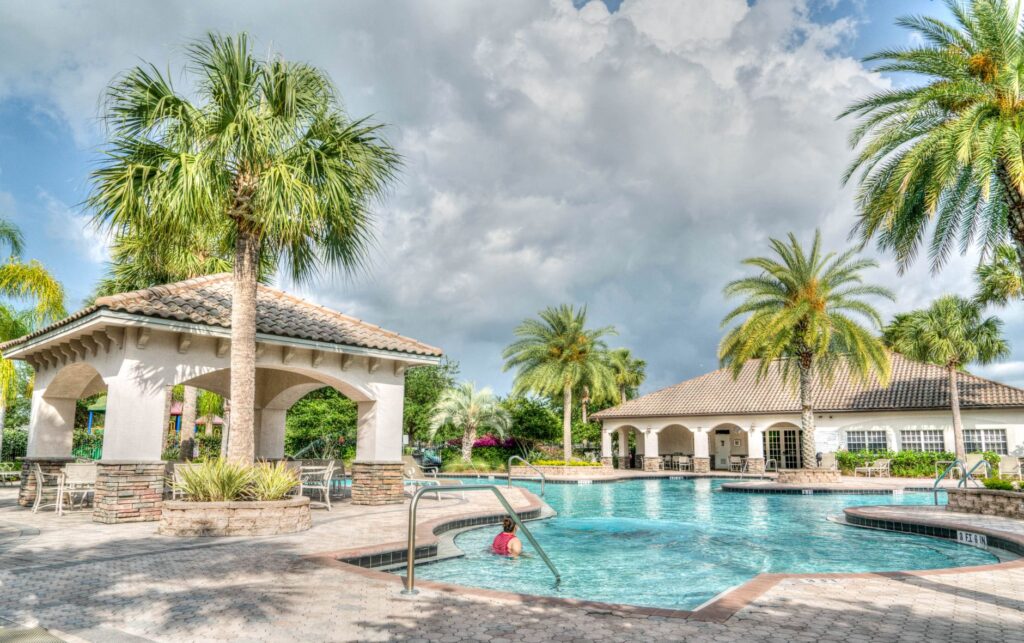
Quick Answer: DIY sealing kits can work for small, low-traffic areas, but professional sealing includes cleaning, repair, and commercial-grade sealer that lasts longer and looks more even.
| Factor | DIY Sealing | Professional Sealing |
|---|---|---|
| Equipment | Store-bought sealer, roller | Commercial sprayer, surface cleaner |
| Prep work | Often skipped or rushed | Full pressure wash + joint sand refresh |
| Sealer quality | Retail-grade, thinner coverage | Commercial-grade, UV-rated |
| Typical lifespan | 1-2 years | 2-4 years |
| Risk of streaking/blotching | Higher | Low, with proper technique |
| Time investment | A full weekend | Usually one day |
📊 Data Point: Improperly cleaned surfaces are one of the leading causes of coating failure, according to industry guidance from the Interlocking Concrete Pavement Institute, which stresses surface prep before any hardscape treatment.
Choosing a Sealer for Florida’s Climate
Quick Answer: Water-based, UV-resistant sealers generally perform best in Central Florida because they breathe better in humid conditions and resist yellowing under intense sun. Wet-look sealers deepen color; matte sealers keep a natural finish.
Solvent-Based vs Water-Based
Solvent-based sealers create a thicker, glossier finish but can trap moisture in humid climates like ours, sometimes leading to a hazy or milky look. Water-based sealers cure slower but breathe better, which matters near Lake Panasoffkee’s high water table and afternoon storms.
Both options are considered low-VOC when labeled correctly, and homeowners concerned about runoff into nearby waterways can review general environmental guidance from the EPA before choosing a product. We always ask clients about proximity to water features before recommending a specific formula.
⚠️ Common Mistake: Choosing a sealer based on price alone. A cheap sealer that needs redoing in one year usually costs more than a mid-grade product that lasts three.
Cost and Maintenance Schedule
Quick Answer: Most paver sealing projects in Lake Panasoffkee and surrounding Marion and Sumter County communities run based on square footage, with pool decks and driveways at the higher end due to prep work.
| Area Type | Reseal Frequency | Typical Prep Needed |
|---|---|---|
| Shaded patio | 3-4 years | Light wash, spot sand refill |
| Full-sun driveway | 2-3 years | Full wash, weed removal |
| Pool deck | 2-3 years | Algae treatment, chemical rinse |
| Dock/waterfront pavers | 1-2 years | Heavy algae and mildew treatment |
We see this pattern across the region — from Belleview to Silver Springs Shores to Ocklawaha — where lake and canal proximity accelerates wear versus inland Marion County neighborhoods.
Bundling Services Saves Time
Many homeowners pair paver sealing with a broader exterior refresh. If your patio needs attention, our patio cleaning and pool deck cleaning services prep the surface before sealing, and our concrete sealing crew can handle driveways in the same visit.
FAQ
How much does paver sealing cost in Lake Panasoffkee?
Costs depend on square footage, paver condition, and how much repair or algae treatment is needed before sealing. Waterfront and pool-adjacent areas typically cost more due to extra cleaning steps.
How long does paver sealer last in Florida?
Most quality sealers last two to four years in Central Florida, though full-sun and waterfront areas may need resealing closer to the two-year mark. Shaded, low-traffic patios often stretch toward the four-year end.
Can I seal pavers myself?
You can, but DIY kits typically use thinner retail-grade sealer and skip professional-grade prep work like pressure washing and joint sand replacement. This usually means a shorter lifespan and a higher chance of blotchy application.
What is efflorescence on pavers?
Efflorescence is a white, chalky mineral deposit that forms when water pulls salts to the paver’s surface as it evaporates. It’s not structural damage, but it’s a clear sign your pavers need cleaning and sealing.
Does paver sealing stop weeds between pavers?
Yes — sealing joints with polymeric sand and a proper topcoat makes it much harder for weed seeds to take root between pavers. It won’t guarantee zero weeds forever, but it dramatically reduces the problem.
Is wet-look or matte sealer better for pool decks?
Both protect equally well; the choice is purely aesthetic. Matte finishes tend to hide footprints and water spots better around pool decks, while wet-look sealers deepen paver color for a richer appearance.
How soon can I walk on pavers after sealing?
Most sealers are dry to light foot traffic within 24 hours, but full cure — especially in Florida humidity — can take up to 72 hours. Avoid vehicle traffic and sprinklers until the sealer has fully cured.
Final Thoughts
Paver sealing protects your investment against the exact conditions that make Lake Panasoffkee beautiful — sun, water, and lush surroundings. Left unsealed, those same elements fade color, invite algae, and shorten the life of your hardscape. A proper sealing job, done with the right prep and product, is what keeps driveways, patios, and pool decks looking sharp for years. That’s why paver sealing Lake Panasoffkee homeowners request most often includes a full clean-and-repair process, not just a quick coat.
Next steps:
- Run the water-drop test on your pavers this week.
- Note any efflorescence, weeds, or faded areas.
- Request a free inspection and quote from our team.
- Schedule sealing before Florida’s rainy season peaks.
Starr’s & Stripes PowerWash Ocala serves Lake Panasoffkee, Belleview, Silver Springs Shores, Ocklawaha, and the rest of Marion and Sumter County. Contact us today to schedule your paver sealing consultation and keep your hardscape protected year-round.