
Paver sealing in Silver Springs Shores East is the single best defense against Florida’s relentless sun, sand, and summer downpours wearing down your driveway or patio. Without it, unsealed pavers fade, sprout weeds, and start shifting within two to three years. We’ve watched too many gorgeous brick patios turn patchy and loose because sealing got skipped — and it’s an easy fix.
Most homeowners assume pavers are "install and forget," but that’s a myth that costs real money down the road. A properly sealed surface locks sand in the joints, blocks UV fading, and repels the mold that Marion County’s humidity practically guarantees. This guide walks through what sealing actually does, when yours needs it, and how to choose between DIY and a pro crew.
📌 Key Takeaways
- Reseal pavers every 2-3 years in Central Florida’s climate for lasting protection.
- Faded color, loose joint sand, and weed growth are the top three warning signs.
- A penetrating sealer suits most Silver Springs Shores East driveways; a wet-look film sealer suits pool decks and patios.
- Skipping surface prep (cleaning + weed removal) is the #1 reason sealant fails early.
- Professional sealing typically runs $1.50-$3.50 per square foot depending on sealer type and paver condition.
Jump To a Section
- Why Paver Sealing Matters Here
- Warning Signs You’ve Waited Too Long
- The Sealing Process, Step by Step
- Choosing the Right Sealer
- DIY vs Professional Sealing
- Cost and Maintenance Schedule
- FAQ
Why Paver Sealing Matters in Silver Springs Shores East
Quick Answer: Sealing shields pavers from UV rays, rain intrusion, and stains while keeping joint sand locked in place so bricks don’t shift or sink. In our climate, that protection is not optional — it’s maintenance.
Central Florida sees intense summer UV combined with frequent afternoon storms, a one-two punch that fades and erodes unsealed concrete or clay pavers fast. According to UF/IFAS Extension, Marion County’s subtropical climate produces high humidity and heavy seasonal rainfall that accelerate efflorescence — the white, chalky mineral deposits that surface on unprotected masonry. Sealant creates a barrier that keeps moisture from wicking through the paver body in the first place.
Local Soil and Sand Concerns
Silver Springs Shores East sits on sandy soil that shifts more than clay-heavy regions. Loose joint sand invites ants, weeds, and eventually paver movement. A quality sealer bonds the sand within joints, cutting down on regrouting and weed-pulling.
✅ Quick Tip: Sweep polymeric sand into joints before sealing — it locks in place once the sealer cures and resists washout during heavy rain.
Warning Signs You’ve Waited Too Long
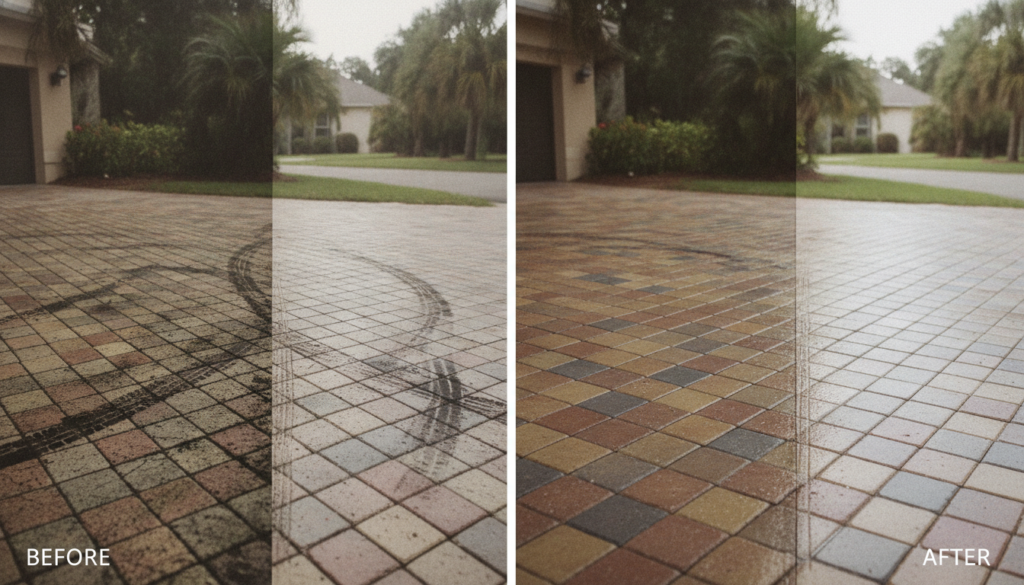
Quick Answer: Faded color, crumbling joint sand, visible weeds, and a rough or chalky surface texture all signal it’s time to reseal. Waiting past these signs invites cracking and costly paver replacement.
We get calls from Belleview and Ocklawaha homeowners who assumed a dull driveway was just "getting old." Usually it’s dried-out sealant that stopped doing its job years earlier. The pavers themselves are often fine — they just need cleaning and a fresh seal coat.
The Three-Year Rule of Thumb
Most sealers in this region hold up two to three years before UV breakdown sets in. If your last sealing predates that window, plan on a fresh application soon, even if damage isn’t obvious yet.
| Warning Sign | Likely Cause | Recommended Action |
|---|---|---|
| Faded or blotchy color | UV breakdown of old sealant | Clean + reseal |
| Loose or missing joint sand | Rain washout, ant activity | Resand + seal |
| Weeds between pavers | Unsealed joints, organic buildup | Weed removal + seal |
| Slippery, chalky surface | Sealant film degrading | Strip old coat + reseal |
| Standing water pooling | Settling or drainage issue | Inspect base, possible releveling |
⚠️ Common Mistake: Applying new sealer directly over dirt, mildew, or old peeling sealant. This traps moisture underneath and causes cloudy white patches within weeks.
The Paver Sealing Process, Step by Step
Quick Answer: Professional paver sealing follows five steps: clean, weed and repair, resand joints, apply sealer, and cure. Skipping any step shortens the life of the finish dramatically.
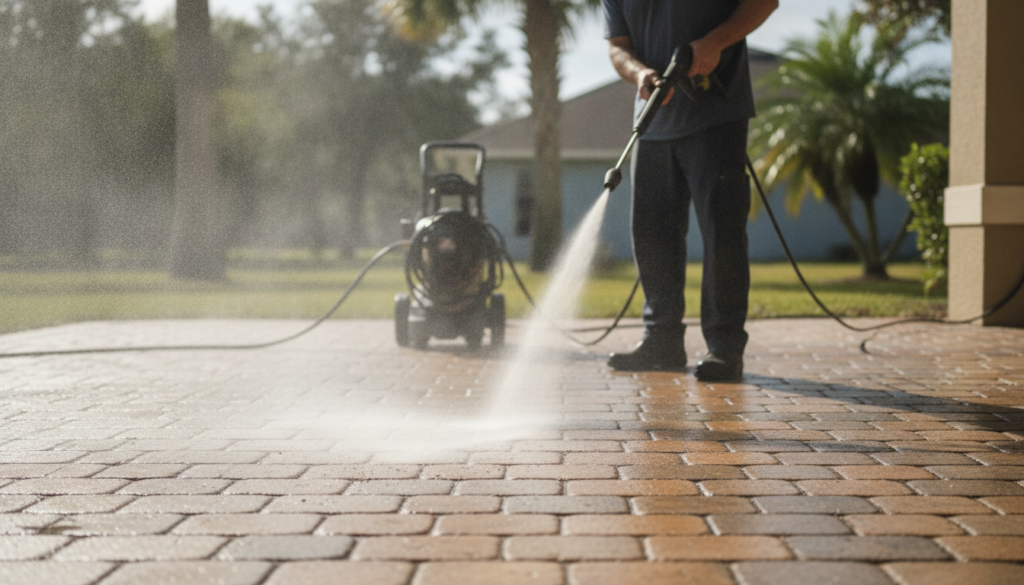
Step 1-2: Cleaning and Prep
A pressure washer at the correct PSI removes algae, dirt, and old sealant residue without pitting softer paver materials. This is also when cracked or sunken pavers get flagged for repair before sealing locks them in place.
Step 3-4: Resanding and Sealing
Once dry, joints are refilled with polymeric or plain sand, then the sealer is applied evenly with a sprayer or roller. Two thin coats generally outperform one thick coat, which can pool and yellow.
Step 5: Cure Time
Most sealers need 24-48 hours of dry weather to cure fully. In Sumter County and Lake Panasoffkee’s rainier stretches, we watch the forecast closely and schedule accordingly.
💡 Expert Insight: We always test a small hidden section first. Sealer reacts differently on older, more porous pavers than on newer, denser ones — a test patch avoids surprises on the whole driveway.
Choosing the Right Sealer for Local Weather
Quick Answer: Penetrating sealers work best for driveways needing a natural, matte finish, while film-forming "wet-look" sealers suit pool decks and patios where a glossy, color-enhanced look is desired.
Penetrating Sealers
These soak into the paver, blocking water and salts without changing surface appearance much. They’re a strong pick for Rainbow Springs and Liberty Triangle driveways exposed to constant sun.
Film-Forming Sealers
Wet-look sealers sit on top, deepening color and adding sheen — popular for pool decks in Inverness and patios throughout the shores communities. They do require more frequent reapplication since the film wears with foot traffic.
📊 Data Point: The EPA notes that many masonry sealers are formulated as low-VOC or water-based products, which reduces runoff concerns near pools, gardens, and stormwater drains — worth confirming with your provider.
DIY vs Professional Paver Sealing
Quick Answer: DIY sealing can save money on small patios, but uneven application, wrong sealer choice, or poor prep often costs more to fix than hiring a pro from the start.
What DIY Really Involves
Renting a pressure washer, buying sealer, and applying it evenly across hundreds of square feet is physically demanding and easy to get wrong on the first try. Streaking, puddling, and missed spots are common rookie outcomes.
When a Pro Makes Sense
Larger driveways, pool decks, or commercial walkways benefit from crews with the right sprayers, sealer-to-surface ratios, and experience reading paver porosity.
| Factor | DIY | Professional |
|---|---|---|
| Upfront cost | Lower | Higher |
| Even application | Inconsistent | Reliable |
| Time investment | Full weekend+ | Same-day for most homes |
| Product knowledge | Limited | Matched to paver type |
| Long-term value | Risk of redo sooner | Longer-lasting finish |
⚠️ Common Mistake: Sealing over wet pavers. Trapped moisture creates a milky haze that can take a full strip-and-reseal to correct.
Cost and Maintenance Schedule
Quick Answer: Expect roughly $1.50-$3.50 per square foot for professional sealing, with resealing recommended every two to three years across Marion and Sumter County homes.
Typical Reseal Timeline
| Surface Type | Reseal Frequency | Notes |
|---|---|---|
| Driveway (high traffic) | Every 2 years | Heaviest UV and tire wear |
| Patio | Every 2-3 years | Moderate foot traffic |
| Pool deck | Every 1-2 years | Chlorine and moisture exposure |
| Walkway | Every 3 years | Lower traffic areas |
Budgeting for sealing on this cycle is far cheaper than replacing cracked or shifted pavers later. It’s a maintenance cost, not a luxury upgrade.
FAQ
How often should I schedule paver sealing in Silver Springs Shores East?
Most driveways and patios in this area need resealing every two to three years due to intense sun and seasonal rain. Pool decks may need it slightly more often because of chlorine exposure.
Can I pressure wash my pavers myself before sealing?
You can rent equipment, but incorrect PSI settings can pit softer pavers or blast out joint sand. Many homeowners hire a pressure washing crew for prep to avoid surface damage.
What’s the difference between wet-look and matte paver sealer?
Wet-look sealers form a glossy film that deepens color, while matte or penetrating sealers soak in and preserve a natural appearance. The right choice depends on whether you want a showroom shine or a subtle, understated finish.
Is paver sealing in Silver Springs Shores East worth the cost?
Yes — sealing prevents fading, weed growth, and joint sand washout that otherwise lead to costly repairs. It’s generally far less expensive than replacing damaged or shifted pavers years later.
How long does paver sealer need to cure before I can walk on it?
Most sealers need 24-48 hours of dry weather to cure fully before foot traffic and about a week before vehicle traffic on driveways. Rain during curing can cause a cloudy finish that requires reapplication.
Do sealed pavers stay cooler in Florida heat?
Lighter-colored sealed pavers can reflect more heat than dark, unsealed ones, though the sealer itself mainly protects against UV and moisture rather than temperature. Choosing a lighter paver color alongside sealing helps more with heat than sealant alone.
Will paver sealing stop weeds from growing between bricks?
Sealing joints filled with proper sand significantly reduces weed germination by blocking the gaps weeds need to take root. It won’t guarantee zero weeds forever, but it dramatically cuts down on maintenance.
Final Thoughts
Paver sealing in Silver Springs Shores East isn’t a one-time job — it’s a maintenance rhythm that keeps driveways, patios, and pool decks looking sharp and structurally sound through Florida’s toughest weather. Skipping it invites fading, weeds, and eventually expensive paver replacement. The good news: with the right prep, sealer choice, and timing, results last years, not months.
Next Steps:
- Inspect your pavers for fading, loose sand, or weeds.
- Decide between a penetrating or wet-look sealer based on the surface.
- Schedule cleaning and sealing before Florida’s rainy season peaks.
- Set a reminder to reseal every 2-3 years going forward.
As of 2026, we’re actively serving homes throughout Silver Springs Shores East, Belleview, Ocklawaha, Rainbow Springs, and the broader Marion County area — plus related exterior work like patio cleaning, pool deck cleaning, and driveway cleaning. For a dedicated sealing quote, visit our paver sealing services page or explore concrete sealing options for driveways and walkways too. Contractors performing masonry and sealing work in Florida should carry appropriate state licensing per FDACS guidelines. Call Starr’s & Stripes PowerWash Ocala today to book your paver sealing appointment before the next storm rolls in.