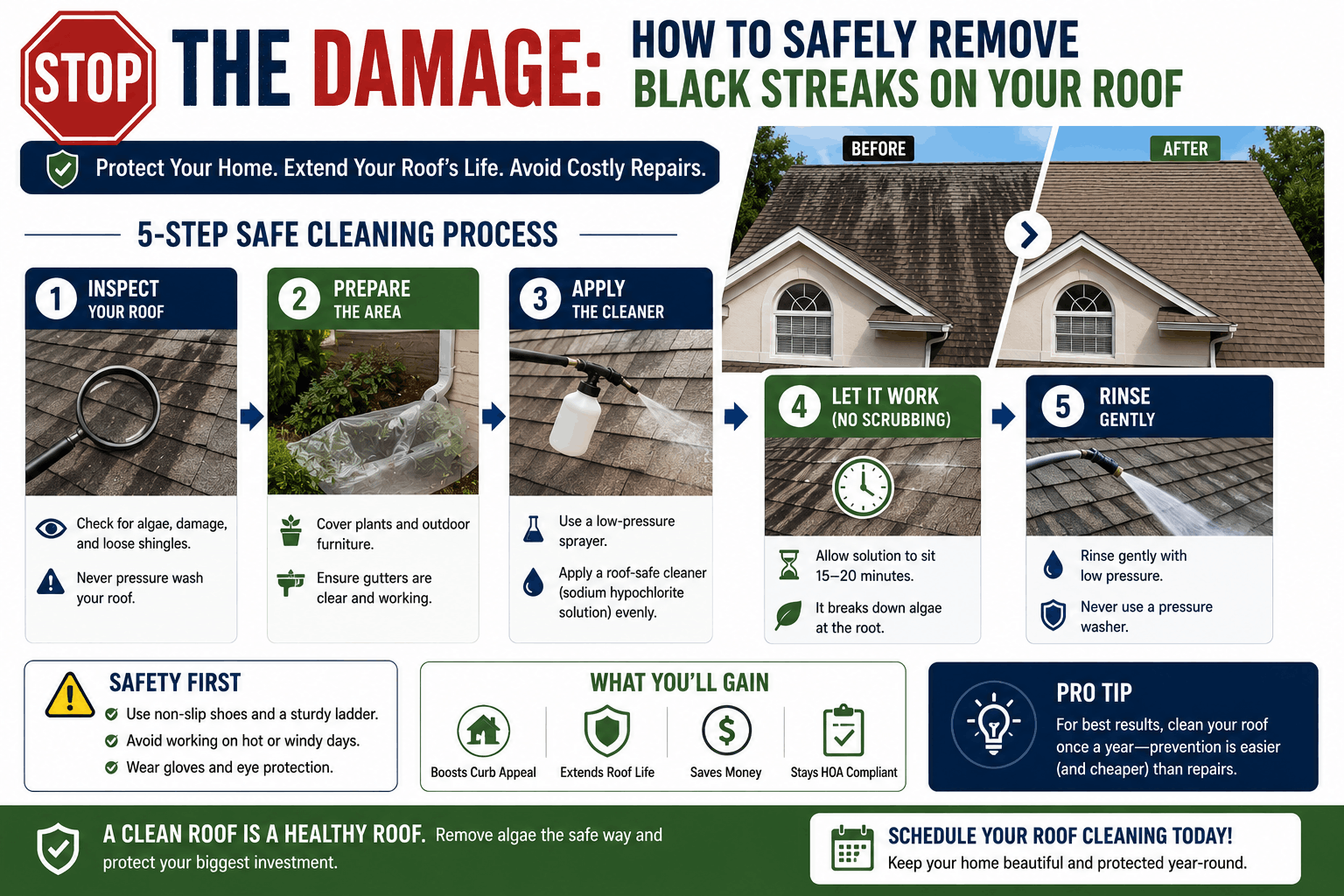
Stop the Damage: How to Safely Remove Black Streaks on Your Roof
If you want to permanently remove black streaks on your roof, you must avoid destructive high-pressure washing and instead utilize a chemical-based, low-pressure soft wash treatment. Are you noticing dark, unsightly stains stretching down your shingles? If you live in Central Florida, you are definitely not alone.
Many homeowners in Ocala assume these marks are simply dirt, soot, or accumulated charcoal. Naturally, their first instinct is to grab a heavy-duty pressure washer to clean it off. However, blasting your shingles with high-pressure water is one of the most expensive mistakes you can make for your property.
As of 2026, improper roof cleaning remains a leading cause of voided manufacturer warranties in Marion County. Understanding exactly what causes these dark marks and how to safely treat them is crucial. Below, we break down the science behind roof stains, the destructive nature of high pressure, and the proven methods to restore your home’s curb appeal safely.
📌 Key Takeaways
Identify the true threat: Those streaks are living algae (Gloeocapsa magma), not just dirt or soot.
Never use high pressure: Blasting shingles tears away UV-protective granules and instantly voids manufacturer warranties.
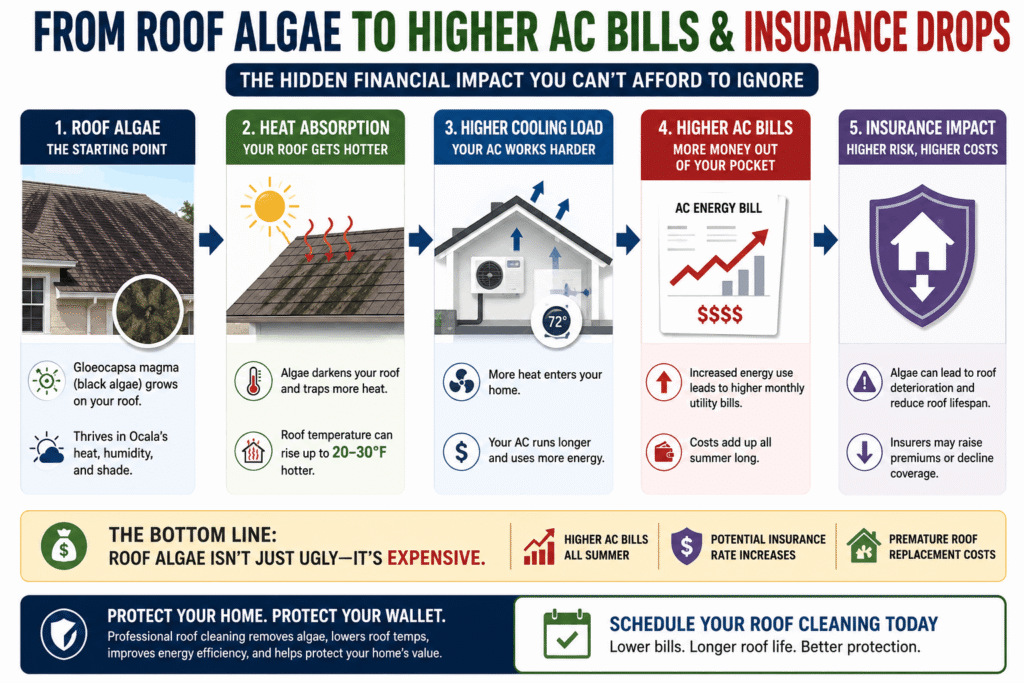
Algae increases AC bills: Dark stains absorb solar heat, making your attic significantly hotter.
Soft washing is the standard: Rely on low-pressure (under 100 PSI) chemical treatments approved by roofing manufacturers.
Prevent insurance cancellation: Routine professional roof cleaning satisfies strict Florida home insurance audits.
Table of Contents
Understanding the True Cause of Roof Stains
The Microscopic Enemy: Gloeocapsa Magma
The Dangers of High-Pressure Washing
Why DIY Roof Cleaning is a Huge Risk
The Soft Washing Revolution
Financial Benefits of Proper Maintenance
Choosing a Certified Professional in Ocala
Frequently Asked Questions
✅ Quick Answer: The black streaks on your roof are not dirt; they are rapidly multiplying colonies of living cyanobacteria (algae) that thrive in Central Florida’s hot, humid climate.
The dark, stretching stains marring your beautiful home are not accumulations of ash. Instead, they are a living, breathing colony of primitive organisms.
The Perfect Climate for Roof Algae
In regions like Marion County, Florida, our unique climate creates a perfect storm. The combination of intense heat, high humidity, and frequent rain turns your roof into a tropical greenhouse.
This environment allows airborne spores to land and spread rapidly across your asphalt shingles or concrete tiles.
How the Streaks Form
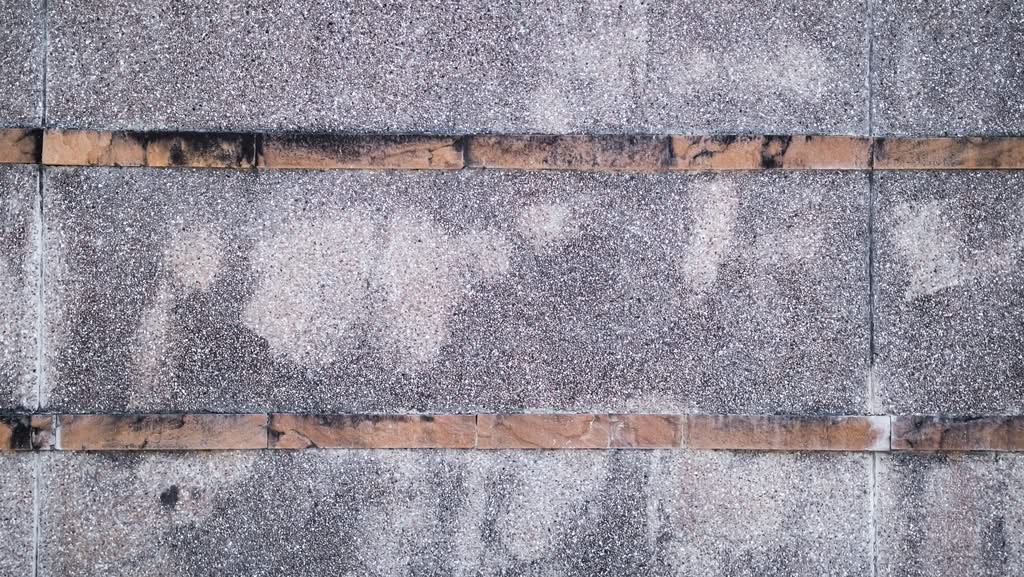
The growth starts out as small, unnoticeable spots. However, it quickly forms long, vertical streaks. This specific pattern occurs because rainwater carries the microscopic organisms down the slope of your roof.
✅ Quick Answer: Gloeocapsa magma is a hardy algae that feeds on the crushed limestone filler inside your asphalt shingles, slowly deteriorating your roof’s structural integrity.
The primary culprit behind these eyesores is a specific blue-green algae. Scientists refer to it as Gloeocapsa magma. This bacterium has adapted perfectly to survive on modern building materials.
Why Algae Loves Modern Shingles
To understand why this organism thrives, you must look at modern manufacturing. Shingle producers add crushed limestone into their asphalt mixtures. This provides weight, stability, and durability.
Unfortunately, limestone is the favorite food source for Gloeocapsa magma. The algae literally feeds on the structural components of your shingles.
📊 Data Point: According to the Asphalt Roofing Manufacturers Association (ARMA), algae growth on roofs is prevalent in environments with high humidity and can significantly shorten the lifespan of standard asphalt shingles if left untreated.
The Hidden Threat of UV Absorption
As the algae expands, it develops a dark, pigmented shell. This protects it from the harsh Florida sun. This dark shell creates the black streaks on your roof.
Because dark colors absorb heat, a stained roof acts like a heat magnet. This biological layer raises your attic temperatures significantly, driving up your monthly utility bills.
✅ Quick Answer: Using high pressure (over 1,000 PSI) strips the protective ceramic granules off your shingles, exposing the asphalt to UV rays and causing premature roof failure.
When homeowners spot these stubborn stains, their first thought is a pressure washer. This is a critical mistake. Using high pressure causes immediate, irreversible damage to asphalt shingles.
Granule Loss and UV Damage
Asphalt shingles are topped with a fine layer of ceramic-coated granules. These granules serve two vital purposes:
They reflect ultraviolet (UV) rays away from the asphalt core.
They provide primary water-shedding protection for your home.
When a high-pressure stream hits a shingle, it acts like a sandblaster. It strips away millions of protective granules in seconds.
⚠️ Common Mistake: Never point a pressure washer wand up the slope of a roof. This pushes bulk water directly underneath the overlapping shingles, rotting your wooden decking.
Without granular protection, your shingles will quickly dry out. They will curl, crack, and fail long before their intended lifespan.
✅ Quick Answer: DIY roof washing is physically dangerous, highly likely to void your roofing warranty, and frequently results in dead landscaping from improper chemical runoff management.
It can be tempting to rent a pressure washer over the weekend. However, we strongly discourage DIY roof cleaning due to severe risks.
Personal Safety and Liability
Roof cleaning is inherently hazardous. Falling from a wet, slippery roof is a leading cause of residential construction injuries. Stepping onto a steep roof covered in slick algae is incredibly dangerous without fall-arrest systems.
Collateral Property Damage
Beyond personal safety, a DIY approach frequently results in expensive collateral damage:
Voiding Your Roof Warranty: Major manufacturers (like GAF and Owens Corning) explicitly state that high-pressure equipment voids their warranties.
Killing Your Landscaping: Improper chemical mixtures will run down and destroy your expensive landscaping.
Incomplete Cleansing: High pressure only shears off the top layer of algae. The black streaks on your roof will return within months.
✅ Quick Answer: Soft washing uses a specialized, low-pressure system (under 100 PSI) combined with biodegradable sanitizers to safely dissolve algae roots without damaging your shingles.
The only safe, approved method to eliminate stains is soft washing.
How Soft Washing Works
Unlike pressure washing, soft washing relies entirely on a customized chemical solution. It is applied at extremely low pressure, similar to a gentle garden hose (under 100 PSI).
💡 Expert Insight: In my years of servicing Ocala homes, I have seen soft washing save property owners upwards of $15,000 by preventing premature roof replacements caused by pressure damage.
Instead of mechanically ripping the algae off, the solution sanitizes the surface. It kills algae, moss, lichen, and mold spores at their root level. The remaining residue safely washes away with natural rainfall.
✅ Quick Answer: Professional soft washing extends your roof’s lifespan, lowers your summer AC bills by restoring UV reflectivity, and prevents aggressive insurance policy cancellations.
Investing in professional soft washing yields measurable financial returns.
Measurable ROI
| Benefit Category | Impact of Algae Infestation | Results After Professional Soft Wash |
| Roof Lifespan | Premature aging, brittle shingles | Maximizes full 25-30 year design life |
| Energy Efficiency | Absorbs heat, skyrocketing AC costs | Restores reflectivity, lowering bills |
| Property Value | Drastically lowers home valuation | Restores pristine curb appeal |
| Insurance Compliance | High risk of policy cancellation | Satisfies strict underwriter audits |
Homeowners’ insurance companies throughout Florida are increasingly strict. If drone inspectors spot substantial organic growth, they will issue a 30-day notice to clean the roof or face cancellation.
✅ Quick Answer: Always hire an exterior cleaner with specific soft wash equipment, commercial liability insurance, workers’ compensation, and dedicated plant protection protocols.
Because soft washing requires exact chemical blending, you must hire a qualified company. Always verify these credentials:
Commercial Liability Insurance: Ensure the company carries at least $1 million in liability insurance rated for roof work.
Workers’ Compensation: Verify that every technician is fully covered to shield you from liability.
Dedicated Systems: True soft washing requires separate, specialized low-pressure pumps, not just a turned-down pressure washer.
Plant Protection Protocols: Confirm they utilize a ground spotter to continuously rinse your plants and grass.
What exactly are the black streaks on your roof?
The black streaks on your roof are dense colonies of a cyanobacteria known as Gloeocapsa magma. They are not dirt or soot; they are living organisms feeding on the limestone filler used inside your asphalt shingles.
Will soft washing void my roof warranty?
No, soft washing will not void your warranty. In fact, low-pressure chemical cleaning is the exact maintenance method recommended and approved by the Asphalt Roofing Manufacturers Association (ARMA) to safely maintain shingle integrity.
How long does a professional soft wash treatment last?
Because soft washing completely eliminates the biological root systems rather than just scraping away surface stains, a professional application typically keeps your roof completely clean and free of growth for 2 to 5 years, depending on tree shade.
Will the roof cleaning chemicals harm my pets or plants?
When applied by trained professionals utilizing standard plant mitigation protocols (continuous watering before, during, and after application), the solutions are highly managed. Once the treated surfaces dry, there is zero risk to your family or pets.
Can you remove black streaks on metal or tile roofs?
Absolutely. Soft washing is highly effective and recommended for metal roofing panels, clay tiles, and concrete tiles. It removes dark organic oxidation without damaging the vital structural paint finishes or underlying weather barriers.
Conclusion
If you are dealing with ugly black streaks on your roof, acting quickly is essential to protecting your property value. High-pressure washing is a destructive, outdated method that will permanently damage your shingles and void your warranties. Professional soft washing is the only proven, manufacturer-approved way to eradicate Gloeocapsa magma at its root safely.
Ready to restore your home’s curb appeal and protect your investment?
Walk outside and inspect your roof for dark, vertical stains.
Check your home insurance policy for maintenance requirements.
Contact a certified soft washing professional to schedule an assessment.
Call Power Wash Ocala today to get a free quote and safely eliminate roof algae for good!