Paver sealing Silver Springs Shores homeowners rely on does one job well: it locks moisture, algae, and Florida grit out of your pavers before they ruin the surface. Without it, sun and summer storms fade color and let weeds push through the joints within a couple of seasons. A sealed patio or driveway simply holds its look longer and cleans up faster after the next downpour.
We’ve resealed patios all over this neighborhood, from cul-de-sacs off Silver Road to the pool decks near Baseline. The pattern is always the same — unsealed pavers look tired by year three, while sealed ones still look freshly installed. This guide walks through what paver sealing actually does, what it costs, and how to keep your investment protected in our humid Central Florida climate.
📌 Key Takeaways
- Sealing typically lasts 2-4 years in Marion County’s climate before a refresh coat is needed.
- A quality sealer reduces efflorescence, the chalky white mineral residue that forms on unsealed pavers.
- Cleaning and joint sand refill must happen before sealing, not after.
- Wet-look and matte sealers exist — pick based on how much shine you want, not just price.
- DIY sealer often traps moisture if applied wrong, which can cloud or peel within months.
Table of Contents
- Why Paver Sealing Matters in This Climate
- How the Sealing Process Actually Works
- Choosing the Right Sealer for Your Pavers
- Paver Sealing Costs Across Marion and Sumter Counties
- DIY vs. Professional Paver Sealing
- Maintaining Sealed Pavers Year-Round
- FAQ: Paver Sealing Questions We Hear Most
Why Paver Sealing Matters in This Climate
Quick Answer: Florida’s heat, humidity, and heavy rain break down unsealed pavers fast by feeding algae growth and washing out joint sand. Sealing creates a protective barrier that sheds water and blocks UV fade.
Marion County sees intense summer sun and near-daily storms from June through September. That combination is brutal on concrete and clay pavers left unprotected. Without a sealer, water soaks into the porous surface, and mold or algae take hold within weeks in shaded areas.
The Efflorescence Problem
Efflorescence is the chalky white haze that appears when minerals inside the paver rise to the surface with moisture. It’s harmless structurally but makes pavers look dirty and old. A breathable sealer reduces how much moisture moves through the paver, which cuts down on this staining.
💡 Expert Insight: According to the EPA’s guidance on stormwater management, permeable and sealed hardscapes both play a role in reducing runoff pollutants — sealing done right doesn’t block drainage, it just protects the surface layer.
How the Sealing Process Actually Works
Quick Answer: Proper paver sealing is a multi-step process — clean, repair, refill joints, then apply sealer in thin, even coats. Skipping any step shortens the life of the finish dramatically.
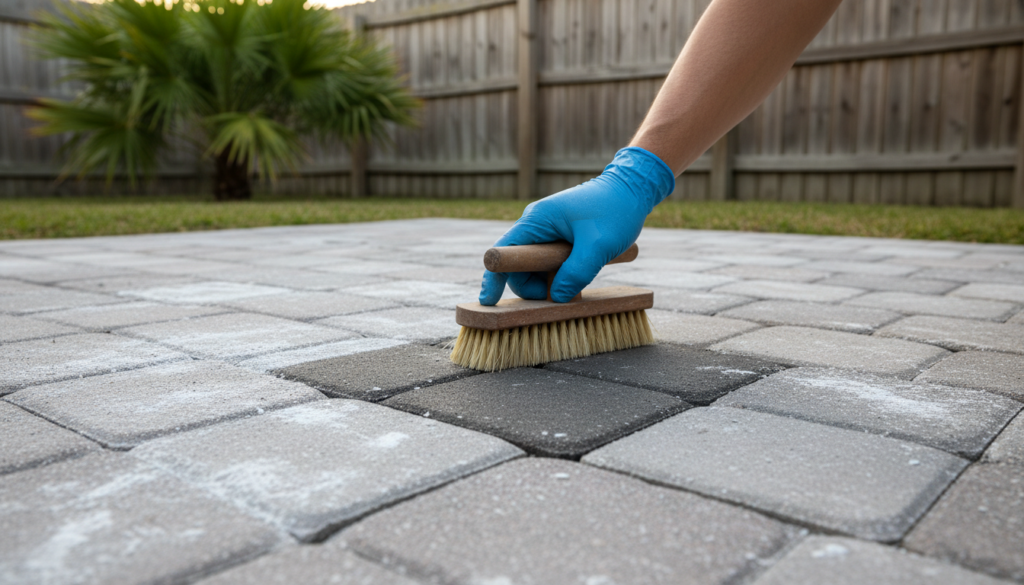
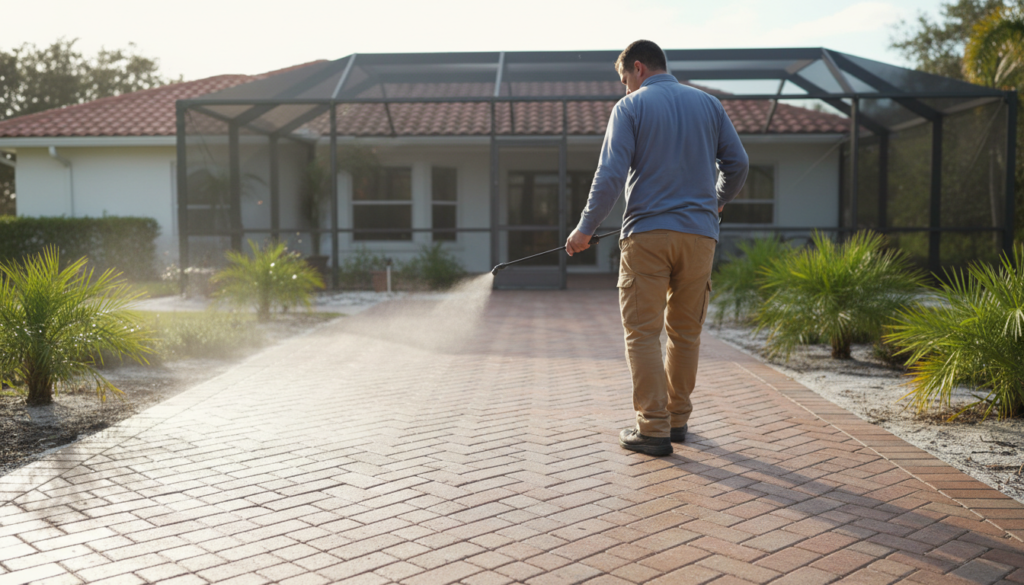
We start every job with a pressure wash rated for pavers, not concrete driveways, since paver surfaces chip more easily under high PSI. Loose or cracked pavers get reset before anything else happens. This step matters more than people expect — sealer over damaged pavers just locks in the damage.
Joint Sand and Sealer Application
Once the surface dries fully, we refill joints with polymeric sand, a sand-and-polymer blend that hardens to resist weeds and ants. The sealer goes on afterward in two thin coats using a low-pressure sprayer, letting each coat cure before the next. Rushing this step is the single biggest reason DIY sealing jobs turn cloudy or blotchy.
⚠️ Common Mistake: Sealing over damp pavers or during high humidity traps moisture underneath, causing white haze or bubbling that can take a full strip-and-reseal to fix.
| Step | What Happens | Why It Matters |
|---|---|---|
| 1. Wash | Low-PSI clean removes algae, dirt, oil | Prevents sealing over debris |
| 2. Repair | Reset shifted or cracked pavers | Stops future cracking under sealer |
| 3. Sand | Refill joints with polymeric sand | Blocks weeds and ant nests |
| 4. Seal | Apply 2 thin coats, cure between | Builds an even, durable finish |
| 5. Cure | 24-48 hour dry time, no foot traffic | Lets sealer bond properly |
Choosing the Right Sealer for Your Pavers
Quick Answer: Wet-look sealers deepen color and add shine, while matte sealers protect without changing the look much. Pool decks near Rainbow Springs and Silver Springs often benefit from slip-resistant additives.
Not every sealer fits every paver type. Clay pavers, concrete pavers, and travertine each absorb sealer differently, and picking the wrong formula can leave a sticky or overly glossy finish that homeowners regret.
Matching Sealer to Location
Pool decks and walkways need slip-resistant additives blended into the sealer for safety, something we specify on nearly every patio cleaning job that includes a pool area. Driveways, by contrast, benefit more from a harder finish that resists tire scuffing over time.
📊 Data Point: Well-maintained hardscapes and outdoor living spaces are consistently cited by University of Florida IFAS Extension as a factor that supports home value and curb appeal in Florida’s landscape and hardscape guidance.
Paver Sealing Costs Across Marion and Sumter Counties
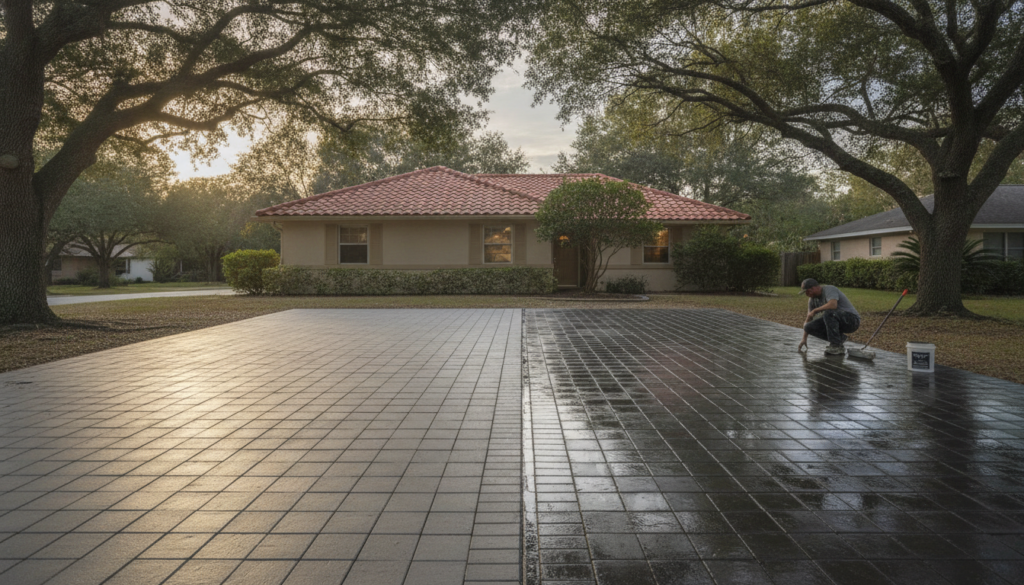
Quick Answer: Most paver sealing jobs in this region run by square footage, with price shifting based on paver condition, sealer type, and access. Getting a firm quote requires an on-site look, not a phone estimate.
Homeowners from Belleview to Lake Panasoffkee often ask for a ballpark before booking, and it’s a fair question. Pricing depends heavily on how much prep work is needed and whether joint sand needs a full refill or just spot repair.
What Changes the Price
Square footage is the biggest factor, but paver age matters too — older, more porous pavers soak up more sealer per coat. Heavily shaded patios near Ocklawaha or wooded lots often need extra cleaning passes to clear algae before sealing can even start.
| Factor | Lower Cost | Higher Cost |
|---|---|---|
| Paver age | Newer, less porous | Older, weathered |
| Sand condition | Sand mostly intact | Full joint refill needed |
| Shade/algae | Full sun, light growth | Heavy shade, deep staining |
| Sealer type | Standard acrylic | Enhanced/slip-resistant blend |
✅ Quick Tip: Ask any contractor whether their quote includes joint sand refill and a repair pass — some low bids skip both and the sealer fails within a year.
DIY vs. Professional Paver Sealing
Quick Answer: DIY sealing can work for small, simple patios, but uneven application, wrong cure times, and skipped prep are the most common failure points we see homeowners come to us to fix.
Box-store sealer kits look simple, and for a tiny walkway they can be fine. Larger patios, pool decks, and driveways are a different story because even coverage across hundreds of square feet is genuinely hard to control by hand.
Where DIY Usually Goes Wrong
Most do-it-yourself jobs we’re called to repair had one of three problems: sealing over wet pavers, uneven coats leaving streaky patches, or skipping polymeric sand entirely. Each mistake shortens the sealer’s life to well under a year.
💡 Expert Insight: The OSHA safety guidelines for pressure washing equipment are also worth a look before renting gear — improper PSI settings can etch or chip pavers before sealer is even applied.
Maintaining Sealed Pavers Year-Round
Quick Answer: Sweep debris regularly, rinse off dropped organic matter fast, and schedule a resealing check every 2-4 years depending on sun exposure and traffic.
Sealed pavers still need light upkeep. Leaves, pine needles, and fruit drop from oak and citrus trees can stain a sealed surface if left sitting for weeks in our humidity.
Signs It’s Time to Reseal
Watch for water that stops beading on the surface — that’s the clearest signal the sealer has worn thin. Fading color, rough texture underfoot, or new weed growth in joints are other cues it’s time for a refresh coat.
⚠️ Common Mistake: Waiting until pavers look visibly dull before rebooking a seal usually means the joint sand has already started washing out underneath, adding cost to the next job.
Homeowners in Marion Oaks, Rainbow Park, and the Liberty Triangle area tend to get the longest life from their seal by scheduling a maintenance rinse every few months rather than waiting for visible grime. Combining that rinse with a periodic driveway cleaning visit keeps the whole hardscape looking consistent, not just the patio.
FAQ: Paver Sealing Questions We Hear Most
How long does paver sealing last in Florida’s climate?
Most sealed pavers in Marion and Sumter counties hold up for 2-4 years before needing a fresh coat, depending on sun exposure and foot traffic. Pool decks and shaded patios sometimes need a touch-up sooner due to constant moisture.
Is paver sealing in Silver Springs Shores worth the cost?
Yes, for most homeowners it pays off by preventing costly repairs like joint sand washout, cracking, and heavy algae staining. It also keeps color and shine consistent, which matters if you’re maintaining curb appeal or preparing to sell.
Can I seal pavers myself instead of hiring a pro?
Small walkways can sometimes be a reasonable DIY project, but larger driveways and patios are harder to coat evenly by hand. Uneven application is the top reason we get called to fix DIY paver sealing jobs.
What’s the difference between wet-look and matte paver sealer?
Wet-look sealer deepens paver color and adds noticeable shine, while matte sealer protects the surface with a more natural finish. The choice comes down to personal preference and whether the area needs slip resistance, like a pool deck.
How soon after cleaning can pavers be sealed?
Pavers need to be completely dry before sealing, which usually means waiting 24-48 hours after washing in Florida’s humidity. Sealing over damp pavers is one of the most common causes of cloudy or peeling finishes.
Do sealed pavers need less maintenance than unsealed ones?
Sealed pavers are easier to clean because dirt and organic staining sit on the surface instead of soaking in. They still need periodic rinsing and an eventual resealing, but day-to-day upkeep is noticeably lighter.
Does paver sealing help with weeds growing between pavers?
Yes, sealing combined with polymeric sand in the joints makes it much harder for weeds to take root between pavers. It won’t guarantee zero growth, but it significantly cuts down on how often you’re pulling weeds from joints.
Bringing It All Together
Paver sealing Silver Springs Shores homeowners invest in isn’t a cosmetic extra — it’s what keeps pavers from fading, staining, and crumbling under Florida’s sun and storms. Done right, with proper cleaning, repair, and sand refill before the sealer goes on, it can add years to a patio, driveway, or pool deck. Skipping steps or rushing the job is exactly how sealer fails early, which is why prep work matters as much as the sealer itself.
Here’s how to move forward:
- Inspect your pavers for cracked sections, faded color, or thinning joint sand.
- Decide between a matte or wet-look finish based on the space and slip-resistance needs.
- Schedule a professional cleaning and repair pass before any sealer touches the surface.
- Book your paver sealing appointment before Florida’s rainy season ramps up.
Starr’s & Stripes PowerWash serves Silver Springs Shores, Belleview, Marion Oaks, Ocklawaha, and neighboring Marion and Sumter County communities with full-service paver sealing and hardscape care. Licensed and insured for Florida exterior cleaning work, our crews also handle concrete sealing and general power washing for homes throughout the service area. Contact us today for a free on-site quote and give your pavers the protection this climate demands.