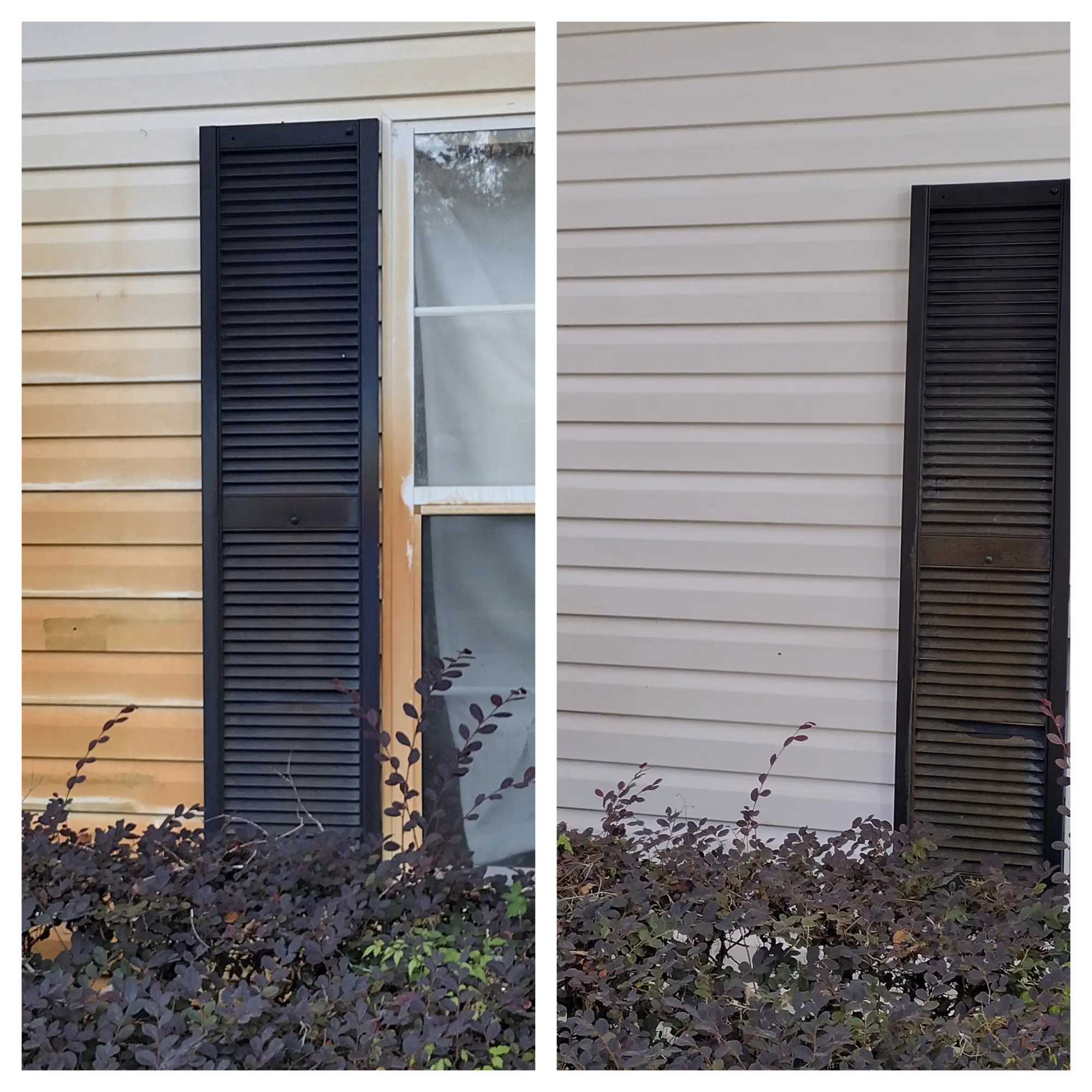
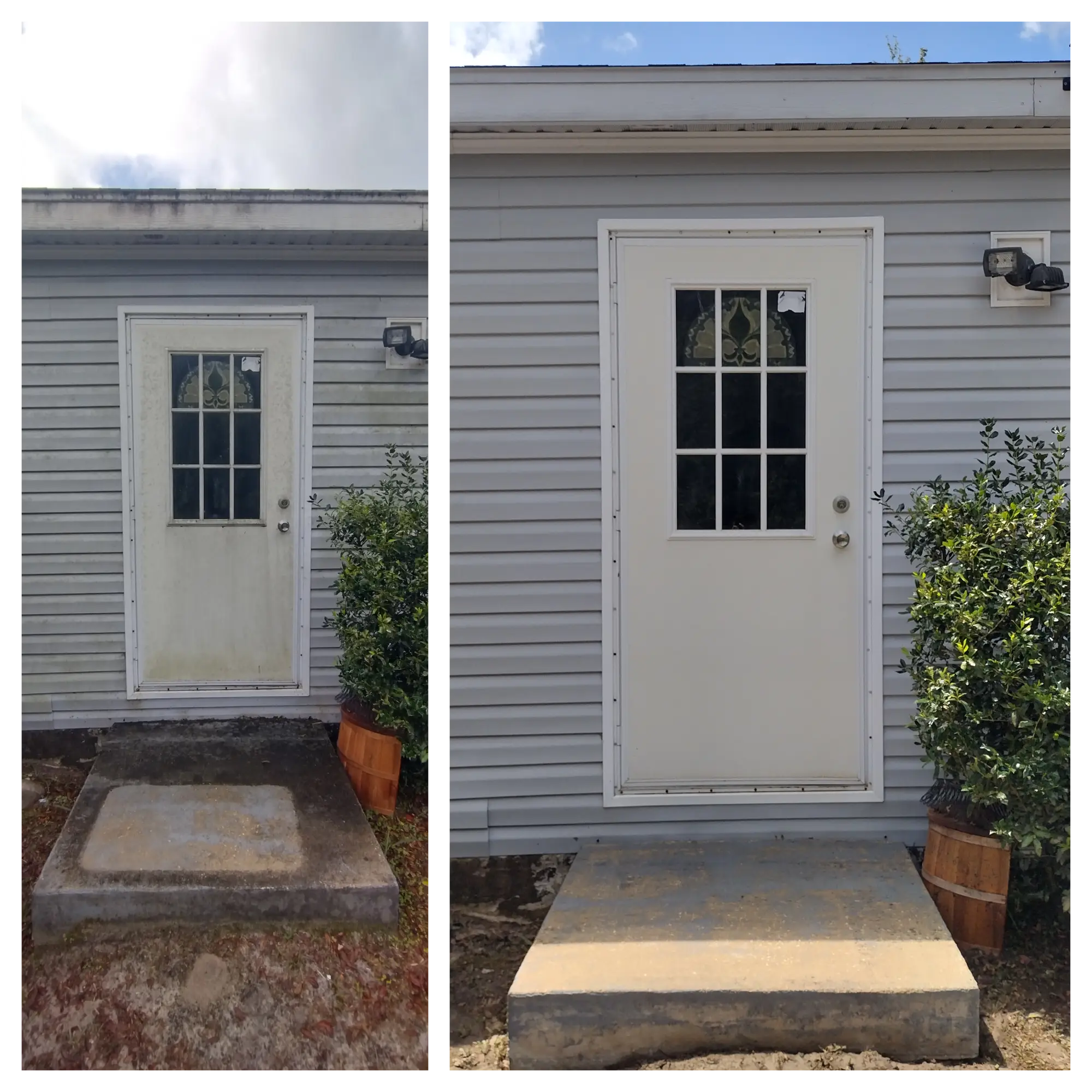
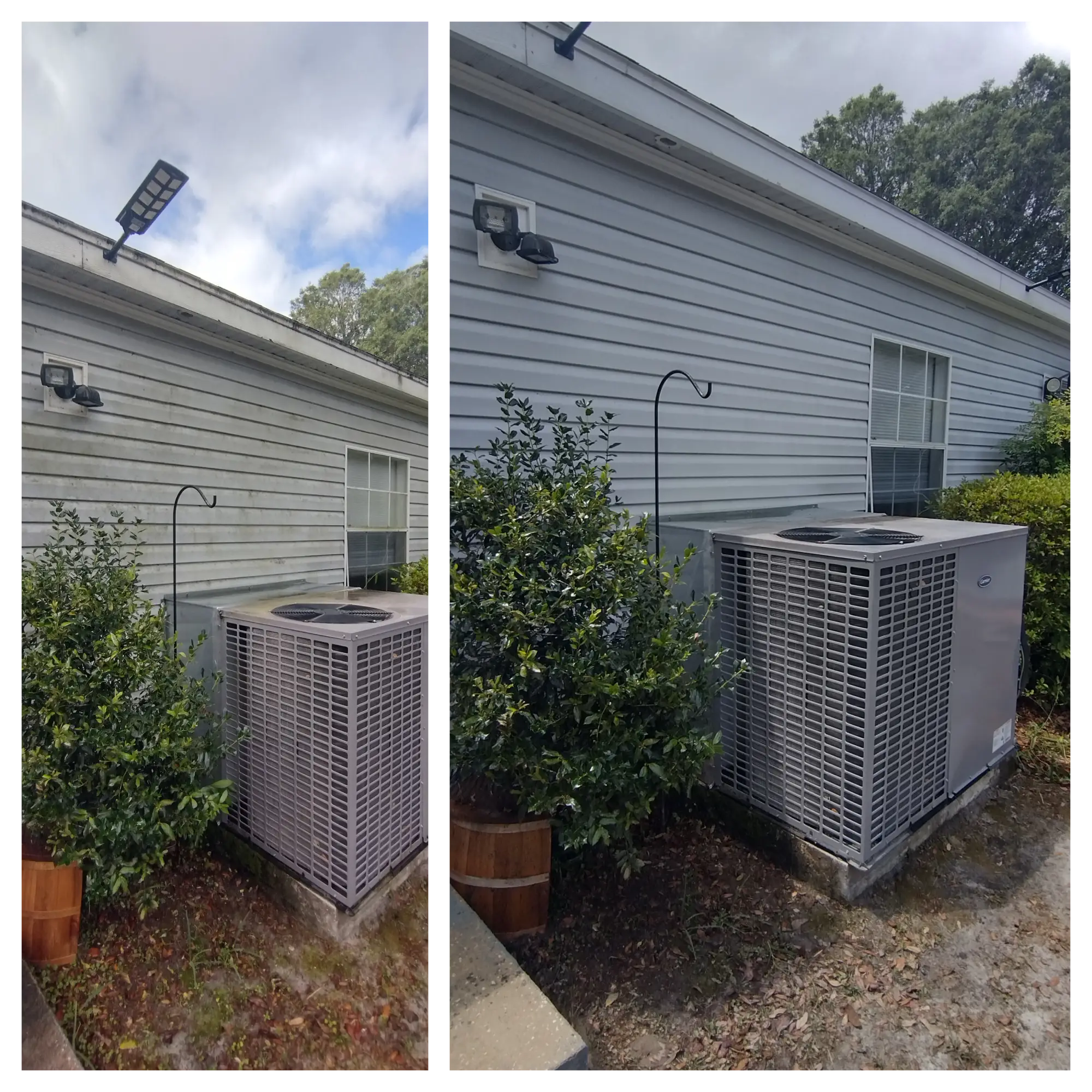
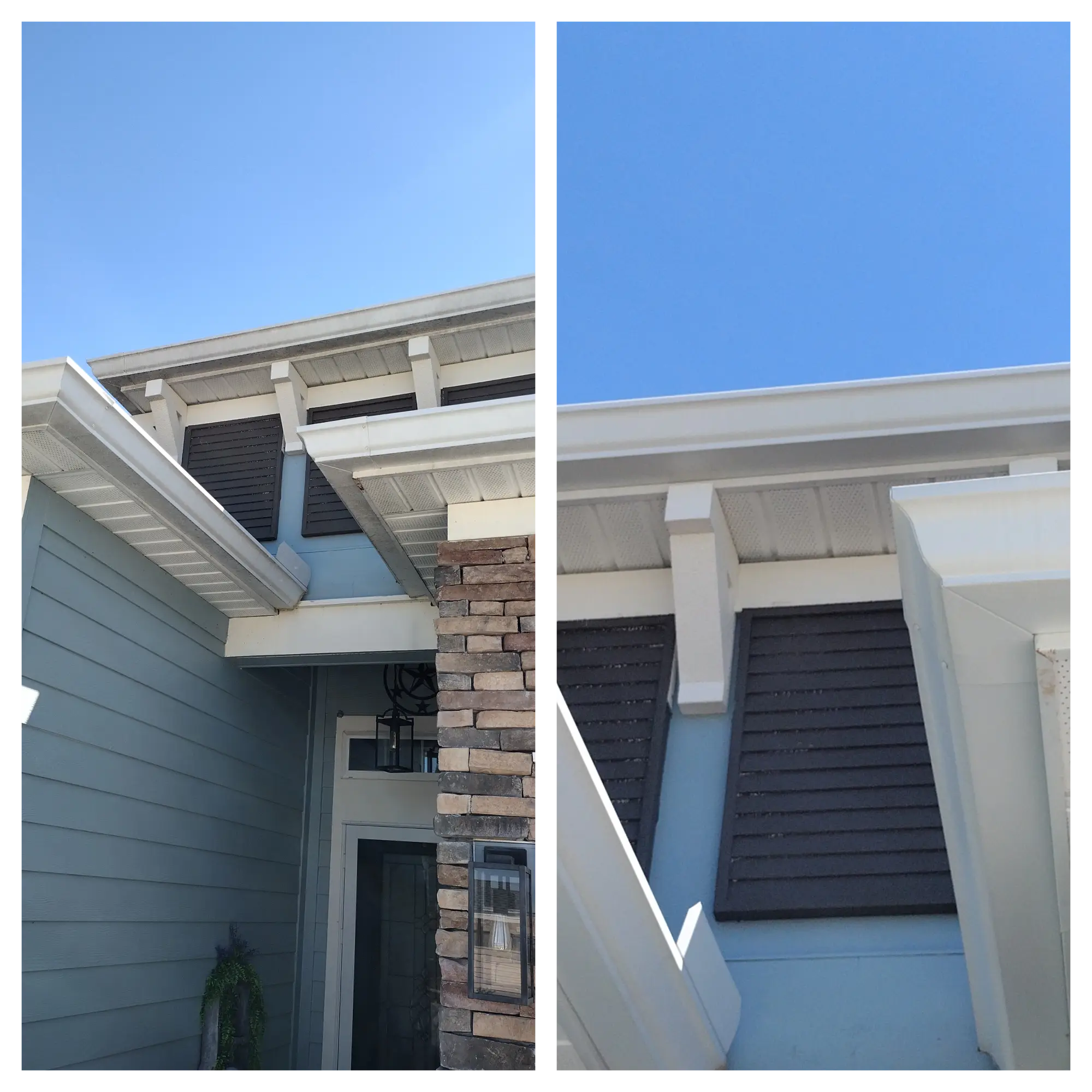
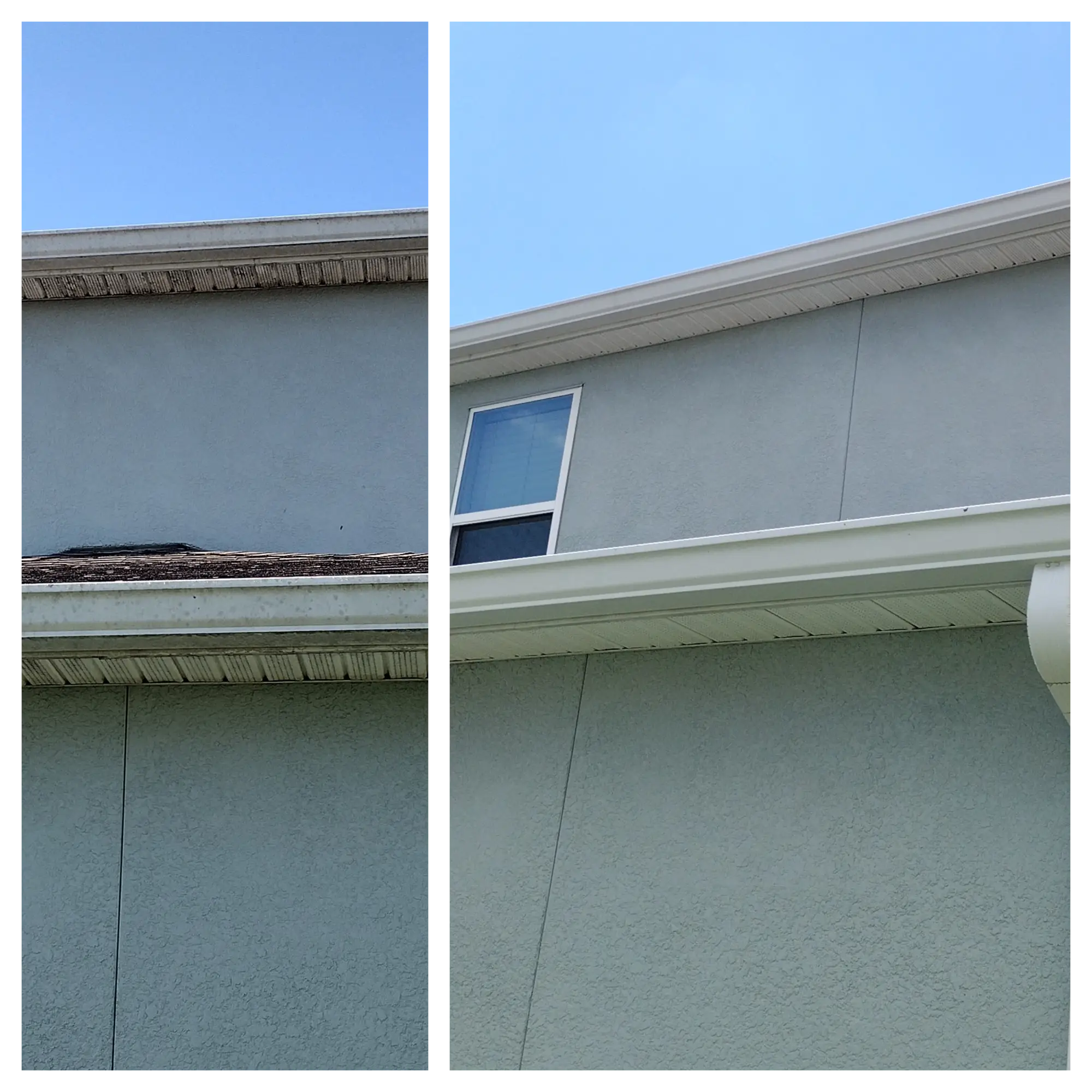
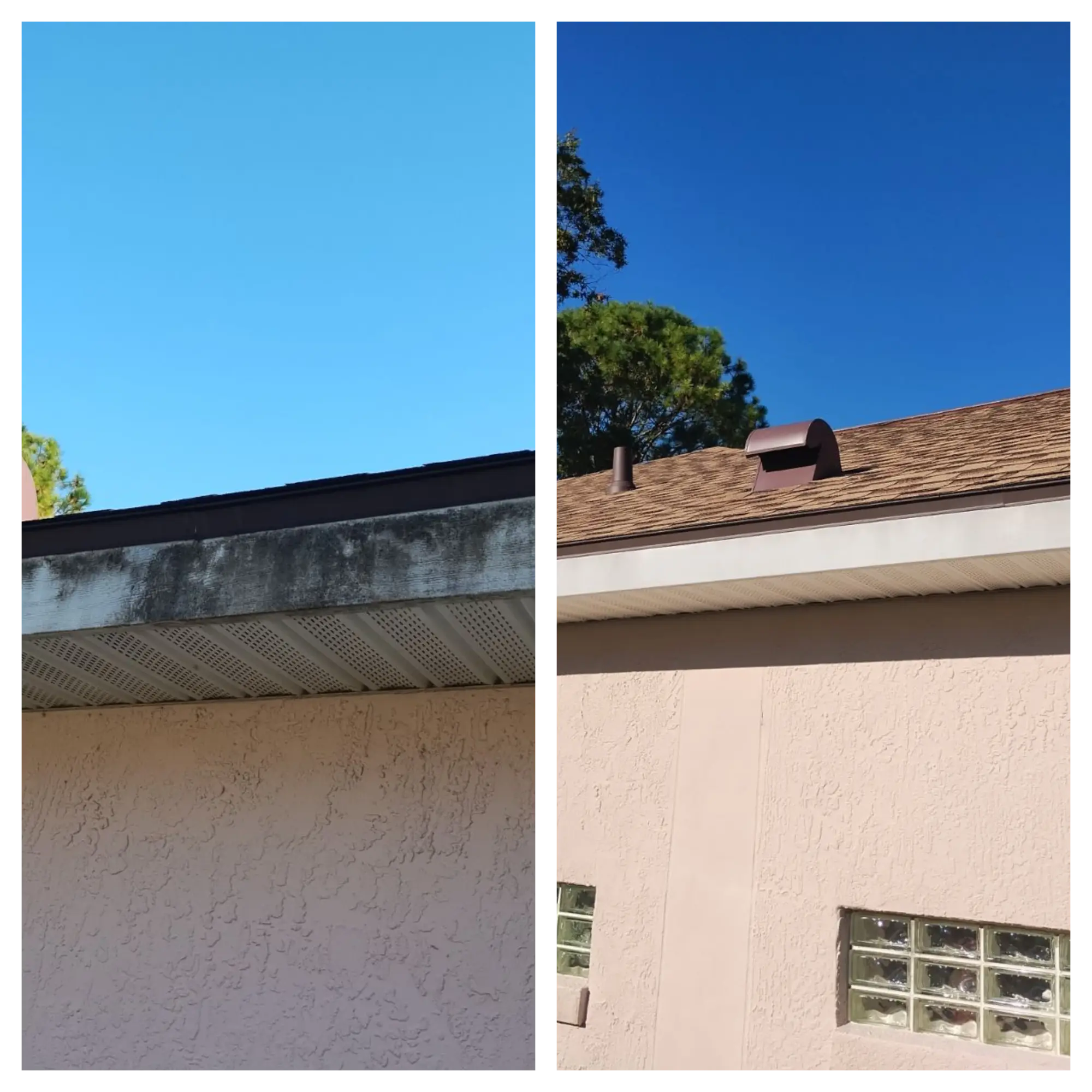
The dark streaks running vertically down exterior siding from the roofline or gutters are not dirt. They are Gloeocapsa magma, a photosynthetic bacteria that colonizes roofing materials and exterior wall surfaces throughout the Southeast. In Florida, it thrives in the combination of year-round warmth and consistent moisture from the summer rainy season. Once established on the siding surface, the biological film holds moisture against the material, which accelerates further growth and progressively darkens the surface. The colony spreads.
The green discoloration common on shaded exterior wall sections is algae colonization. The fuzzy gray-green patches on stucco are mold and mildew. The pollen coating that turns all exterior surfaces yellow-green every spring bonds with organic material already on the surface and provides a nutrient base for biological growth. Together these organisms transform a freshly painted or installed exterior into a surface that looks years older than it is.
The instinctive response to a dirty exterior wall is to blast it with a pressure washer. For siding, this is the wrong approach for two reasons. First, high-pressure water applied to exterior siding forces moisture behind the substrate. On vinyl siding, water infiltrating behind the panels contacts the underlying sheathing and framing. On stucco, high pressure can penetrate hairline cracks and enter the substrate. Trapped moisture behind the siding causes hidden rot, interior mold, and paint failure from the inside out. The exterior looks clean after the pressure wash. The damage is invisible until it is expensive.
Second, high pressure physically damages many siding materials. Direct high-pressure contact scars stucco surfaces, strips oxidation in ways that leave uneven texture on older vinyl, and can dislodge mortar from brick joints. The cleaning solves the visual problem while creating structural ones.
The social dimension of the brief is real. Research consistently shows that exterior appearance is the primary factor in how neighbors and visitors assess a property. A well-maintained landscape combined with algae-streaked siding still reads as neglected. A modest home with a clean, bright exterior reads as cared-for and well-maintained. The siding is not a background surface. It is the face of the house, and it is communicating something to every person who sees it.
The wrong cleaning method for the wrong material causes damage that reverses the benefit of the cleaning. Stucco scarred by high pressure, vinyl siding with moisture forced behind the panels, brick with mortar erosion from direct water impact — all are avoidable outcomes when the method matches the material. Professional assessment before cleaning protects the siding investment.
Florida challenge: Stucco is the most common exterior finish on Central Florida homes built from the 1980s through today. It is also the most pressure-sensitive exterior material on a typical residential property. Hairline cracks and the porous texture of stucco allow high-pressure water to penetrate the surface and enter the substrate, carrying moisture behind the wall. Traditional stucco and EIFS (Exterior Insulation and Finish System) synthetic stucco require different chemistry but share the same pressure constraint: direct high-pressure contact causes surface scarring and moisture infiltration.
Cleaning method: Low-pressure soft wash application using biodegradable surfactant solution calibrated to kill the biological organisms on the stucco surface without mechanical abrasion. Solution applied at low pressure, allowed to dwell, then rinsed gently. Detail treatment on vertical streak channels and around windows and trim.
Visual result: Stucco surface color restored. Dark vertical streaks eliminated. Green and gray biological growth removed from all wall sections. Surface is clean without texture damage or moisture infiltration risk.
Florida challenge: Vinyl siding is the most forgiving material for cleaning in terms of pressure tolerance but has two Florida-specific challenges beyond biological growth. First, oxidation: older vinyl siding develops a chalky, dull surface film as the UV inhibitors in the vinyl compound degrade under Florida’s intense sun exposure. Oxidation makes the siding look permanently faded even after cleaning biological growth. Second, vinyl siding in Central Florida’s humid climate develops biological colonization faster than siding in drier climates because the material holds moisture in the channels between panels.
Cleaning method: Soft wash application targeting biological growth with surfactant pre-treatment. Oxidation on older vinyl noted and addressed where treatable; fully reversing oxidation depends on the degree of UV degradation. Pressure calibrated to clean the panel faces without forcing moisture behind the panel edges and seams.
Visual result: Biological growth eliminated. Siding color and sheen restored where oxidation treatment is effective. Panel faces clean and bright. Significant improvement in overall appearance even on older vinyl with moderate oxidation.
Florida challenge: Brick exteriors in Central Florida accumulate biological growth in the mortar joints, which are the most porous and moisture-retentive part of the surface, and on the brick face, which develops a biological film that progressively darkens the natural brick color. Efflorescence, the white mineral bloom common on pavers and concrete, also occurs on brick masonry. Brick is more pressure-tolerant than stucco or vinyl but direct high-pressure impact on mortar joints can erode the mortar over time.
Cleaning method: Medium-pressure soft wash with surfactant pre-treatment on mortar joints and brick face. Efflorescence treated with pH-appropriate solution before main cleaning pass. Pressure calibrated to clean the brick surface without mortar erosion. Rinse direction managed to avoid forcing water into any visible mortar cracks.
Visual result: Natural brick color restored. Biological film and efflorescence removed. Mortar joints clean. Brick exterior reads as new construction rather than aged masonry.
Florida challenge: Wood and fiber cement siding are painted exterior products that require careful pressure management to avoid damaging the paint layer. High pressure strips paint from wood and fiber cement edges and can raise wood fiber on natural wood siding. Fiber cement products like HardiePlank and HardiePanel are significantly more durable than wood but are still vulnerable to high pressure at close range, particularly at cut edges and around fastener points.
Cleaning method: Soft wash application with gentle rinse pressure that cleans the painted surface without stripping paint from edges or penetrating fastener points. Biological growth treated with surfactant pre-treatment. Detail wand around trim, window frames, and exposed edges.
Visual result: Painted siding surface clean and bright. Biological growth removed. Paint layer intact. Siding appearance significantly improved without the paint damage risk of high-pressure washing.
Posted on GoogleTrustindex verifies that the original source of the review is Google. Randy and his team are true pros when it comes to power washing. They take the time to do the job right and treat your property with care. Highly recommend!Posted on GoogleTrustindex verifies that the original source of the review is Google. Does and great job, extremely thorough job on a drive way and house.Posted on GoogleTrustindex verifies that the original source of the review is Google. Stars and Stripes Power Washing does incredible work. Randy and his crew did an outstanding job on my horse trailer. It looks brand new. He is professional, shows up on time, paid attention to the details, and left everything clean when he finished. I’m a realtor, and I recommend Randy and Stars and Stripes Power Washing to all of my clients who need power washing. Reliable, high quality work every time..Posted on GoogleTrustindex verifies that the original source of the review is Google. We own Complete Dryer Vent Services LLC and were really impressed with the work these guys performed. I can't believe how dirty my vinyl fence was. A week later and it's still glowing white! Got a good education on how lichen can cause staining and damage protective coating on vinyl fence. These guys know their stuff. They even washed our work trailer! Highly recommend Starr's and Stripes.Posted on GoogleTrustindex verifies that the original source of the review is Google. Randy and Mathew from Starr's and Stripes Power Wash did an excellent job on our full house wash. Communication was clear and easy from start to finish, and they took the time to protect the plants and landscaping around the house. Our roof shingles had streaks all over them and now they are completely gone — the roof and house both look amazing. Honestly looks like a brand new home again. I would absolutely recommend them to anyone looking for pressure washing done right.Posted on GoogleTrustindex verifies that the original source of the review is Google. Really great people! Prompt, courteous and professional while still being personable. Highly recommend!!! Edited to add that we are now repeat customers and our rating hasn't changed a bit! Same promptness, courtesy and professionalism!Posted on GoogleTrustindex verifies that the original source of the review is Google. Randy was very professional, friendly and thorough. I would highly recommend Starr's & Stripes Powerwash to anyone needing their home, roof or driveway cleaned.Posted on GoogleTrustindex verifies that the original source of the review is Google. Starr's & Stripes PowerWash exceeded my expectations! Randy's team transformed my property, leaving everything spotless and looking brand new. Their attention to detail and dedication to quality are impressive. If you need reliable and thorough exterior cleaning, look no further—these guys are the best in the business!Posted on GoogleTrustindex verifies that the original source of the review is Google. Absolutely the nicest people to deal with and a great job.Posted on GoogleTrustindex verifies that the original source of the review is Google. I am a local Realtor, and I love that I can trust Starrs & Stripes to do a great job and with such professionalism that my clients reach out singing their praises after they leave. I highly recommend using this company for all of your power washing needs!
Yes, when done incorrectly. The two primary risks are moisture infiltration and surface damage. High-pressure water applied to exterior siding can force moisture behind the substrate at seams, panel edges, and any existing hairline cracks. That moisture, trapped between the siding and the wall framing or sheathing, causes rot and interior mold that is invisible from the exterior until it has progressed to structural damage. On stucco specifically, high pressure can also scar the surface texture and force water into the substrate through hairline cracks. On vinyl, direct high-pressure contact at close range causes permanent stress marks. Professional soft wash cleaning applies surfactant solution and rinse water at low pressure, eliminating both risks while still removing biological growth completely.
Soft wash is a cleaning method that relies on professional-grade surfactant chemistry rather than mechanical pressure to remove biological growth and contamination from exterior surfaces. The surfactant solution emulsifies and kills algae, mold, mildew, and bacteria at the root level rather than simply rinsing the surface. The biological organism is neutralized, not just displaced. The solution is applied at low pressure — well below the threshold that damages siding materials — and then rinsed with clean water. Because the chemistry does the cleaning work rather than pressure, the result is thorough biological removal without surface damage. It is the industry-standard method for exterior wall cleaning and the only appropriate method for stucco, painted surfaces, and older vinyl siding.
Yes. Stucco is the most common exterior finish on Central Florida homes and the material we clean most frequently. Stucco requires soft wash treatment specifically because high pressure damages the surface texture and can force moisture into the substrate through hairline cracks. Our soft wash process applies biodegradable surfactant at low pressure to kill the biological growth that causes the dark vertical streaks and green patches on stucco surfaces, then rinses gently. The result is stucco that looks like the original installation rather than a surface that has been through several Florida wet seasons.
No. Plant protection is built into our standard process. Before any cleaning solution is applied near landscaping, the crew pre-wets all surrounding plants, grass, and ground cover to dilute any surfactant contact. After cleaning, the entire area is rinsed thoroughly. The surfactant solutions we use are biodegradable and plant-safe at the dilution rates used in professional application. If you have specific plants or garden beds you want the crew to be aware of before starting, mention them when scheduling and we will note them for the technician.
Most standard residential siding cleaning visits in the Ocala area are completed in a single visit, typically two to four hours depending on the size of the home, the number of stories, and the degree of biological growth present. Homes with significant staining or heavy biological colonization on multiple wall sections may take longer. You do not need to be home during the cleaning as long as we have exterior access and a water connection. We can send before and after photos when the job is complete.
Every twelve to eighteen months is the standard recommendation for most homes in the Ocala area. Homes on the shaded north and east-facing wall sections, homes under heavy oak or pine canopy, or homes near ponds and water features will tend toward the shorter end of that range because shaded, humid conditions support faster biological regrowth. Homes on open lots with good sun exposure across the full exterior may go longer between cleanings. The most reliable indicator is the first visible appearance of green or dark streaking on any wall section, which signals that the biological growth has established enough to be worth treating before it progresses.
No. You need to be available to discuss the job and approve the estimate before scheduling, but you do not need to be present during the actual cleaning. The crew needs exterior access to the home and an outdoor water connection. We can work independently and will send before and after photos when the job is complete. If you have preferences about any specific areas of the property, note them when scheduling or leave written guidance for the technician.
Siding cleaning is priced based on the square footage of the home’s exterior, the siding material, the number of stories, and the degree of biological growth present. Most single-story residential siding cleanings in the Ocala area range from 50 to 00. Two-story homes range from 50 to 50 depending on size and complexity. Stucco homes with heavy biological streaking may require additional pre-treatment. Starr’s & Stripes provides a free written estimate before any work begins. Call or text (352) 230-9299 for a same-day quote.